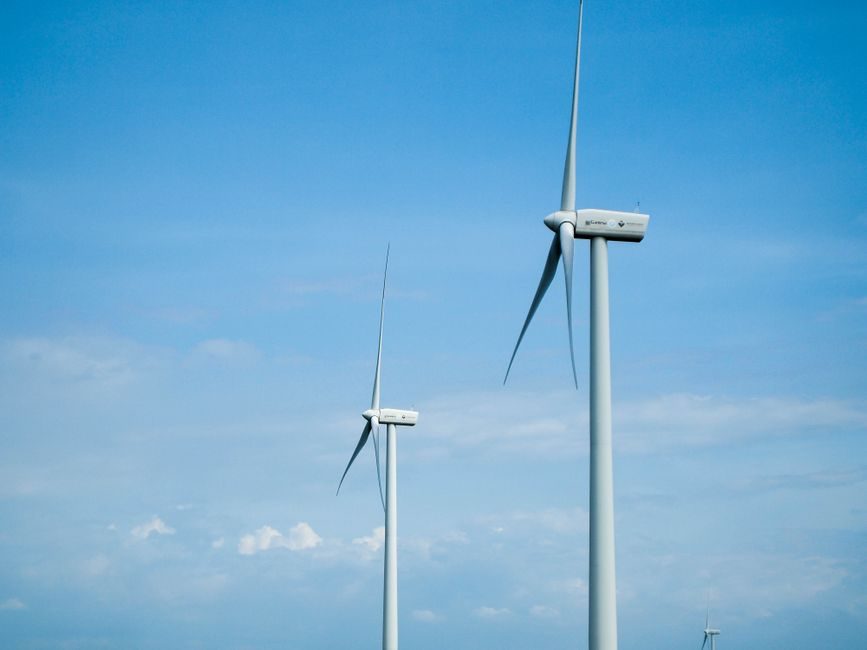
Intelligent wind turbine market value is forecast to reach $25.39 billion by 2026, expanding at a 4.38% CAGR over 2021-2026 as operators push condition monitoring and remote diagnostics deeper into the nacelle [S3].
That growth is reshaping the bill of materials: pitch and yaw feedback, gearbox vibration, hydraulic pressure, and lube-oil temperature all need fieldbus-capable transmitters and turbine-grade flow meters, while structural-health monitoring is moving from optional to standard on multi-MW platforms.
Why Intelligent Turbines Are Pulling More Industrial Instrumentation
IndustryARC defines the intelligent wind turbine segment by integrated SCADA, pitch/yaw closed-loop control, and predictive-maintenance loops, with rotor-condition analytics now embedded at the converter level rather than retrofitted in the O&M yard [S3].
For instrumentation buyers this means a step-change in I/O density per nacelle: a 4-5 MW onshore machine typically carries 80-150 analogue and digital channels (vibration, temperature, pressure, current, position) feeding a central PLC and a redundant condition-monitoring unit, against roughly half that on pre-2015 designs [S3].
Channel count alone does not justify the spend; the value sits in the closed-loop logic. IEC 61400-25-series communications map the data model between field devices and the wind-power SCADA, which is why pressure transmitters with HART 7 and dual-channel vibration probes with IEPE / 4-20 mA outputs are now baseline on new builds rather than upgrades.
Safety, Standards and the Offshore Operating Envelope
Wind turbine safety has been a stated priority since the PRNewswire safety brief of 2011, which called out extreme temperature, vibration, oscillation and aggressive offshore air composition as the four mechanical drivers of component failure [S1].
Fifteen years on, the offshore envelope has hardened those requirements into formal conformance: lightning protection to IEC 61400-24, design classes per IEC 61400-1, and hazardous-area classification of nacelle top boxes following IEC 60079-0 / IEC 60079-7 for zone-2 gas groups, with ATEX 2014/34/EU governing European installations.
Component-level pressure and flow instrumentation is the most exposed. Salt-laden air, -20 to +40 °C ambient swings, and constant 0.1-2 g broadband vibration push suppliers toward stainless 316L wetted parts, IP66/IP67 housings, and conformal-coated electronics. Buyers should verify NACE MR0175 compliance only when H2S partial pressure can exceed 0.0003 MPa in the gearbox vent stream, not as a blanket spec.
Size Bands, Vessel Constraints and the Logistics Ceiling
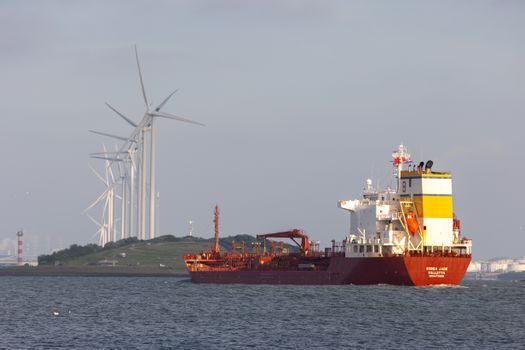
Hub height, rotor diameter and nacelle mass now collide with road, rail and port-infrastructure limits well before the turbine reaches its rated aerodynamic output, which is the single biggest non-engineering constraint on the 2026 build pipeline. [S1]
Onshore hub heights have moved from 80-100 m to 120-160 m to chase lower wind shear; rotor diameters of 160-180 m are now standard for the 5-7 MW class, with each blade running 70-90 m and 18-25 t. That geometry is forcing split-blade transport and 6-axle extendable trailers on most secondary roads.
Offshore, the constraint shifts to installation vessels. WTIVs capable of lifting 1,500 t at 150 m above deck remain the bottleneck, and 2026 new-build capacity has tightened for monopile foundations above 10 MW ratings. For a deeper read on these logistics-driven pivot points, see the Wind Turbine Market 2026: Size Bands, Vessel Constraints and Forecast Pivot Points brief.
Generator, Converter and Sub-Component Sourcing Map
China remains the dominant supply base for wind turbine generator motors and converters, with multi-supplier catalogues on Made-in-China.com showing MOQs as low as 1 piece for prototyping and 50-piece tiers for OEM pilot runs, and negotiable pricing for both DFIG and PMSG topologies [S2].
That sourcing map is increasingly bifurcated. Tier-1 European OEMs (Vestas, Siemens Gamesa successor entities, Nordex) still source generators and main shafts from in-EU and Korean mills for quality and traceability, while domestic Chinese OEMs and the Indian-Suzlon-equivalent segment buy predominantly domestic. Buyers evaluating Asian suppliers should request IEC 61400-25-2 conformance evidence and full-load test reports at the rated power factor, not just nameplate data.
Pitch-system hydraulics, yaw drives and the cooling loop all depend on rugged industrial valves and on turbine-grade pressure sensors rated for glycol-water mixtures down to -30 °C; the operating pressure window of 200-350 bar in pitch cylinders is now a default spec line on European tenders.
Noise, Community Acceptance and the Next Compliance Wave

Wind Turbine Noise 2025 (Copenhagen, www.windturbinenoise.eu) confirmed that amplitude-modulation (AM) complaints, not broadband SPL, are the single largest driver of permitting rejection on Northern European sites, with several German Länder tightening night-time AM limits below the IEC 61400-11 default [S4].
For operators, this shifts the spec conversation from acoustic emission to operational curtailment. Several OEMs now offer serrated trailing edges (Noise Reduction Kits) and low-noise serration tape as factory options, with measured AM reductions of 2-3 dB and broadband reductions of 1-2 dB on representative IEC 61400-11 test stands.
Coupled with radar-activated curtailment near civil aviation corridors and bat- and bird-protection slow-downs, the available capacity factor on a well-sited European turbine has effectively been re-rated downward by 1-3 percentage points versus 2018-2020 commissioning data, a non-trivial drag on project IRR that buyers must build into 2026 models.
China Policy Backdrop and Industrial-Restructuring Effects
China's 2011 Guideline Catalogue for Industrial Restructuring forced the first wave of domestic wind-turbine consolidation, raising the minimum MW threshold and tightening grid-connection standards, an early template for the kind of policy-driven market shaping the world is now seeing in 2026 [S5].
Beijing's subsequent 14th and 15th Five-Year Plan periods have continued that lever: subsidy phase-outs for conventional onshore units, priority dispatch for turbines with integrated storage, and provincial quotas that prefer domestically manufactured converters and PLC controls.
For international buyers, the policy ripple is pricing: when Chinese provincial quotas tighten, domestic demand absorbs factory output, FOB export prices rise 8-15 % within a quarter, and lead times on sub-MW generators move from 8-10 weeks to 16-24 weeks. Locking frame agreements with two qualified suppliers is now standard procurement practice for any 2026 EPC tender exposed to Chinese content.
Decision Criteria: What Spec Actually Matters in 2026

Three filters separate a defensible 2026 turbine-component spec from a copy-paste of a 2018 datasheet: the operating envelope (offshore class, ambient range, vibration), the data interface (IEC 61400-25 mapping, HART vs Foundation Fieldbus), and the after-sale window (MTTR target, spare-parts commitment, obsolescence policy). [S2]
Cheaper non-certified sensors fail the offshore TCO test inside year three, when replacement labour and vessel time erase any capex saving.
Pair this with a turbine flowmeter selection on the gearbox lube loop that verifies viscosity-range behaviour at low temperature (the typical failure mode is impulse-blade drag at sub-zero start-up), and the major 2026 instrumentation risks drop into a manageable engineering checklist rather than a procurement lottery.
For buyers cross-checking solar and storage economics against wind project IRR, the Solar Panel Market 2026: Module Pricing, Sub-Segment Forecasts and Sizing Bands brief is a useful parallel read.
The next trackable signals for 2026-H2 are: the Q4 release of revised IEC 61400-1 design-class amendments, the outcome of the next Copenhagen Wind Turbine Noise workshop, and any expansion of Chinese provincial quotas that frees up export allocation for generator and converter capacity, all of which will move both project IRR and component lead times in a single quarter.