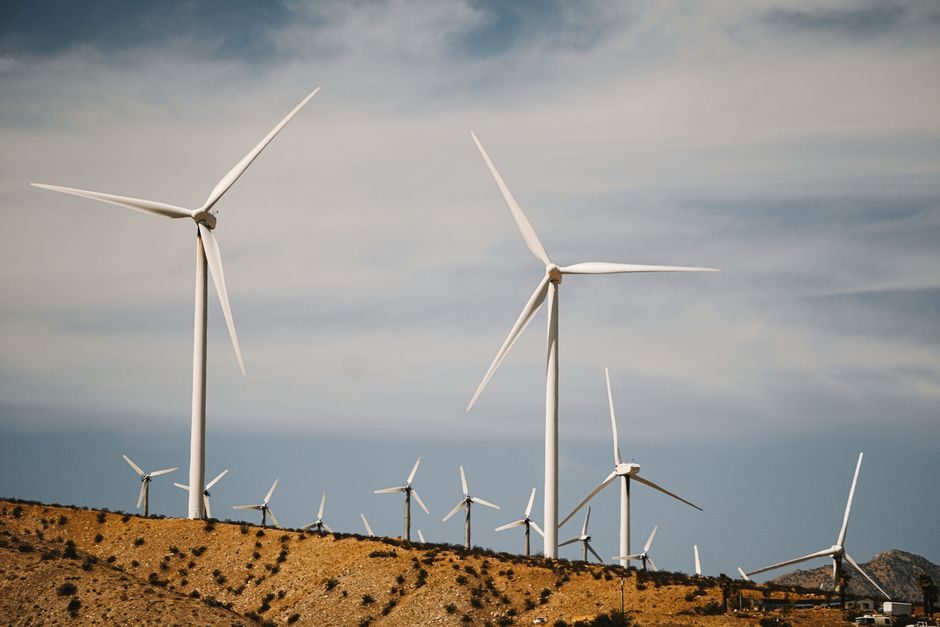
Floating wind turbine market value is projected to climb from $3.2 billion in 2019 to $30.6 billion by 2027, per Allied Market Research's "Floating Wind Turbine Market by Foundation and Depth: Opportunity Analysis and Industry Forecast, 2020–2027" (Report Code A07598) [S1].
The cross-segment picture for mid-2026 is uneven: Allied's offshore wind turbine installation vessel study was reissued in Feb 2026 (Report Code A02744), its small-wind report the same month (Report Code A00612) [S4], while the floating-wind foundation breakdown — spar-buoy, TLP, semi-submersible — is sized by depth at the 60 m shallow/deep split [S6]. Magnesium die-casting, which feeds lightweight gearbox housings and tower internals, is pegged at USD 6.85 B in 2026 growing to USD 13.33 B by 2033 at 10.0% CAGR, with die-casting holding a 37% share [S2].
Floating wind: foundation type is the dominant cost variable
Allied segments the floating-wind opportunity by three foundation families: spar-buoy, tension-leg platform (TLP), and semi-submersible, plus an "Others" bucket that typically covers barge and hybrid concepts [S6]. The 60 m water-depth line is the cut-off the report uses between "shallow" and "deep" ratings — anything above 60 m is classed as deep water and is where floating foundations compete against fixed-bottom monopiles and jackets [S6].
On the capital-outlay side, the floating-wind vessel class is segmented into self-propelled jack-up, normal jack-up, and heavy-lift vessel (Report Code A02744). Specifying engineers should map the foundation choice to the vessel that can install it: spar-buoys generally need wet-storage and up-end in harbour, TLPs require precision tendon tensioning, and semi-submersibles are tow-out friendly but still demand high-deck-air-gap jack-ups. For a side-channel on nacelle and drivetrain assembly throughput, see the wind turbine smart manufacturing field map.
Onshore small wind: HAWT vs VAWT and grid-tied vs off-grid split
Allied's small-wind report (Report Code A00612, Feb 2026) splits the segment by axis — horizontal axis wind turbine (HAWT) versus vertical axis wind turbine (VAWT) — and by interconnection: on-grid versus off-grid [S4]. HAWTs dominate nameplate count globally because their blade-tip-speed ratio maps more efficiently to standard three-phase grid inverters; VAWTs keep a niche in turbulent urban and rooftop sites where directional vane behaviour is poor.
Off-grid small wind continues to be specified for remote telemetry, cathodic protection on pipelines, and SCADA cabins where running LV distribution is more expensive than a turbine+mast+battery skid. On-grid units are most often sold into agricultural and small-commercial net-metering programmes. Process engineers evaluating flow and pressure instrumentation for these turbine hubs will find the working principles laid out in the flow meter and pressure sensor reference pages.
Drivetrain: wind turbine shaft, gearbox housing, and the magnesium angle

The wind turbine shaft transmits mechanical, rotational energy from the rotor to the gearbox/generator stage, and is the single longest forged component in a multi-MW nacelle (Allied Report Code A07824, outlook to 2027) [S3]. Low-alloy CrMo steels remain the default for main shafts above 3 MW; for gearbox housings and bearing carriers, the trade-off is cast iron (good damping, heavy) versus magnesium die-cast housings (light, needs corrosion-controlled coating system).
Magnesium metal market value is set at USD 6.85 B in 2026, expanding to USD 13.33 B by 2033 at 10.0% CAGR, with die-casting holding 37% application share [S2]. The catch on magnesium in nacelle service is galvanic compatibility with steel fasteners and salt-laden offshore air — which is where the coating additives market (USD 12.8 B in 2026, 4.6% CAGR through 2036 per FMI) becomes a directly coupled sub-market, not a separate line item. For a cost-frame on cast iron alternatives used in the same housings, the cast iron price and cost guide 2026 walks through grade, weight and machining levers.
Installation economics: WTIV class drives the offshore capex envelope
The offshore wind turbine installation vessel (WTIV) market is sized in three classes — self-propelled jack-up, normal jack-up, and heavy-lift vessel (Report Code A02744). Self-propelled jack-ups cut transit cost between fields; normal jack-ups are typically chartered and repositioned by tug; heavy-lift vessels are reserved for next-generation 15 MW+ nacelles and XXL monopile sections where hook-height and deck-load exceed the installed jack-up fleet's envelope. [S1]
For 2026 procurement, the binding constraint is not the turbine — it is the WTIV order book. Engineers planning cable-pull and switchgear scope alongside turbine install should treat vessel availability as the critical-path activity, with the control side covered in the PLC reference and hydraulic pitch/yaw control valves detailed under industrial valve.
Adjacent test and certification infrastructure
Aerodynamic and structural validation pulls from the wind tunnel market (MarketsandMarkets report 186355571), segmented by solution (products, services), alignment (horizontal, vertical), and application (aerospace, transportation, racing, construction, skydiving, simulation) [S5]. For utility-scale wind, the relevant sub-applications are aeroelastic scaled-model testing, blade-tip vortex studies, and fatigue load calibration against field SCADA.
Calibration of nacelle test stands is where pressure transmitter and turbine flowmeter grades matter most: hydraulic pitch system pressure verification, gearbox lube-oil flow, and yaw-drive hydraulic circuit test all run through these instruments, with HART or analogue 4-20 mA signalling back to the SCADA PLC. The electric linear cylinder market (Coherent Market Insights report CMI3031, 2026-2033) is the adjacent actuation layer for blade-pitch and yaw drives, segmented by linear speed bands (<0.1 m/s, 0.1-0.5 m/s, >0.5 m/s) and by vertical (food & beverage, automotive, healthcare/pharma, others).
What 2026 buyers should anchor on
Public research figures indicate: the floating-wind market is projected to reach $30.6 B by 2027 [S1]; the magnesium metal market is estimated at $6.85 B in 2026, growing to $13.33 B in 2033 at a 10.0% CAGR, with die-casting holding a 37% share in 2026 [S2]; and the coating additives market is estimated at $12.8 B in 2026, growing at a 4.6% CAGR through 2036 [S7]. The two report reissues to track are A02744 (WTIV) and A00612 (small wind), both dated Feb 2026 [S4].
Trackable signals into 2H 2026: any update to the floating-wind foundation mix as semi-submersible projects reach FID, magnesium die-casting share movement off the 37% baseline if automotive light-weighting plateaus, and coating additives volume tracking the offshore-tower repaint cycle. A cross-reference for module-side renewable demand drivers sits in the solar panel market 2026 sizing bands write-up.