
Lighting-fixture zinc castings are overwhelmingly produced on hot-chamber die casting machines in the 50-400 ton clamping-force class, with shot weights commonly landing between 0.1 kg and 4 kg per cycle for heat sinks, lamp housings, canopy bases, and decorative pendant bodies [S3].
Alloy choice narrows quickly: Zamak 3 (ASTM B240, UNS Z33521) is the default for general-purpose lighting hardware, while Zamak 5 (UNS Z35531) is specified where higher creep resistance is needed, such as adjustable track-light swivel joints that sit near the LED module [S2].
Why Hot-Chamber Dominates Lighting Zinc Castings
Hot-chamber machines keep the molten zinc inside an integrated furnace pot at roughly 410-440 °C, which matches the narrow 380-420 °C operating window of Zamak alloys and avoids the iron-pickup and melt-loss issues that plague cold-chamber setups [S3]. For decorative pendant bodies and thin-wall lamp shades with wall thickness down to 0.8-1.2 mm, hot-chamber injection velocities of 1.5-3.0 m/s and cycle times of 20-60 seconds keep surface finish at a level that tolerates direct polishing or chrome plating without rework [S1]. Cold-chamber cells do appear in the lighting supply chain, but typically only for larger cast aluminum heat sinks; pure zinc lighting parts are almost never run on cold-chamber equipment because the melt would oxidize during transfer.
Selection Criteria That Actually Move the Decision
Tier-1 lighting buyers in the Guzhen cluster, where Zhongshan Daedal Lighting operates, routinely run 0.3-1.5 kg Zamak 3 pendant bodies on 88-160 ton hot-chamber cells with 2-cavity dies and 35-45 second cycles [S2]. For thicker structural components such as downlight canisters or track-light adaptor bodies, 250-400 ton machines with 3-cavity dies keep cost-per-shot in the 0.08-0.15 USD range at 2026 zinc prices [S1].
Alloy and Process Map for the Common Lighting Part Families
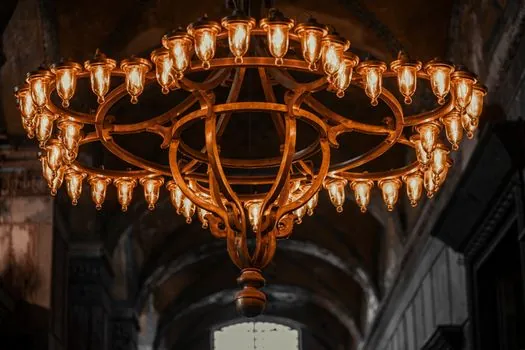
Pendant bodies, ceiling-rose covers, and switch housings almost always spec Zamak 3 because the alloy casts cleanly at 0.8 mm wall and accepts bright chrome or PVD brass plating without blistering [S2]. Heat-sink-adjacent bezels that sit within 10 mm of an LED junction run Zamak 5 (UNS Z35531) to take advantage of its roughly 10% higher yield strength at 95-120 °C, which prevents creep-induced sag over the LED's 50,000-hour service life [S3]. Decorative finials and chain links run Zamak 7 (UNS Z33522) where the slightly higher copper content delivers a smoother as-cast surface that skips a grinding pass before polishing. Across all three alloys, die temperature is held at 150-200 °C and the shot sleeve is preheated to 180-220 °C; straying outside that band is the dominant cause of cold-shut defects in thin-wall lighting castings [S1].
Surface Finish, Plating, and the Hidden Spec Trap
Lighting buyers will reject a housing that shows porosity under chrome plating, so the spec gate is not tonnage but porosity class. ASTM B240 sets the as-cast porosity limit at Grade 1 for decorative parts, and the practical acceptance window for plated lighting hardware is no surface pore larger than 0.3 mm and no cluster of more than 2 pores within any 25 mm × 25 mm patch [S3]. To hit that window the die must be vacuum-assisted or the shot must use a slow-fill to fast-fill velocity profile; vacuum-hose retrofits on hot-chamber machines are now standard on 2026-spec cells serving the export lighting market [S1]. Post-cast finishing is almost always outsourced to a plating shop, so the machine spec sheet should also list a maximum flash thickness under 0.15 mm and draft angles of 1-2° per side; the zinc die casting machine selection for hardware: tonnage, shot weight, and alloy map article covers the same draft/flash rules for adjacent part families.
Comparison Table: Machine Class vs. Lighting Part Family

50-90 ton hot-chamber cells suit Zamak 3 pendant bodies up to 0.3 kg and SPI-A3 surface, with cycle times near 25-30 seconds. 100-160 ton hot-chamber cells suit 0.4-1.5 kg downlight canisters and track-light adaptor bodies in Zamak 3 or Zamak 5, with 35-45 second cycles. 200-400 ton hot-chamber cells suit multi-cavity dies for chain links, finials, and small heat-sink bezels, with cycle times 40-60 seconds. Cold-chamber machines (typically 400-900 ton) are reserved for cast aluminum heat sinks and are not used for pure zinc lighting parts in normal practice. Selecting outside these bands usually indicates the buyer is mis-sizing: oversized machines waste melt, undersized machines trigger flash and short-shot defects that show up at the plating line [S1][S2][S3].
Standards, Tolerances, and the Numbers That Hold Up in Audit
Casting dimensional tolerance is generally held to ISO 8062 CT5-CT6 for lighting hardware (roughly ±0.05 mm on dimensions under 50 mm), with CNC machining reserved for mating faces that interface with the LED module or the electrical terminal block [S3]. Material certification follows ASTM B240 for the alloy ingot and ASTM B86 for the as-cast part, and tier-1 lighting OEMs additionally require RoHS and REACH compliance statements traceable to the alloy lot [S2]. For high-bay or exterior luminaires where the zinc housing sees humidity cycling, the post-plating salt-spray requirement is typically 96 hours neutral ASTM B117 with no red rust at the base of the plating, which in turn forces a copper-plus-nickel-plus-chrome stack of at least 8-12 µm Cu, 8-15 µm Ni, and 0.25-0.5 µm Cr [S1].
Who This Spec Map Is, and Is Not, For
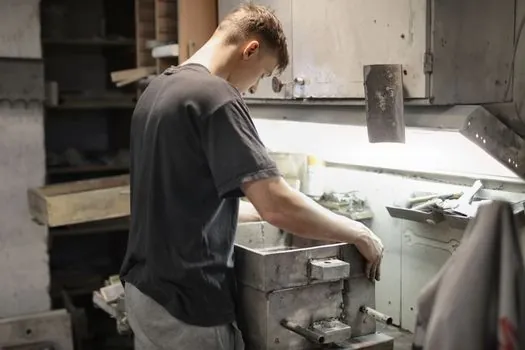
This map is written for the buyer or process engineer selecting a hot-chamber cell for Zamak lighting hardware, the lighting OEM auditing a Tier 2 supplier, and the die shop quoting a new pendant-body or canopy-base die. It is not written for aluminum or magnesium heat-sink work, where aluminum die casting machine selection and magnesium die casting machine selection follow different tonnage and shot-weight rules, nor for general contract zinc hardware outside the lighting use case. For the broader hardware context, the related spec map at zinc die casting machine selection for pump and valve production: spec map covers the higher-pressure classes needed in fluid-handling castings. [S3]
Common Failure Modes to Bake Into the Spec
Three failure modes account for the majority of rejected lots at the plating line: cold shuts (die temperature below 150 °C or shot velocity below 1.5 m/s), porosity (vacuum not enabled, or melt temperature above 440 °C causing gas pickup), and flash (clamping tonnage undersized for the projected area, or die deflection from worn tie-bar bearings) [S3]. A fourth, increasingly common failure mode is blistering under bright chrome when the alloy is contaminated with lead or cadmium above RoHS thresholds, which is why RoHS-certified Zamak 3 ingot is now the default for any lighting OEM selling into the EU or California [S1][S2]. The dominant monitoring signal across all four is the SPC chart on shot weight and peak injection pressure: a drift of more than 2% on shot weight over a 200-shot window usually precedes a porosity or flash spike within the next shift.
Trackable Signals for the Next Spec Refresh
Two signals are worth watching into late 2026: the rollout of closed-loop shot-weight control on hot-chamber cells serving the Guzhen lighting cluster, and the migration of vacuum-assisted die casting from a premium option toward the default spec for any plated lighting housing. The Asia Products zinc die casting machine capability list confirms that product design, tool manufacturing, zinc die casting, CNC machining, surface finishing, and mechanical assembly remain the six integrated steps that lighting buyers expect a single supplier to run in-house [S1]. For cross-referencing the gravity-cast alternative used on heavier decorative pendants, the gravity die casting machine reference covers the tooling and cycle-time differences that show up when the part geometry forces a non-pressure casting route.