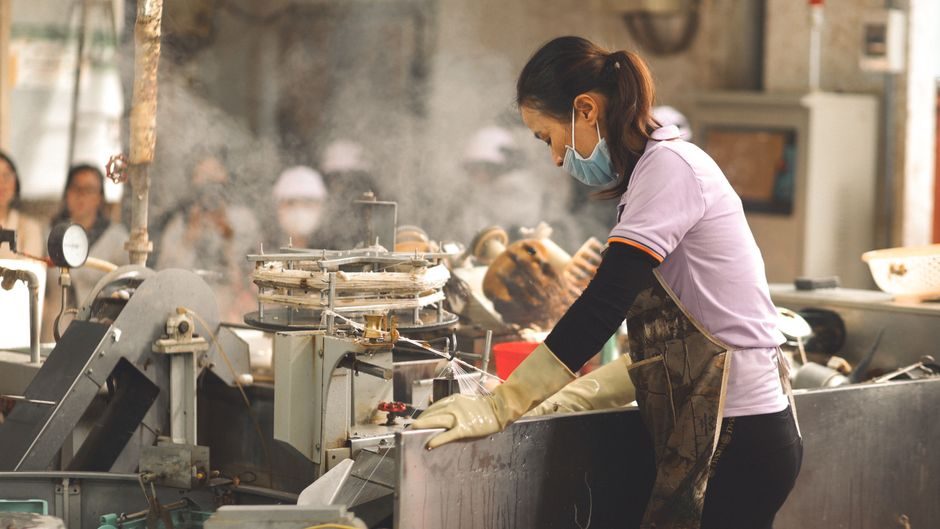
Zinc die casting machine supply in mid-2026 is concentrated in four Chinese OEM clusters — Ningbo (Zhejiang), Dongguan/Tangxia (Guangdong), Qingdao (Shandong) and the Lijiang/Yangzhong belt — where audited ISO 9001 factories deliver hot-chamber locking-force bands from 20 ton up to 1,600 ton and shot weights from 0.1 kg to roughly 30 kg per stroke [S1][S5].
The 2026 supplier landscape splits cleanly into three tiers: machine builders (Buenwell, Lijiang, CSM, Summit), component/mould foundries (Laishun, V-King, Compass, Shengerfu), and trading-company exporters that bundle mould + machine + polish [S3][S5][S8][S10]. For buyers cross-referencing a zinc die casting machine spec, the cluster-to-tonnage pattern matters more than the brand sticker.
Supplier Tiers: Machine Builders vs Mould Foundries vs Export Traders
Machine builders (Buenwell, Lijiang, CSM) sell complete hot-chamber cells with PLC control, shot-end servo options and clamping force from 20 ton (small hardware) up to 1,600 ton (large automotive structural zinc alloy parts), with typical machine-level quotations in the US$8,000-400,000/set range as observed on Made-in-China and China.cn listings [S1][S10].
Component foundries such as Ningbo Laishun Metalwork (L&L) and Ningbo V-King Metal Technology operate ISO 9001:2008/2015 audited production and quote moulded zinc castings at US$0.50-13.20/pc MOQ 100-1,000 pieces, with Qingdao Compass Hardware and Zhongshan Shengerfu pricing zinc hardware die-castings between US$0.30 and US$1.48/pc at 100-piece MOQ [S3][S5][S9]. A buyer's decision on die casting machine tier usually follows from the casting tier first — not the reverse.
Export traders (Cixi Linglong, Xiamen Hoxin, Qingdao Compass) act as aggregators on Made-in-China and Okorder, holding no foundry capacity themselves but bundling mould, machine, and surface finishing. Dongguan Summit Machinery & Hardware Factory, by contrast, runs a Dongguan-based HPDC facility and ships directly to OEM buyers in sanitary, hardware and 3C sectors [S7][S8].
Tonnage Bands and Clamping Force Reality
Cold-chamber aluminium-zinc cells from Chinese builders commonly cover 160-1,600 ton locking force, while hot-chamber zinc cells dominate the 20-160 ton band for Zamak 3/5 hardware — the working envelope a gravity die casting machine cannot reach because zinc's 420°C melt point sits well below the aluminium-suitable gravity process window [S1][S6].
For faucet, tap and sanitary zinc castings, automatic gravity die-casting cells are quoted at US$5,000-35,000/set, whereas a true hot-chamber zinc die casting machine with shot-end servo and closed-loop injection sits at US$10,000-400,000/set — a 10-30× price spread that maps directly onto tonnage, automation class and shot-weight capacity [S6][S10].
When you compare aluminum die casting machine tonnage to zinc tonnage, the rule of thumb is straightforward: zinc uses roughly half the locking force of aluminium for the same projected area, because Zamak's injection pressure and melt temperature are both lower — but the trade-off is shot weight, not clamping force, and that is what the machine builder's spec sheet must show.
Zinc-Specific Process Notes Buyers Rarely See in Catalogs
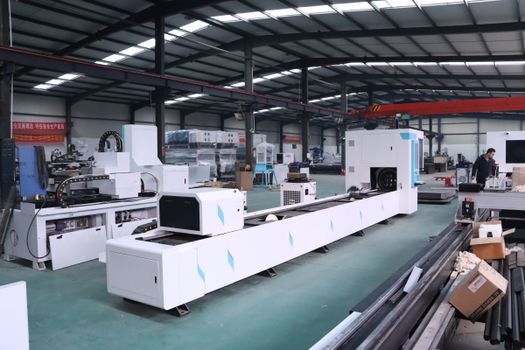
Zamak 3 and Zamak 5 alloys pour at 380-420°C and are processed almost exclusively on hot-chamber machines with gooseneck injection, in contrast to magnesium (which uses a vacuum die casting machine cell with SF6 cover gas) and aluminium (cold-chamber with shot sleeve) [S1][S2].
Cold-chamber zinc cells are still used for Zamak die-castings above ~12 kg shot weight, where hot-chamber gooseneck corrosion becomes a maintenance liability; this is the same threshold where the magnesium die casting machine envelope is actually closer in tonnage to aluminium than to standard zinc hot-chamber hardware [S1][S2].
India, Vietnam and the Non-China Sourcing Question
Outside China, India's DST Tech Private Limited is positioned as an ISO 9001-certified OEM-grade zinc die caster serving sanitary, automotive and 3C sectors in India, USA and worldwide, but its published capability stops at the component level — DST does not build the die casting machine itself, and its mould/machine supply still routes through Chinese OEM builders [S4].
Buyers asking for "non-China" zinc die casting machine supply in mid-2026 will find that India, Vietnam and Turkey host casting foundries and assembly shops, but the machine tool itself — frame, PLC, hydraulic or servo shot-end — is overwhelmingly Chinese-built. A useful parallel is the sourcing pattern covered in Magnesium Die Casting Machine Suppliers 2026: China OEM Map, Tonnage Bands and Sourcing, where the same OEM-to-foundry split holds.
Selection Criteria for the 2026 Buy RFQ
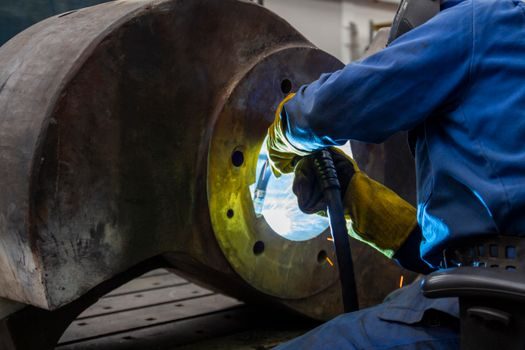
Four criteria dominate a 2026 zinc die casting machine RFQ: (1) shot weight vs part weight with a 1.3-1.5× safety factor, (2) platen size and tie-bar clearance for the mould footprint, (3) automation class — manual, semi-auto (robotic extraction), or full auto (sprue cut + trim + conveyor), and (4) certification — CE, ISO 9001, and for export into EU the ATEX 2014/34/EU route when zinc dust is recovered [S1][S3][S7].
Spec-vs-spec comparison: a 160 ton hot-chamber zinc machine (US$25,000-60,000, shot weight 2-5 kg) is the right pick for plumbing/hardware, a 400-800 ton cold-chamber cell (US$80,000-250,000, shot weight 8-20 kg) suits automotive structural zinc, and a 1,200-1,600 ton cold-chamber press (US$250,000-400,000+) is the bracket where the buyer's real question is aluminium-magnesium substitution, not zinc-pure volume [S1][S10].
The locking-force and shot-weight logic is laid out in detail in Zinc Die Casting Machine Sizing: Locking Force, Shot Weight and Platen Logic, which pairs with the present supplier map for a complete spec-and-source decision.
Pricing Reality, MOQ and Audit Status
Machine-level price bands span roughly US$8,000 (entry-level gravity cell for faucet lines) to US$400,000 (large cold-chamber servo cell), with the Ningbo cluster anchoring the lower-mid band and Dongguan/Tangxia sitting in the mid-upper band [S1][S6][S10].
Casting-level MOQs for zinc die-cast parts sit at 100-1,000 pieces across the Made-in-China supplier list, with diamond-member and audited-supplier badges (Ningbo V-King, Qingdao Compass, Cixi Linglong) carrying a 5-15% price premium over non-audited exporters — a premium that, in the experience of repeat OEM buyers, pays back in one rejected-batch avoided [S5][S9].
Watch List for the Next 90 Days
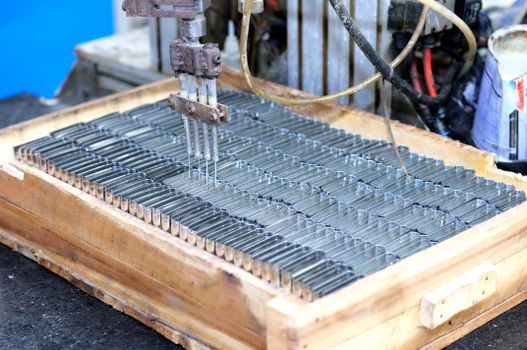
Two trackable signals: (1) the Ningbo Beilun Allway Machinery Co. listing on Made-in-China shows die casting machines at US$10,000-400,000/set MOQ 1 piece with diamond-member status, which is a reliable reference price-floor for 2026 Q3 RFQs [S10]; (2) CNM Casting in China's "die casting town" near the second-largest container port continues to push export-oriented HPDC pricing for both aluminium and zinc, and a quote request to them in July 2026 will return a current tonnage-vs-price bracket within 48 hours [S7].
For the broader equipment-supply map, the same China-cluster, tier-based pattern shows up in Planetary Reducer Suppliers 2026: China OEM Clusters, Ratio Bands and Sourcing Reality — useful background for any sourcing manager building a cross-category vendor shortlist in 2026.