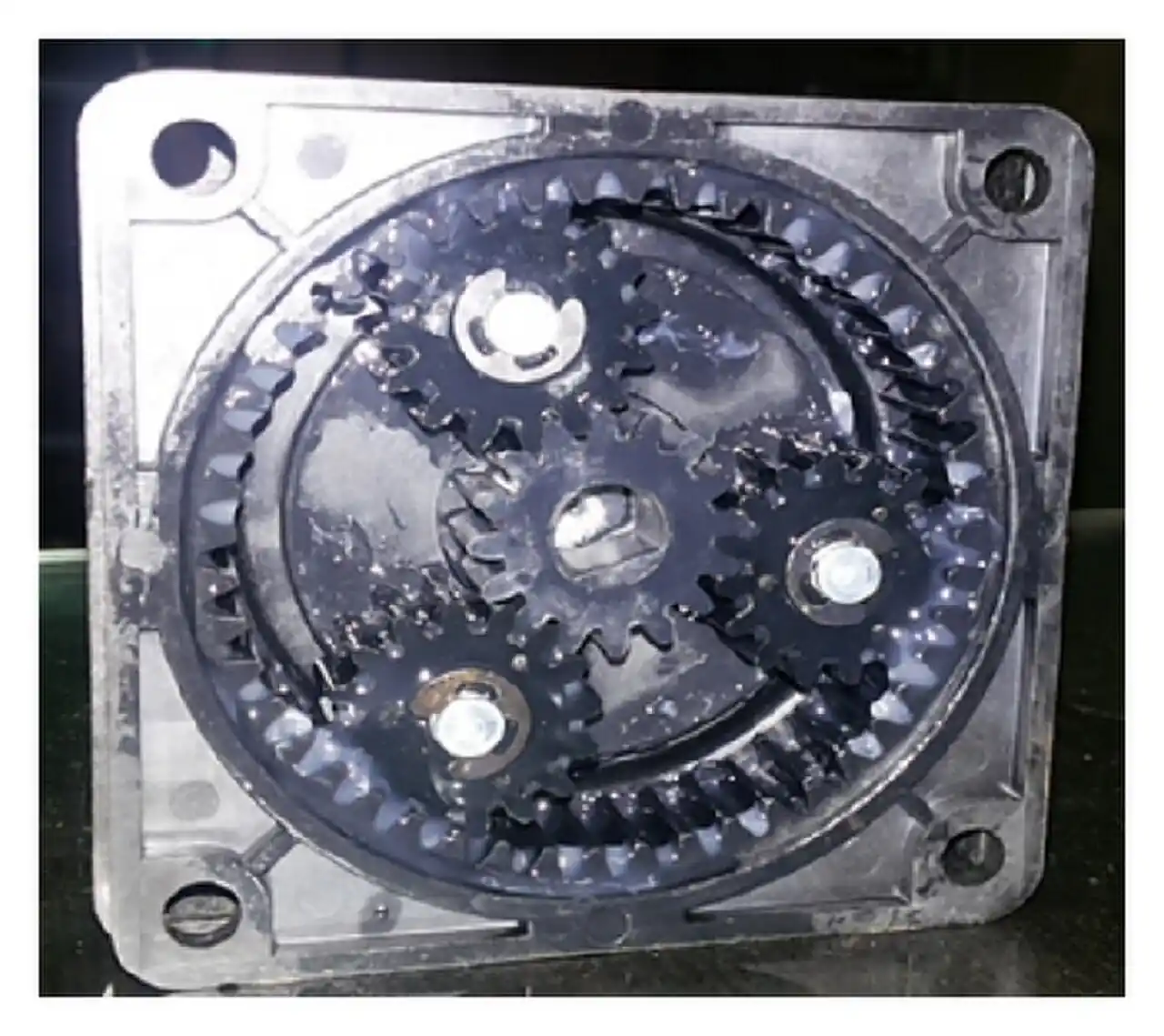
Planetary vs Worm Reducer Selection by Efficiency and Layout
Choosing between a Planetary Reducer and a Worm Reducer is a recurring power-transmission fork on conveyors, packaging machines, AGVs, rotary tables, and valve automation auxiliaries. Both multiply torque and reduce speed from an AC Motor, Servo Motor, or Stepper Motor, yet they diverge on efficiency, back-drivability, axis layout, and heat. Specifying worm where continuous high efficiency is required burns energy for the life of the machine; specifying planetary where a compact right-angle self-locking stage is needed adds cost and still may need a brake.
This page treats the decision as a duty problem. It maps application families to architectures, explains mesh physics with numbers, sets construction and thermal boundaries, decodes Key Specification Parameters (ratio, backlash, efficiency, service factor), walks a six-step selection with cost lines and an RFQ checklist, and closes on lubrication, wear, and integration with a VFD, Soft Starter, Ball Screw, Linear Guide, Hydraulic Motor, or Gear Pump driven machine section. The Power Transmission Hub is the parent category for related leaves.
Use the same process data sheet for every gearbox bidder: input speed, input power or torque, output torque, ratio target, duty cycle, ambient, and whether reverse driving must be blocked or allowed.
This guide is aimed at industrial purchasing and design engineers. It covers 6 chapters from the selection problem and gear physics to duty boundaries, parameter decoding, and field practice, with 7 selection FAQs.
Chapter 1 / 06
The Selection Problem
A reducer RFQ that states only a ratio and a kilowatt rating hides the real forks: in-line versus right-angle envelope, continuous efficiency versus occasional motion, and whether the load must hold when motor power is removed. Planetary stages are typically coaxial, high efficiency, and high torque density. Worm stages are typically right-angle, lower efficiency that worsens as ratio increases, and may provide partial or full self-locking depending on lead angle and friction.
Servo indexing, robotics joints, and precision conveyors lean planetary for stiffness, low backlash options, and efficiency under continuous or high-cycle motion. Compact right-angle drives on gates, small hoists, and some packaging functions still lean worm when envelope and quiet mesh matter more than efficiency, or when a measure of irreversibility is desired without a separate brake (always verify self-locking; do not assume it).
Two cautions. First, worm self-locking is conditional; vibration and lead angle can allow back-drive. Safety-critical holding needs a brake sized to the load. Second, planetary efficiency advantages vanish on paper if the wrong service factor or duty cycle overheats a tiny unit; thermal rating is part of selection, not an afterthought.
Drivers matter: an AC Motor on a VFD, a Servo Motor on a drive, or a Stepper Motor each present different input speeds, peak torques, and control expectations. Soft Starter use on large AC motors is upstream of the reducer but still affects start torque through the mesh.
RFQ framing that prevents false equivalence. Force every bidder to restate the duty in engineering units: loads, speeds, environment, duty cycle, and the controlled variable. Quotations that only repeat catalog horsepower without those inputs are incomplete. Keep a single process data sheet attached to all bids so commercial comparison stays aligned to the same service.
Document the cost of being wrong. An undersized selection that fails in six months usually costs more than the premium option declined at purchase. Write that failure cost into the scoring matrix when two architectures both claim to fit.
Identify interfaces early: upstream drivers, downstream mechanisms, control via PLC, and mechanical envelope limits. Interface mismatches create field change orders that dwarf meter-to-meter price gaps.
Decision ownership and data sheet freeze. Assign a single process owner for the duty inputs before commercial comparison starts. When sales, design, and maintenance each silently assume different duty cycles, every architecture can be made to look like a winner. Freeze the data sheet revision in the RFQ and require bidders to echo that revision number on their proposal cover.
Define what success looks like in the first ninety days: availability target, energy or media budget, scrap or rework limit, and maintenance hours. Those metrics become the SAT and early-operation acceptance lens, not only a factory nameplate check.
Map related equipment that can invalidate a selection even when the core device is correct: upstream drivers, downstream mechanisms, piping or fixtures, and control system scan times. Write interfaces as shall statements.
Capture the cost of delay. If lead time differences between architectures affect a shutdown window, lead time becomes a scored technical factor, not only a commercial footnote.
Inertia matching on servo axes deserves early attention. A Planetary Reducer reduces reflected load inertia by roughly the square of the ratio, helping a Servo Motor stay within tunable inertia ratios. A Worm Reducer can also reduce inertia but brings compliance and backlash characteristics that change the tuning problem. Publish load inertia and target ratio in the RFQ when servo tuning is in scope.
Noise and operator comfort can eliminate an otherwise efficient planetary if the machine sits beside workers without acoustic covers. Conversely, worm quietness does not justify chronic overheating on a continuous high-power conveyor. Measure the actual acoustic and thermal constraints rather than arguing from preference.
Compare not only the gearbox but the motor-plus-gearbox package length and mass. A compact worm with a larger motor to overcome efficiency losses can end up longer and hotter than a planetary with a smaller motor. Package-level envelope and thermal models prevent local optimization that hurts the machine.
For Stepper Motor axes, consider microstepping smoothness and resonance: gearbox residual backlash and stiffness interact with stepper behavior. Some steppers run better with planetary low-backlash stages; others are used without gearboxes. Validate with the motion profile.
Chapter 2 / 06
How Each Reducer Transmits Torque
A planetary reducer places planet gears on a carrier between a sun gear and a ring gear. Torque splits across multiple meshes, raising torque density. Single-stage efficiencies commonly sit around 95 to 97 percent; multi-stage units multiply stage losses yet often remain far above worm efficiencies at similar ratios. Output can be taken from carrier or ring depending on design; most industrial units use a rotating carrier output and fixed ring.
A worm reducer drives a worm wheel with a worm screw, usually producing a right-angle output. Sliding contact dominates, so efficiency falls as ratio rises; single-start high-ratio worms may sit near 40 to 70 percent depending on design and lubrication, while multi-start lower-ratio worms run higher. Heat rejection becomes a first-order design limit. Partial self-locking can appear at high ratios with shallow lead angles, but it is not a certified holding brake.
Attribute
Planetary Reducer
Worm Reducer
Typical stage efficiency
About 95 to 97% per stage
About 40 to 85% (ratio dependent)
Common axis layout
Coaxial; right-angle via bevel/hypoid add-on
Right-angle native
Torque density
High
Moderate
Backlash options
Low-backlash servo classes available
Generally higher; adjustable designs exist
Self-locking tendency
None; needs brake if holding required
Possible at high ratio; verify, do not assume
Heat at continuous duty
Lower for same throughput
Higher; thermal rating critical
Noise / mesh character
Planetary whine if poorly tuned
Often quieter sliding mesh
Typical relative cost
Higher for precision classes
Lower for commodity right-angle
Implications for energy and drives. On a continuous conveyor, a 20-point efficiency gap is continuous electrical power. Over thousands of hours it dominates gearbox capital. On intermittent indexing at low duty cycle, heat and energy matter less than backlash and peak torque. Match the architecture to the duty cycle, not to habit.
Downstream machines using a Ball Screw and Linear Guide expect certain stiffness and backlash from the reducer; servo planetary units are built for that chain. Hydraulic Motor or Gear Pump driven systems are different domains; do not mix selection rules casually when comparing electric geared axes to hydraulic axes.
Numbers first, adjectives second. Replace brochure adjectives with the measurable quantities that appear on nameplates and acceptance tests. Where a vendor cannot provide a number for efficiency, stiffness, pressure drop, accuracy, or duty cycle, treat the claim as unsupported.
Worked comparison at one duty point beats three pages of generalities. Pick min, normal, and max operating points and evaluate both options at those three points before shortlisting.
Remember that steady-state ratings and transient ratings differ. Starts, reversals, overload, and thermal cycling often decide the winner after the steady-state table looks tied.
Operating envelope table. Build a three-column envelope for minimum, normal, and maximum conditions covering load, speed, temperature, and media properties. Evaluate both options at all three columns. Architectures that only win at the brochure nominal point and fail at the maximum column are not qualified.
Separate continuous ratings from intermittent ratings in the comparison. Marketing sheets often blend them. Your duty cycle decides which column is binding.
Quantify uncertainty. If efficiency, accuracy, or torque is stated without a tolerance, ask for it. Design margins evaporate when the adverse tolerance stack is ignored.
Include transient events explicitly: starts, stops, reversals, emergency stops, clean-in-place, and warm-up. Transients drive fatigue and thermal peaks that steady-state tables miss.
Efficiency maps versus ratio should be requested for worms. A single catalog efficiency number at a favorable ratio misleads when your ratio sits at the steep end of the curve. Planetaries should disclose stage count and compounding efficiency so a three-stage unit is not treated as a single-stage 97 percent device.
Back-driving tests matter for both architectures when gravity loads exist. Ask for vendor guidance on back-drive torque and never substitute it for a brake on personnel-safety holding. Label the machine with brake requirements so future maintenance does not remove a brake thinking the worm is enough.
Heat rejection paths differ: worms rely on housing surface and oil volume; planetaries often run cooler but can still overheat in insulated cabinets. Provide ventilation rules in the installation drawing. Temperature stickers on first articles teach operators what normal looks like.
Chapter 3 / 06
Construction, Ratios, and Duty Boundaries
Ratio packaging. Worms achieve high ratios in one compact right-angle stage. Planetaries stack stages for high ratios while keeping efficiency; overall length grows. Right-angle planetary solutions add bevel or hypoid stages when coaxial will not fit.
Materials and lubrication. Worm wheels often use bronze against hardened steel worms; oil selection and temperature limits are strict. Planetary gears use hardened steels with grease or oil depending on size and speed. Food-grade lubricants and leak paths must be declared for packaging lines.
Where each stops. Worms stop being suitable on continuous high-power duty when thermal limits force oversizing that erases the cost advantage, or when efficiency targets in the machine energy budget cannot be met. Planetaries stop being the cheap answer when a simple quiet right-angle intermittent drive is all that is needed and low-backlash precision is unused.
Housing, sealing, and mounting (foot, flange, shaft-mounted) decide washdown survival. Pair enclosure thinking with motor IP/NEMA practice when the reducer-motor package sits in the same environment.
Backlash classes for servo planetary units (arcmin ratings) are product differentiators; commodity worm units rarely compete there. If positioning error budgets need single-digit arcmin, shortlist planetary servo gearboxes first.
Materials and environment boundaries. Ambient temperature, washdown, dust, corrosives, and hazardous-area classification constrain housings, seals, coatings, and lubricants. A correct mechanism in the wrong enclosure still fails. Map enclosure and sealing needs to the plant standard and to NEMA or IP expectations where electrical interfaces exist.
Maintainability is a duty boundary. If the plant cannot lock out and replace a wear item during a scheduled window, choose the architecture with longer wear intervals or external wear parts.
List prohibited materials and lubricants (food grade, silicone-free, paint systems) in the RFQ so vendors do not discover constraints after award.
Site and packaging constraints. Envelope drawings must include service access for seals, brushes, probes, lubricators, and terminal boxes. A technically perfect device that cannot be maintained in the installed position becomes a reliability problem within a year.
State cleaning chemistry, blast levels, and hose-down pressures when washdown applies. Seals and nameplates that survive the process can still fail under sanitation.
Hazardous-area and functional-safety requirements belong in chapter-level boundaries, not in a late commercial email. Certificates must match the area classification drawing and the safety performance level required by the risk assessment.
Prefer designs with replaceable wear modules when the plant stores limited spares. Monolithic assemblies with long exotic lead times need an explicit spare on the shelf or a dual-source plan.
Hollow-shaft and shaft-mounted packages change installation economics for conveyors. Confirm keyless bushings, torque arms, and alignment tolerances. Soft-foot on shaft-mounted worms is common when torque arms are poorly placed.
Corrosion and paint systems on food or outdoor machines must match plant standards. Unpainted aluminum planetary housings may be fine indoors and unacceptable outdoors without coatings. State salt-spray or washdown expectations explicitly.
When replacing a worm with a planetary on an energy-retrofit project, check whether the existing right-angle envelope and shaft positions can be matched. Adapter plates are cheaper than redesigning the machine frame, but only if torsional stiffness and alignment remain acceptable.
Chapter 4 / 06
Key Specification Parameters
Read both datasheets against the same input speed, duty cycle, and ambient.
Parameter
Planetary
Worm
Ratio and stages
Per stage ~3 to 10; stack as needed
Single stage high ratio common
Rated output torque
Nominal and max acceleration torque
Nominal; thermal derate important
Input speed limit
Catalog n1 max
Catalog n1 max; lower if heat limited
Efficiency
About 95 to 97%/stage typical
Publish at operating ratio
Backlash
Arcmin classes for servo
Typically larger; state if adjustable
Service factor / duty
AGMA/ISO duty factors
Same; plus thermal service
Mounting
Flange, foot, shaft
Flange, foot, shaft
Lubrication
Grease or oil life rating
Oil type and level critical
Ambient / IP
Sealing options
Sealing options
Brake compatibility
Motor brake or output brake
Do not rely on self-lock alone
Service factor pitfalls. Shock loads from conveyors that jam, or from indexers that hit hard stops, require service factors above smooth duty. Underspecifying service factor is the most common quiet cause of early worm wheel wear and planetary bearing failure.
Thermal rating on worms must be checked at actual ambient and duty cycle. A unit rated at 20 C ambient in free air may overheat in a 40 C cabinet. Publish ambient and airflow in the RFQ.
Datasheet decoding discipline. Read footnotes. Derating curves, altitude factors, duty-cycle definitions, and test standards hide inside small print. Copy the exact test standard onto the RFQ so every bidder uses the same acceptance language.
Require identical units across bids (N.m vs lb-ft, kW vs HP, bar vs psi). Unit confusion is a common source of apparent price winners that are actually undersized.
Ask for the uncertainty or tolerance on every critical parameter you will use in design calculations, not only the nominal value.
Parameter crosswalk worksheet. Create a one-page crosswalk that lists each critical datasheet parameter, the process need, the quoted value, and the acceptance test method. Attach that crosswalk to the purchase order. It prevents shipping a catalog cousin that almost matches.
Normalize units and test standards before ranking price. A torque rating under one standard can be incomparable to another without conversion and duty definitions.
Require curve data where a single point is misleading: pump curves, gearbox thermal curves, meter accuracy versus flow, actuator torque versus angle, enclosure derating versus temperature.
Electronics and firmware options (protocols, diagnostics, password locks) should be frozen as configured model codes, not as vague “HART capable” language.
Output shaft options (solid, hollow, spline, flange) and input adapter codes (IEC, NEMA, servo-specific) must be frozen in the model string. Wrong adapters are a leading cause of receiving an unusable box. Demand a dimensional PDF with the quote, not after PO.
Allowable overhung load and thrust load on the output shaft often decide bearings life more than torque does. Belt drives and pinion outputs need those numbers checked against the mechanism design.
Document the exact lubricant brand and grade approved by the vendor, including food-grade equivalents when required. Mixing lubricants is a common silent killer of worm wheels. Place the lubricant spec on the maintenance job plan and on a tag on the housing.
Chapter 5 / 06
Selection Decision Factors
Layout and efficiency first. If coaxial high efficiency is required, planetary. If compact right-angle intermittent duty dominates and heat is low, worm remains competitive.
Is continuous efficiency or energy cost material? Yes: prefer planetary (or helical/bevel alternatives). No: continue.
Is native right-angle envelope mandatory? Yes: worm or right-angle planetary/bevel package.
Is low backlash required for positioning? Yes: servo planetary classes.
Must the load hold without motor power? Size a brake; treat worm locking as supplemental only after verification.
What is the duty cycle and ambient? Check worm thermal rating hard; check planetary accel torque peaks.
What driver and control? Match inertia ratios for Servo Motor axes; confirm VFD/Soft Starter torque profiles for AC Motor axes.
Cost line
Planetary route
Worm route
Gearbox capital
Higher for precision
Lower commodity right-angle
Energy (continuous)
Lower losses
Higher losses
Cooling / oversize
Rarely needed
May need larger frame for heat
Brake
Often required for holding
Still recommended for safety
Maintenance
Bearing/seal life
Oil and worm wheel wear
Integration
Servo flanges common
IEC/NEMA adapters common
RFQ checklist.
Input power/torque, speed, and driver type (AC Motor, Servo Motor, Stepper Motor).
Output torque, speed, ratio, direction, and duty cycle (starts per hour, on-time).
Backlash and torsional stiffness targets if positioning.
Mounting, shaft, flange standards, and envelope limits.
Ambient, IP needs, lubricant constraints.
Holding requirements and brake specification.
Service factor and shock description.
Related machine elements: Ball Screw, Linear Guide, or other driven mechanics.
Total cost lines to keep visible. Capital, installation, energy or media consumption, planned spares, calibration or proving, training, and expected major overhaul interval. A low sticker price with high energy or short overhaul intervals loses on a five-year view.
Decision hygiene: freeze the process data sheet before opening price envelopes. Reopening duty assumptions after seeing prices invites motivated reasoning.
Write a short selection memo naming the winning architecture and the duty facts that forced it. Future projects will reuse that memo and avoid repeating debates.
Scoring model. Use a weighted score: technical fit, risk, lead time, energy or media cost, maintainability, and price. Publish weights in the RFQ. Vendors then optimize the right function, and internal stakeholders cannot silently reweight after seeing the numbers.
Keep a written reject log for the architectures not chosen, citing the duty fact that eliminated them. That log is the fastest way to answer the next audit or the next project reuse question.
Negotiate spares and training as part of award, not after installation when leverage is gone. Critical wear parts and a commissioning engineer-day package are cheaper in the bid than in an emergency PO.
Confirm that installation contractors receive the same data sheet revision and wiring diagrams used for award. Field improvisation is a top source of early failures blamed on the product.
Worked sketch A: 1.5 kW continuous conveyor, right-angle, 40:1, 24/7. Prefer high-efficiency right-angle helical/planetary or bevel package; worm only if thermal calc with service factor still has margin and energy cost is accepted. Sketch B: servo rotary indexer, 10 arcmin total budget, coaxial. Prefer low-backlash Planetary Reducer. Sketch C: intermittent packaging flap, 0.25 kW, quiet, tight envelope. Commodity Worm Reducer often wins if brake policy is clear.
If Hydraulic Motor drive is an alternative architecture for the same axis, do not force a planetary-versus-worm debate to answer a question that is really electric-versus-hydraulic. Separate the power-method decision from the gear-architecture decision.
Chapter 6 / 06
Field Practice: Lubrication, Backlash, and Failures
Lubrication discipline. Worm reducers fail early on wrong oil, low oil, or over-temperature. Planetary grease units fail when water ingress emulsifies grease. Follow fill orientation rules; some mounts reduce oil coverage on gears.
Backlash growth. Wear increases backlash. On positioning axes, schedule backlash checks against scrap limits. On conveyors, rising backlash may be tolerable longer but signals impending wheel replacement on worms.
Alignment and soft-foot. Misaligned couplings overload bearings. Soft-foot on flange mounts distorts housings. Check alignment after the first thermal cycle.
Integration with controls. VFD accel ramps reduce shock into gear teeth. Soft Starter current limits do not remove mechanical shock if couplings slam; mechanical damping still matters. Servo tuning that overshoots injects torque spikes through a Planetary Reducer.
Failure modes. Worm: wheel wear, scoring from oil film loss, seal leaks, overheating. Planetary: bearing fatigue, sun/planet tooth damage from shock, fretting on splines. Specify inspection ports, oil sight glasses, and temperature sensors on critical continuous units.
Spare strategy. Stock seals and oil for worms; stock coupling hubs and a complete critical-axis planetary for high-rate machines. Document nameplate ratios carefully; a wrong-ratio spare creates dangerous speed errors.
Commissioning evidence pack. As-found settings, baseline diagnostics, acceptance test data at agreed points, spare list, and training attendance. Payment milestones should reference that pack.
Failure-mode monitoring belongs in the control narrative: alarms, interlocks, and inspection triggers. Hardware without monitored failure modes fails silently until scrap or injury appears.
Schedule the first verification interval at purchase time. Orphaned instruments and drives that never re-enter a calibration or inspection system drift out of trust within a year.
Capture lessons learned after thirty and ninety days of operation: nuisance alarms, accessibility issues, and spare gaps. Feed them into the next RFQ template for this product family on SpecForge-related categories.
Baseline and trend monitoring. Record as-commissioned diagnostics, temperatures, currents, accuracies, or cycle times. Trend against those baselines on a defined cadence. Absolute alarm limits without baselines either nuisance-trip or miss slow degradation.
Write the troubleshooting tree into the maintenance system: first checks, probable causes, and spare identities. Relying on tribal knowledge fails on night shifts.
After any process change (new fluid, new speed, new recipe), re-qualify the device against the original selection assumptions. Many “mysterious” failures are duty changes that nobody re-ran through the decision sequence.
Close the loop with suppliers on chronic defects using evidence packs (trends, photos, nameplates, oil samples). SpecForge-style specification discipline works only if field evidence returns into the next RFQ.
Plan end-of-life. Controllers, transmitters, and firmware age out before housings wear out. Demand a support horizon statement and a migration path that reuses wet or mechanical parts where possible.
Turnover package contents. Nameplate photos, as-built wiring, final configuration files, spare parts list with OEM numbers, lubrication chart, alarm list mapped to the PLC tags, and the signed SAT data. Store the package in the same repository as the P&ID and the quality records so the next outage team does not start from a blank search. Review the package after the first planned maintenance to fill gaps while memory is fresh.
Competency and training records. List which roles may adjust setpoints, which roles may open housings, and which roles may change firmware. Uncontrolled access is a latent failure mode. Refresh training when firmware major versions change or when a near-miss implicates misuse.
Oil analysis on critical worm units catches bronze wear metals early. Infrared scans catch overheating housings before oil carbonizes. For planetaries on servo cells, monitor drive following error growth as a proxy for rising backlash or bearing drag.
Mounting orientation changes after installation (machine redesigned) can starve worm meshes of oil. Any orientation change requires vendor confirmation and possibly a different internal lubrication scheme.
Keep coupling guards and torque-arm guards in place; many gearbox injuries are mechanical, not electrical. Coordinate lockout with the AC Motor and VFD procedures already used on the line.
Commissioning should include a loaded run at maximum routine torque and a thermal soak check for worms. Record housing temperature rise versus time until plateau. If plateau exceeds vendor limits, stop and resize before production release. For planetary servo axes, include a following-error and settling-time check against the motion specification.
Spare Planetary Reducer units for bottleneck machines should be stored with shaft protection and with documented orientation. Spare Worm Reducer units should be stored filled or inhibited per vendor storage rules so they are not installed with dry meshes after years on a shelf.
Finally, align nameplate language across languages and plants. Ratio, service factor, and lubricant type must be readable in the language of the maintaining site. Ambiguous nameplates cause wrong oil and wrong spare orders. Include a digital copy of the nameplate in the CMMS asset record when the plant uses one.
Power Transmission Hub browsing often starts at Planetary Reducer or Worm Reducer leaves; use this comparison when both leaves appear viable on a single axis and the RFQ needs an explicit architecture choice before quoting adapters and brakes.
FAQ
Is a worm reducer always self-locking?
No. Self-locking depends on lead angle, friction, and lubrication, and vibration can defeat it. For safety holding of vertical or hazardous loads, specify a brake sized to the load and treat any worm locking as supplemental after verification.
Why does planetary win on continuous conveyors?
Higher efficiency reduces continuous electrical losses and heat. Over long operating hours the energy difference often exceeds the gearbox capital gap, and thermal limits are easier to satisfy without oversizing.
Can I get right-angle planetary instead of worm?
Yes. Right-angle planetary or bevel-planetary packages exist for servo and industrial duty. They cost more than commodity worms but keep efficiency and low-backlash options. Use them when right-angle envelope and performance are both required.
What backlash should I specify for indexing?
Derive from positioning error budget, including motor encoder, coupling, and driven mechanics such as a Ball Screw. Servo planetary catalogs offer arcmin classes; pick the class that leaves margin rather than the cheapest that barely fits on paper.
How do I size service factor?
Use AGMA or vendor duty tables from the real load profile: smooth, moderate shock, or heavy shock, plus starts per hour. Jamming conveyors and hard-stop indexers need higher factors than continuously smooth fans or pumps.
Does a VFD change reducer selection?
It changes torque-time profiles and heat. Slow accel ramps reduce shock. Continuous low-speed high-torque operation can increase thermal load on worms. Publish the speed torque duty with the RFQ.
When is worm still the rational choice?
Intermittent right-angle duty with modest power, tight envelope, quiet mesh preference, and low priority on efficiency. Many packaging flaps, small gates, and light machines fit that profile when thermal checks pass.