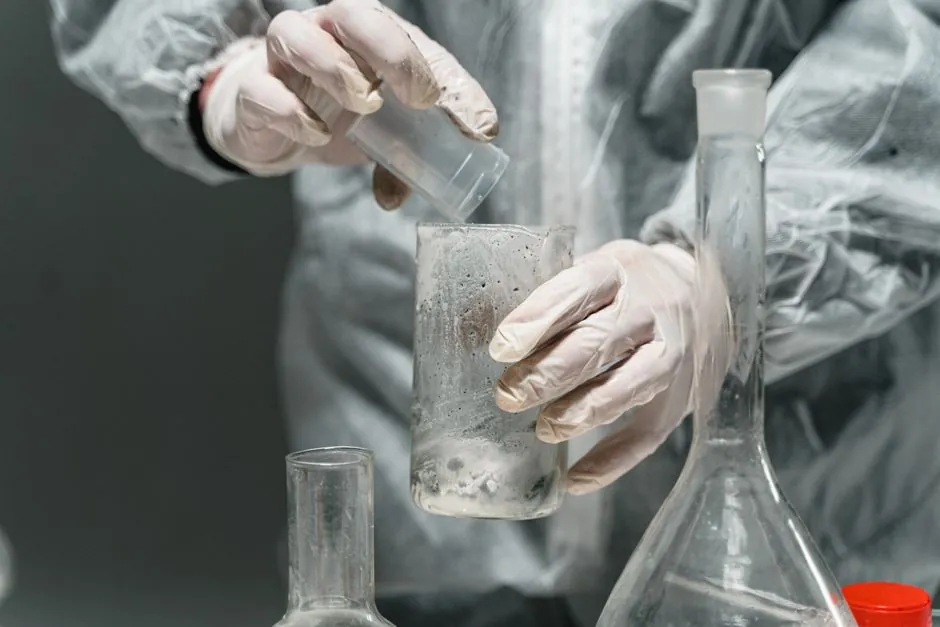
3M completed its exit from PFAS-related manufacturing at the end of 2025, ending supply of the Novec 7000-series fluids that anchored commercial two-phase immersion cooling deployments from roughly 2018 through 2022, and forcing a 2026 procurement rebuild across engineered fluorinated, hydrocarbon, ester, and water-glycol cold-plate chemistries [S2].
US data center operators now operate under EPA TSCA Section 8(a)(7) PFAS reporting, with the submission window delayed to a January 31, 2027 deadline after three extensions; state rules in New Jersey, Maine, Massachusetts, Minnesota, and Washington are adding overlapping disclosure obligations [S1].
Why Novec 7000-series dominated, and what changed
The Novec 7000 (34°C boil point), 7100 (61°C), 7200 (76°C), and 649 (49°C) fluids held an effective monopoly in commercial two-phase immersion tanks through 2022 because they combined low GWP relative to legacy HFCs, non-flammability, electrical inertness, and tunable boiling points matched to chip TDP profiles [S2]. 3M's December 2022 announcement cited the trajectory of PFAS regulation globally, not an immediate safety finding, and the company's internal modeling was overtaken as regulatory pressure accelerated through 2024 and 2025 [S2].
Two-phase immersion submerges hardware in a dielectric that absorbs heat, vaporises, and recondenses on tank-top coils, a topology that delivers high heat-transfer coefficients but is now stalled because viable non-PFAS two-phase fluids are not yet deployable at scale [S1][S4]. Schneider Electric guidance states two-phase immersion cooling is not recommended until non-PFAS fluids are developed, with flammability flagged as a primary screening criterion for any candidate chemistry [S5].
Four fluid families competing for 2026 immersion slots
Synthetic polyalphaolefin (PAO) dielectrics engineered for electronics immersion run $12-$18 per litre, deliver tighter viscosity specifications, and offer better low-temperature behaviour than legacy mineral oils, but they remain single-phase fluids without the latent heat of vaporisation that drove Novec adoption [S2]. Hydrocarbon fluids from ExxonMobil and Shell, bio-based liquids from Cargill, and fluorinated options from Chemours are all being qualified with equipment suppliers, and some already have commercial sales into data center immersion tanks [S4].
Synthetic ester dielectrics and water-based cold-plate loops round out the candidate set; Perstorp markets PFAS-free synthetic cooling fluids engineered for both immersion and cold-plate duty, and ExxonMobil/Shell hydrocarbon offerings target the same single-phase immersion niche [S3][S4]. The price spread across the four families is wide, and none is a drop-in replacement for every Novec role, particularly the two-phase tanks designed around a ~49°C saturation point [S2].
Single-phase DTC now dominates, with water-glycol as the working fluid

Single-phase direct-to-chip (DTC) cooling held a 55% share of the liquid cooling market in 2026, and the working fluid is typically a 75% water / 25% glycol blend circulated in a closed loop from the technology cooling system (TCS) to a coolant distribution unit (CDU) that rejects heat to the facility water system (FWS) [S1]. A CDU relies on a stable power supply and, in larger builds, an industrial UPS to ride through chiller or pump faults; this is the same topology used in many process-plant control rooms, and the reliability engineering transfers directly.
DTC sidesteps the PFAS reporting question entirely because the dielectric is water-glycol, and it benefits from Nvidia's endorsement, which gave direct-to-chip a head start over full immersion in the AI/HPC segment [S1][S4]. Schneider Electric frames single-phase DTC as the most sustainability-attractive liquid cooling option available to data center operators in 2026 [S1].
Cost, qualification, and supply-side constraints
PAO dielectrics at $12-$18/L materially exceed legacy Novec pricing in some SKUs, and high qualification costs plus limited PFAS-free supply are constraining adoption of single-phase dielectric immersion fluids broadly, per Fact.MR market analysis [S2][S7]. OEM testing of new hydrocarbon and ester candidates against server plastics, seal elastomers, and board conformal coatings typically runs 6-12 months before a fluid clears a hyperscale qualification, which is one reason two-phase deployment has stalled even where the heat-transfer physics remain attractive [S2][S4].
Regulatory exposure is layered: TSCA Section 8(a)(7) reporting, state PFAS rules, and the structural PFAS definition that captures fluorinated immersion fluids, so operators holding legacy Novec inventory should plan for disclosure once the EPA window opens [S1][S2]. Chemours, ExxonMobil, Shell, and Cargill are the named suppliers with active data center immersion programs, and Iceotope is among the system integrators developing immersion tanks around the new fluid menu [S4].
Selection criteria for 2026 fluid specification
Engineers selecting a dielectric in 2026 should score candidates on four axes: PFAS posture, dielectric strength, material compatibility with board polymers and elastomers, and the gap between fluid boiling point and chip cold-plate temperature in two-phase designs [S2][S5]. For two-phase tanks the ~49°C saturation target is the hardest constraint to meet without a fluorinated chemistry, and flammability must be screened against the data center's fire-protection basis [S2][S5].
For single-phase immersion, PAO and synthetic ester chemistries score well on dielectric strength and material compatibility, but cost per litre and viscosity at low temperature are the dominant trade-offs against water-glycol DTC, which remains the lowest-cost and lowest-regulatory-risk path for new AI/HPC builds [S1][S2]. Operators running a mix of AI training and general compute should consider whether their switching power supply bus architectures tolerate the elevated coolant temperatures of a single-phase immersion loop, since a 10-15°C delta in inlet temperature can shift PSU efficiency by roughly 0.5-1.0 percentage points.
What is missing, and what to track next
Non-PFAS two-phase fluids are the single biggest open gap, with Schneider Electric and Microsoft researchers both flagging that two-phase immersion chemistries are PFAS by current definitions, and no deployable at-scale alternative has cleared qualification as of mid-2026 [S5][S6]. A related coverage thread on the broader industrial cooling equipment ecosystem, including boiler bimetal thermometer dial sizing for facility heat-rejection loops, speaks to the same engineering discipline now being applied to data center coolant systems.
Three signals are worth watching: EPA's finalised revised TSCA Section 8(a)(7) reporting rule, the first commercial deployment of a non-PFAS two-phase fluid at hyperscale, and any state-level PFAS ban that captures data center cooling under use restrictions rather than reporting only [S1][S2]. The TSCA reporting deadline of January 31, 2027 will force inventory disclosure regardless of whether bans land, and that disclosure data will be the first hard indicator of how much legacy Novec-equivalent fluid remains deployed across the US fleet [S1].