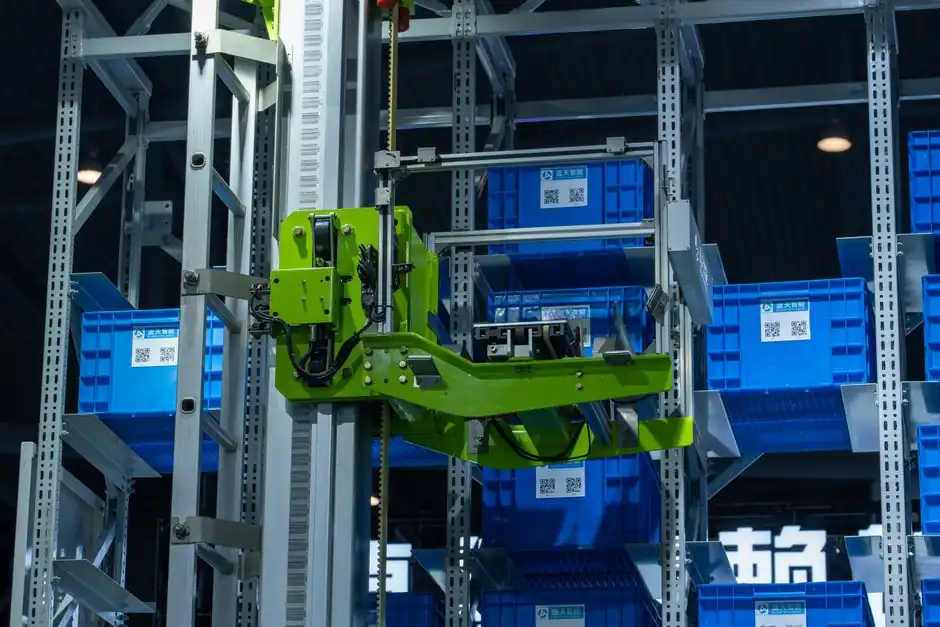
2026 order picker builds converge on two non-negotiable specs: factory-integrated lithium-ion battery packs and OEM telematics modules, with Toyota, Jungheinrich, Hangcha and TCM all listing both as standard equipment on current narrow-aisle and medium-level models [S1][S2][S3][S4].
Lithium iron phosphate (LiFePO4) chemistry dominates the 2026 electric order picker segment because it accepts opportunity charging during breaks, ships with an integrated BMS, and clears the 8 to 10 hour single-shift runtime window that most distribution centres demand [S3][S7].
Lithium-Ion Pack Sizing: 36V Class, 3,000 lb Capacity, AC Drive
Hangcha's 36V Li-ion narrow-aisle high-level order picker carries a 3,000 lb rated load, runs a brushless AC drive motor at a 7.5 mph maximum laden travel speed, and pairs the pack with a CURTIS AC control system over a CANBUS backbone for sub-system comms [S3].
Jungheinrich's EKS series is documented at up to 20% lower energy consumption versus prior lead-acid builds, with opportunity charging treated as a baseline operating mode rather than an optional extra on multi-shift sites [S4]. The reference order picker class definition in our equipment index now lists LiFePO4 as the default chemistry for 2026 production.
Integration depth matters: the Hangcha BMS monitors state-of-charge, cell balancing and fault codes continuously, while the rear-mounted emergency manual lowering valve lets technicians bleed the hydraulic cab down if the electric system fails [S3].
Telematics as Standard, Not an Aftermarket Add-On
By 2026, telematics integration is expected to be a standard feature on most forklift and order picker models, with the data feed covering operating hours, fault codes, location, battery health, driving patterns, and even tyre wear for predictive maintenance scheduling [S2].
Toyota's MyInsights telematics platform is built into the Order Picker product page itself, with fleet dashboards, parts quoting, and operator reporting all wired into the same data stream as the construction machinery and equipment telematics modules that share a common cloud backbone [S1].
Predictive analytics is the differentiator: early telematics only logged hours and fault codes, whereas 2026 platforms run machine-learning models on driving patterns, battery health, and tyre wear to flag component replacement before a downtime event [S2].
Safety Stack That Comes with the 2026 Build Sheet
Standard safety hardware on 2026 medium and high-level order pickers is substantial: full-body harness, left/right guardrails with detection switches that prevent travel unless locked, a 10x-strength mast chain with safety switch, a mandatory safety pedal to enable motion, a tilt switch that disables lift past a set angle, and proportional speed reduction in corners [S3].
Hangcha's OPM05Li vertical stock picker adds a tilt sensor to prevent slope tip-over and speed controllers that auto-decelerate as the cab rises, layering height-aware travel speed control on top of the cornering logic [S8].
Travel speed is also gated by lift height: the higher the cab, the slower the travel and the gentler the acceleration, a logic rule coded directly into the intelligent driving deceleration system on the 36V Li-ion build [S3].
Operator Compartment and Ergonomics on Li-Ion Builds
Proportionally adjusted lift and lower speeds on the operator compartment, a multi-function instrument display, cushioning speed reduction at the top and bottom of the mast, a multi-layer damping pedal pad, and standard LED lights for dim-aisle picking are all fitted as baseline, not as options, on the 36V Li-ion order picker spec sheet [S3].
Reduced operator fatigue is a real selling point because the same cab can spend 8 to 10 hours in picking mode on a Li-ion single-charge cycle, and the damping pedal plus cushioned staging targets the cumulative vibration exposure that drives musculoskeletal injury claims [S1][S3].
Comparison: 2026 Order Picker Builds at a Glance
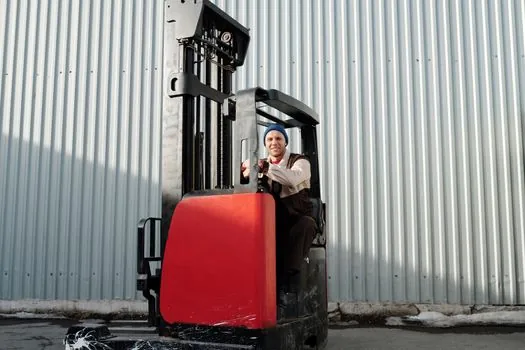
On four decision criteria the 2026 line-up lines up as follows: the Toyota Order Picker covers lift heights up to 390 inches with cushioned mast staging and variable lift/lower [S1]; the Jungheinrich EKS targets up to 20% lower energy use with opportunity charging built in [S4]; the Hangcha 36V Li-ion model delivers a 3,000 lb capacity at 7.5 mph laden travel with a brushless AC drive and CANBUS wiring [S3]; the Hangcha OPM05Li vertical stock picker layers tilt and height-based speed control onto a more compact chassis for slot picking [S8].
All four share LiFePO4 packs, integrated BMS protection, brushless AC drive motors, and factory telematics. Differentiation sits in mast envelope, capacity class, and whether the speed-control logic is height-gated, slope-aware, or both [S1][S3][S4][S8].
Limitations and Sourcing Caveats
Runtime figures cited as 8 to 10 hours are vendor-side marketing claims, not third-party verified cycle data, and they depend on lift duty cycle, ambient temperature, and operator weight class [S7]. Cold-storage operation below 0 deg C can clip usable LiFePO4 capacity noticeably, and battery heater blankets remain a common retrofit on freezer-aisle fleets even in 2026 [S1].
Data on telematics adoption rates was not located in the research material beyond the qualitative 2026 standard-feature statement, so fleet penetration percentages should be treated as directional rather than measured [S2]. Order picker telematics also depends on the warehouse having stable Wi-Fi or cellular coverage at mast top-out, which older DCs frequently lack.
For broader fleet context, the battery-electric reefer and ULT freezer lead-time spec guide covers parallel charging-infrastructure constraints, and warehouse barcode scanning upgrades are documented in industrial barcode scanners for damaged and low-contrast codes, since picking accuracy and picker uptime are linked KPIs on Li-ion telematics dashboards.
The trackable 2026 signal to watch is BMS-firmware revision notes from the major order picker OEMs, because the BMS now governs opportunity-charge acceptance, telematics health reporting, and tilt/height interlocks from a single controller, and a firmware update can move runtime, charging curve, and fleet-data granularity in one release.
The underlying component specifications are covered under lamps and light fittings.