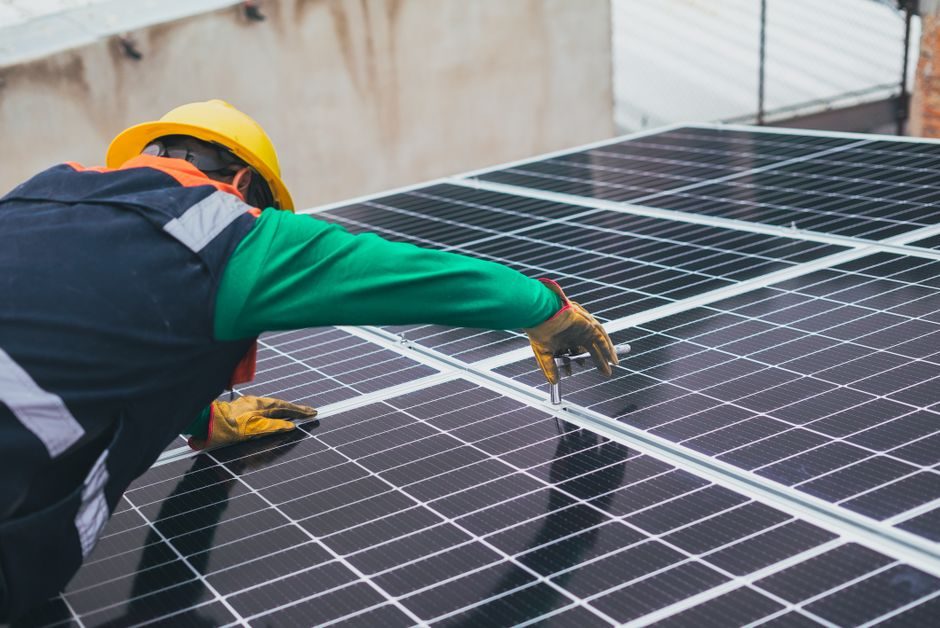
The solar cell value chain in 2026 still runs polysilicon → ingot/wafer → cell → module → BOS, but the spec bottlenecks have moved downstream into M10/M12 wafer formats, TOPCon and perovskite tandem R&D, and 1500 V DC balance-of-system design [S3].
Upstream cost-of-goods is dominated by metallurgical-grade Si purification and Cz/mono pull, while downstream margins now sit with module efficiency, bifaciality, 25-year power warranties and EPC integration at the GW scale [S1][S2].
Upstream: Polysilicon, Ingot and Wafer Texturing
Polysilicon supply still anchors upstream; the metal-assisted chemical etch (HF/AgNO3, 4–5 min) used to make black-Si nanopores 50–100 nm in diameter and 200–300 nm deep has demonstrated mean reflectance as low as 2% for crystalline Si and 4% for multicrystalline Si over 300–1000 nm, with no antireflective coating applied [S1]. A 156 mm × 156 mm black-etched m-Si wafer then converted at 11.5% as a primary cell, rising to 15.8% with a SiO2/SiNx bilayer passivation, proving that passivation — not just texturing — gates large-scale black-Si yield [S1].
On the wafer side, the M10 (182 mm) and M12 (210 mm) pseudo-square formats now define mono-c-Si capacity. For broader 2026 module price and tech-mix readouts, the Solar Cell 2026: Price Bands, Tech Mix and Sourcing Signals reference lays out the per-watt bands that procurement engineers are actually quoting this quarter.
Midstream: Cell Fabrication and TOPCon Repricing
Cell fab in 2026 is dominated by n-type TOPCon on M12 wafers, with p-type PERC holding residual lines; both share a passivation-heavy process flow where SiO2/SiNx stacks directly determine Voc and efficiency. The Solar Cell 2026: TOPCon M210 Reprices the Mono Supply Chain piece quantifies how M210 TOPCon has pulled mono-PERC pricing down and reset contract structures for module buyers. [S1]
Solar cell research at Suzhou University includes teams working on perovskite solar cells (钙钛矿太阳能电池) and CdTe solar cells (碲化镉太阳能电池), as well as a separate group focused on solar water splitting (光电化学水分解、光催化) [S3].
Downstream: Module, Inverter and BOS Integration
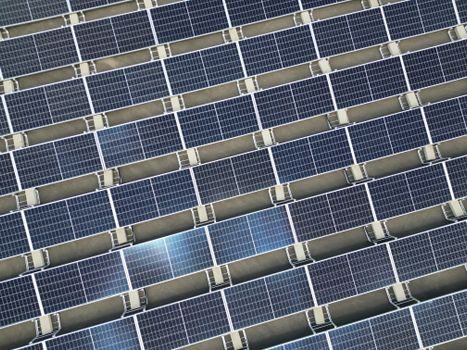
Module specs in 2026 are written around bifaciality factor (typically 0.7–0.9 for premium glass-glass mono), 30-year linear power warranty, and 1500 V DC system voltage; bifacial gain is what unlocked the recent utility-scale LCOE compression. The BOS leg — racking, DC cabling, combiner boxes, SCADA — is where the Top Solar Inverter Companies 2026: Specs, Sourcing and Selection reference earns its place, because string-vs-central inverter choice is now tightly coupled to MPPT channel count, Q at night, and grid-code ride-through. [S2]
EPC integration in fuel-station and industrial-rooftop segments is treated as a turnkey package: consultation, structural assessment, 1 MW+ rooftop permits, and inverter sizing are bundled by integrators such as IMI Industries, with floating-solar and bifacial EV-charger canopies now appearing in the same project pipeline as conventional gas-station work [S2].
Selection Criteria by Plant Type
Spec choice breaks cleanly along three buyer profiles. Utility-scale IPPs prioritize LCOE: TOPCon M12 bifacial modules paired with 1500 V central inverters, single-axis tracking, and DC/AC ratios near 1.3–1.4. C&I rooftops prioritize self-consumption and structural load: lighter mono-PERC glass-foil modules, 1100 V string inverters, and roof-anchor layouts that stay below the local dead-plus-live load limit. Off-grid / petrol-station microgrids prioritize resilience: bifacial modules, hybrid inverters with battery ports, and diesel-genset paralleling — the same segments served by IMI Industries' solar-rooftop and EV-charger canopies [S2].
For process engineers translating the above into sensor and instrument specs, pressure transmitter selection on the thermal-loop side and flow meter choice on the cooling-water side matter for any combined heat-and-power or tracker-hydraulic skid bolted to the PV plant.
Failure Modes and Engineering Constraints
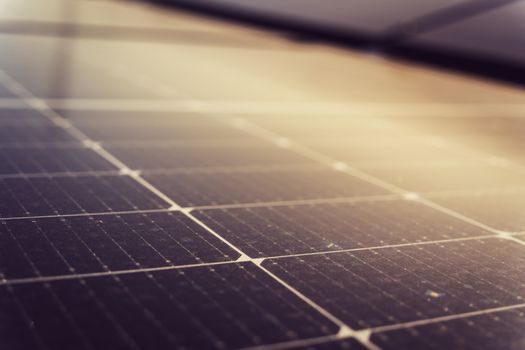
The structural failure modes are well documented: PID (potential-induced degradation) on 1500 V strings mitigated by anti-PID encapsulants and grounding; LeTID on p-type PERC, suppressed by current-assisted annealing; snail trails from backsheet EVA failures; hot spots from cell mismatch — each maps to a specific IEC 61215 / IEC 61730 test sequence that procurement should reference in the contract, not just in marketing. Microcrack propagation under tracker dynamic wind load is a separate BOS-level concern that has driven the move from 5BB to 9BB and now SMBB cell strings. [S3]
On the instrumentation layer, the load cell under each tracker row and the pressure sensor on the hydraulic slew drive are the points where vibration, IP66 ingress, and –40 °C cold-soak actually translate into warranty claims, which is why HALT-tested parts are now the default ask on tracker spec sheets.
Standards, Sourcing Signals and 2026 Trackers
The governing standards remain IEC 61215 (design qualification), IEC 61730 (safety), IEC 62804 (PID), UL 61730 for North America, and IEC 62446-3 for O&M documentation. For balance-of-plant, IEC 62109 governs inverter safety, IEEE 1547 governs grid interconnection, and NFPA 70 / NEC 690 covers rapid-shutdown requirements on rooftop builds. Sourcing signals worth tracking through the rest of 2026: published M12 TOPCon cell efficiencies above 25.0%, bifaciality guarantees above 0.85 on premium glass-glass modules, and any 1500 V central-inverter release that pushes Q-at-night below 50 W. [S4]
For EPCs sizing control valves on tracker hydraulics and for module-factory process engineers sizing chiller loops, industrial valve trim and load cell module choice are the most-overlooked downstream items that still drive field failure rates when the tracker commissioning checklist is sloppy.