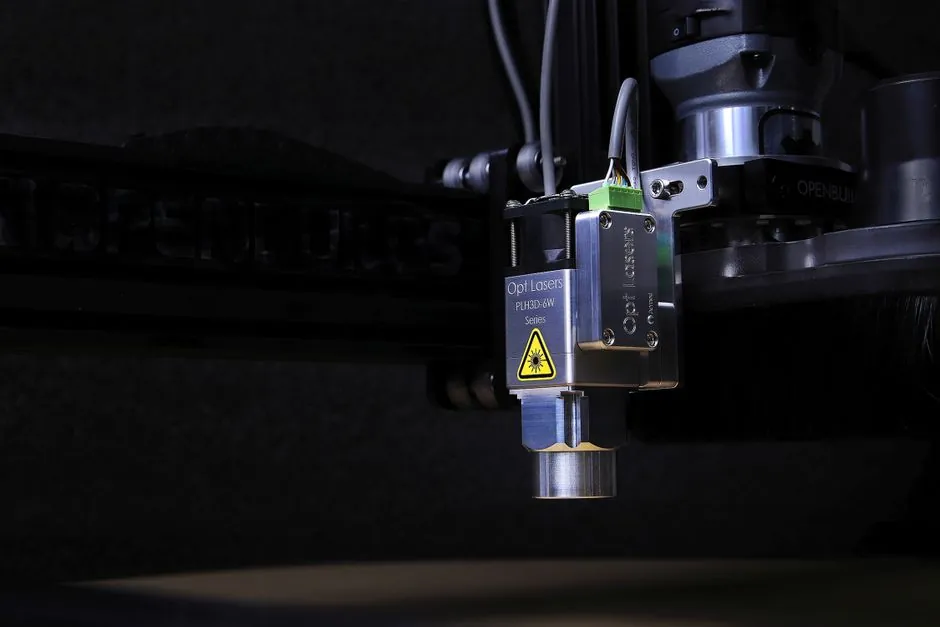
3x360-degree line lasers project one horizontal and two vertical planes simultaneously, covering all four walls plus floor and ceiling from a single tripod position, a configuration the DIY Chatroom upgrade thread identifies as decisive for whole-room layout [S2].
Cross-line lasers emit only one horizontal and one vertical beam onto a single work surface, limiting them to roughly 10-15 feet of usable horizontal reach before the line dims into invisibility, a limitation one Bosch GLL 30 S owner documented directly when planning an upgrade to a Dewalt DW089LG 3x360 unit at $439 versus the $339 DW088LG cross-line model [S2].
Beam Geometry and Working Coverage
Cross-line laser levels project perpendicular horizontal and vertical beams, while 360-degree models create full intersecting planes that wrap around the device, allowing simultaneous reference marks on opposite walls [S3]. The DeWalt DCLE34033D1 evaluated by Fine Homebuilding proved its value at distances up to 30 feet while installing doors, windows, and trim across multiple wall planes [S1]. For interior fit-out tasks like chair-rail height, drop-ceiling grid, and cabinet level lines, a 3x360 laser eliminates the repositioning step that cross-line units force on every wall change, a workflow advantage noted in the Engineer Supply construction laser guide for indoor applications including chair rails, wainscoting, and ceiling tiles [S4].
The Bob Vila 2026 test of 12 models confirms the geometric split: the Huepar HM03CG delivers 1 horizontal plus 2 vertical 360-degree planes, the Skil LL932201 emits a 360-degree cross-line on both axes, and the DeWalt DCLE34020G sticks to a single horizontal plus single vertical cross-line, no wraparound [S5].
Accuracy, Beam Color, and Visibility
Accuracy across the 2026 test cohort ranged from 1/9-inch at 33 feet (Huepar HM03CG, green) to 5/16-inch at 30 feet (Bosch GLL 30, red), with mid-pack units like the Klein Tools 93LCLS and DeWalt DCLE34020G landing at 3/32-inch and 1/8-inch respectively [S5]. Green beams are brighter and easier to see than red, while red beams are more budget-friendly, a trade-off that drives a roughly 1.5x to 2x price step between red and green variants of the same model class [S5]. Fine Homebuilding notes that green is easier for the human eye to see, but green lasers cost more to manufacture and draw battery power faster than red equivalents, a fact confirmed across all seven models tested in that 2024 review [S1].
For interior fit-out, ambient light control usually neutralizes the brightness gap, so a red cross-line remains viable for shaded basements or finished rooms with curtains drawn, while sunlit commercial interiors or open-plan residential spaces push the spec toward green 360 units [S1][S5].
Use-Case Fit Matrix for Interior Fit-Out
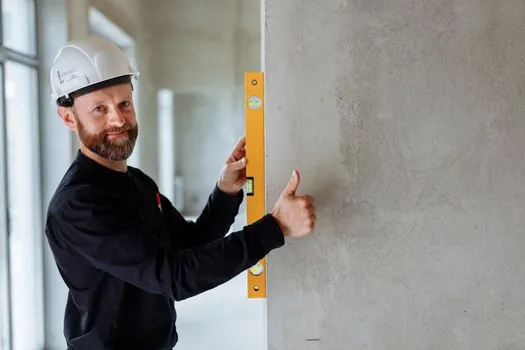
Single-wall tasks, hanging pictures, installing a single shelf run, aligning one door frame, suit a cross-line laser because the work area fits inside the two-plane fan, no extra coverage needed. Whole-room tasks, drop-ceiling grid layout across 20x30 feet, wainscoting height around four walls, kitchen cabinet level lines plus matching toe-kick, demand 360-degree planes, since relocating a cross-line unit mid-layout introduces cumulative error [S3][S4]. A representative spec-to-task matrix for interior fit-out:
Cross-line (e.g. Bosch GLL 30, 5/16-inch at 30 ft, red): single-wall trim, picture hanging, short shelf runs, budget under $80 [S5]. Cross-line green (e.g. DeWalt DCLE34020G, 1/8-inch at 30 ft): mid-range trim, tile layout, longer shelf runs, budget $200 to $400 [S5]. 3x360 green (e.g. Huepar HM03CG, 1/9-inch at 33 ft): whole-room fit-out, drop-ceiling grid, multi-wall cabinet runs, budget $300 to $500 [S5]. 3x360 red (e.g. Skil LL932201, 3/16-inch at 30 ft): shaded interior fit-out on a tighter budget, generally $100 to $200 less than green 360 equivalents [S5].
Power, Battery, and Mounting Practicalities
Many current lasers accept both a proprietary rechargeable pack and disposable alkaline batteries, and disposable batteries are quickly spent powering a green laser, so rechargeable is preferred for daily fit-out use [S1]. The DeWalt DW088LG and DW089LG both run on the standard Dewalt 12V lithium platform, a battery commonality that simplifies charger inventory for crews who already own Dewalt 12V tools, an upgrade rationale cited directly in the DIY Chatroom thread [S2]. Indoor mounting options for line lasers include a wall or ceiling bracket, a light-weight jamb-pole that extends floor to ceiling, or a tripod, with tripod mounting recommended for cabinet and chair-rail alignment [S4].
Self-leveling pendulums can be locked for diagonal layout of tile, coffered ceilings, and hardwood flooring, or when working in out-of-plumb or out-of-level conditions, a feature present on every laser in the Fine Homebuilding test [S1].
Limitations, Failure Modes, and Standards Caveats
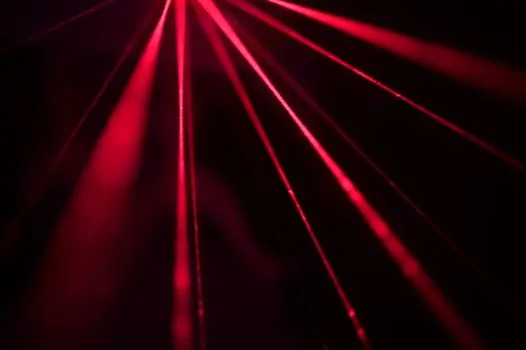
Red lasers are virtually unusable outside without a detector, so any interior fit-out task that extends through a door or window opening for exterior trim work must specify a green beam or carry a detector accessory [S1]. Battery run-time on green-beam units can be half that of red equivalents under continuous use, so a spare 12V pack or USB-C backup is a practical add-on for all-day fit-out shifts [S1]. Accuracy figures from manufacturer datasheets are typically specified at a reference distance, and real-world deviation grows with range; a 1/9-inch-at-33-feet spec does not guarantee the same tight tolerance at 60 feet without recalibration against a known benchmark [S5]. No published CSA, IEC, or ANSI standard governs consumer-grade line laser accuracy tolerances, so spec-sheet numbers from competing brands are not directly comparable without checking the test distance and ambient-light conditions used [S4][S5].
Sourcing and Total Cost of Ownership
The 2026 Bob Vila test priced the 3x360 green Huepar HM03CG as the best-overall value, the red 360 Skil LL932201 as best bang for the buck, and the DeWalt DCLE34020G cross-line as most durable, giving fit-out buyers three reference points across the $100 to $500 band [S5]. The DIY Chatroom comparison of the DeWalt DW088LG cross-line at $339 and the DW089LG 3x360 at $439 shows a $100 step between same-platform cross-line and 3x360 variants, a typical premium for the second and third 360-degree planes [S2]. For crews specifying equipment across multiple job sites, the cross-line to 3x360 price gap is often recovered inside one multi-room fit-out through eliminated repositioning and reduced cumulative error, a workflow case the encyclopedia laser level reference covers in the selection criteria section for interior layout tasks. Buyers should also weigh the cross-line versus 3x360 decision alongside adjacent tool specs such as the stud welder commissioning visual gate and bend test workflow when interior fit-out includes embedded anchor points for steel framing.
For interior fit-out work scheduled in the next 90 days, the spec watchpoints are: confirm beam color against ambient-light conditions, verify the manufacturer accuracy figure at the actual room diagonal distance, and price the 12V battery platform against existing tool inventory before locking the cross-line versus 3x360 decision.
Spec-level background on the components involved: laser marker, and laser profiler.