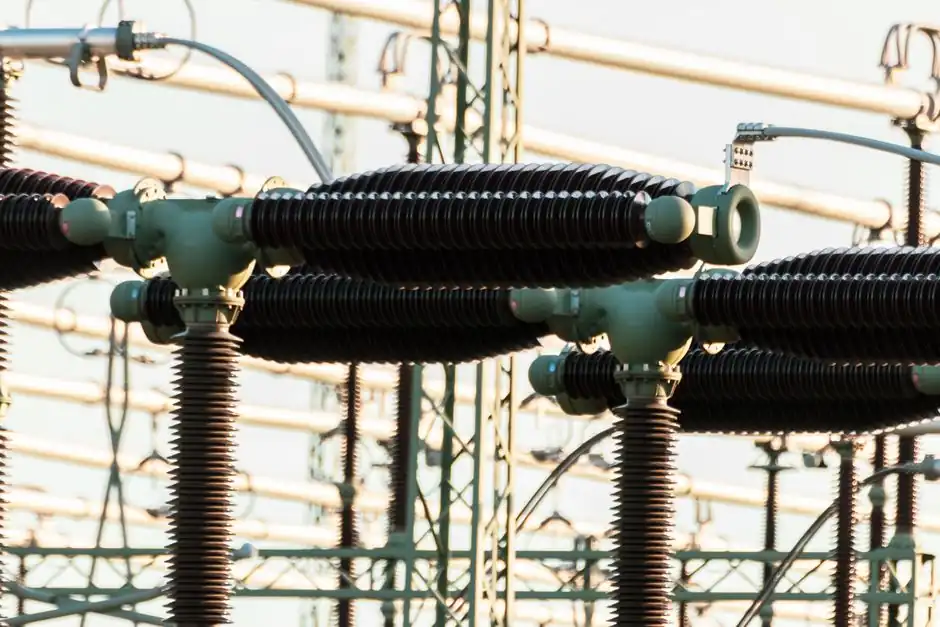
For a 2026 budget line item, a 1000 kVA 13.2 kV primary to 480Y/277 V secondary three-phase pad-mount transformer in the U.S. market spans roughly $25,000 to $70,000 for the bare oil-immersed unit, while turnkey biodegradable-fluid or copper-wind configurations list above $140,000 [S1][S3][S4].
The price spread is driven by fluid type (mineral oil vs. FR3/ester biodegradable), winding material (aluminum vs. copper), BIL rating (95 kV vs. 150 kV), tap configuration, accessories, and whether the unit is a stock build or engineered-to-order [S1][S3][S8]. U.S. utility-grade pad-mounts are commonly listed for both 13.2 kV and 13.8 kV primaries, with 480Y/277 V the dominant North American secondary for 1000 kVA service [S5][S7].
2026 Price Anchors from Active Listings
Four active manufacturer and dealer listings define the live 2026 range. Larson Electronics' MT-PML-R2-3P-DMQ-1MVA-YE-RT-DF-A6-BB-AZ-1ZZ-M1 lists at $141,607.54, with a 13200V Delta primary, 480Y/277V Wye secondary, 95 kV BIL, 5-position tap changer with two +/-2.5% taps above and two below, 65°C rise, KNAN cooling, 350 gallons of biodegradable cooling fluid, NEMA 3R tamperproof cabinet, and aluminum windings at approximately 8,200 lbs total weight [S1]. Bear Power Solutions' 1000 kVA 13200Y/7620 to 277/480 pad-mount is listed at $71,000.00 with a request-for-quote noted for updated pricing [S4].
Winley Electric publishes an OEM-style range of $5,000 to $150,000 for the same 13.2 kV to 0.48 kV pad-mount class, reflecting the wide spread between economy aluminum/mineral-oil builds and engineered copper/biodegradable units [S8]. Daelim's published buyer-guide range for a 1000 kVA pad-mount sits at $8,900 to $26,000, with a Daelim-branded set at $10,800 to $15,800, all aligned with ANSI/IEEE and CSA standards and full UL listing for the North American market [S3]. For a process engineer building a 2026 capital line, plan a base of $30,000 to $50,000 for a standard aluminum-wind, mineral-oil build, $60,000 to $80,000 for a UL-listed copper-wind build, and $120,000 to $150,000 for a sealed-tank biodegradable-fluid unit with full tap-changer and surge-arrestor package [S1][S3][S4][S8].
What Moves the Price: Spec Drivers and Their Dollar Impact
Five spec drivers account for nearly all the variance. Winding material is the largest: copper-wind 1000 kVA pad-mounts typically run 20-40% above aluminum equivalents because of copper conductor mass and the labor to wind it [S1][S3]. The Larson unit specifies aluminum windings, which is one reason the spec sheet reads as a base configuration with premium features [S1]. Insulation fluid is the second driver: mineral oil is the cheapest path, while FR3 or other biodegradable ester fluids add roughly 10-25% to fluid cost, plus the upgraded gaskets, valves, and labeling that the power transformer spec demands for sealed-tank construction [S1].
Tap changer and BIL rating are the third and fourth drivers. A 5-position tap changer (two +/-2.5% taps above and below) is essentially mandatory for utility feed at 13.2 kV because the medium-voltage network varies with load; 95 kV BIL is the standard insulation level for the 15 kV class, but projects in lightning-exposed regions sometimes spec 150 kV BIL with a corresponding cost adder [S1][S5]. Accessories and protection close out the drivers: dead-front vs. live-front, radial vs. loop feed, NEMA 3R tamperproof cabinet, surge arrestors on the primary side, pressure-relief valve, drain valve with sampler port, and analog gauges for liquid level, temperature, and pressure/vacuum all add incremental cost, and the absence of fans (KNAN-only) keeps the baseline simpler than a KNAN/KNAF forced-air build [S1].
Oil-Immersed vs. Dry-Type: Cost and Operating Trade-Off
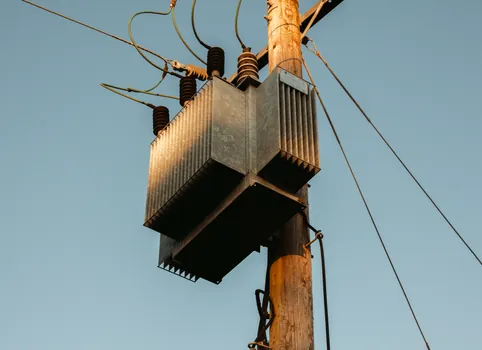
For a 1000 kVA 13.2 kV to 480 V step-down in an outdoor pad-mount configuration, oil-immersed is the default and lower-cost path, while dry-type is reserved for indoor or fire-sensitive sites where the oil hazard is unacceptable [S5]. Oil-immersed units carry slightly higher efficiency, lower noise, and the ability to be installed outdoors without a vault, but require periodic oil sampling, dissolved gas analysis, and fluid replacement on a multi-year cycle [S5].
For a process engineer sizing an outdoor industrial feeder (a common v-belt-driven plant, water treatment facility, or mining operation), the 1000 kVA oil-immersed pad-mount at 13.2 kV primary remains the cost-optimized default [S5][S7].
Standards, Compliance, and Certification Scope
Every credible U.S. 1000 kVA 13.2 kV pad-mount build references the same compliance stack. The Larson spec explicitly states conformance to NEMA, ANSI C57.12, ANSI/IEEE, and DOE 2016 efficiency standards, with 60 Hz operation, 65°C rise, and a NEMA 3R weatherproof enclosure [S1]. Daelim's published range is built to ANSI/IEEE and CSA standards with full UL listing, a baseline that satisfies both U.S. and Canadian utility interconnect requirements [S3]. The Energy Power Transformer reference adds IEC 60076 alongside IEEE C57 for Latin American projects, with Dyn11 vector group, 5-6% impedance, and 65/75°C temperature rise as the typical recommended values [S5].
Primary voltage options in active 2026 listings cluster at 12.47 kV, 13.2 kV, and 13.8 kV, with secondary at 480Y/277 V (the U.S./Canada standard) or 208Y/120 V for lighter commercial loads [S5][S7]. The 13200Y/7620 primary listed by Bear Power Solutions is the grounded-wye variant, which differs from the 13200 Delta primary in the Larson build; grounded-wye primaries are common in U.S. utility 4-wire systems because they limit line-to-ground fault current and coordinate with the utility's neutral grounding [S4][S5][S7].
Total Cost of Ownership: Beyond the Sticker Price
Purchase price is roughly 55-70% of a 2026 installed cost for a 1000 kVA pad-mount project.
Operating cost is dominated by no-load losses, which for a DOE 2016-compliant 1000 kVA unit are typically in the 1.5-2.5 kW range and load losses that scale with the load factor. At a 0.80 power factor and 70% loading, a 1000 kVA pad-mount delivers roughly 560 kW of real power, with annual energy losses in the 8,000-15,000 kWh band depending on efficiency tier [S1][S5]. Maintenance over a 25-30 year service life adds oil sampling every 1-2 years, periodic thermographic inspection of the electronic test points and bushings, and one major fluid reconditioning or replacement at year 15-20, all of which should be carried on the capital line as a multi-year reserve [S1][S5].
What to Verify Before Signing a 2026 PO
For a 2026 purchase order, lock four items in writing before release. First, the BIL and primary voltage configuration: 95 kV BIL at 13.2 kV Delta vs. 13.2 kV grounded-wye is not interchangeable, and the utility will reject the wrong one [S1][S4][S5]. Second, the fluid specification: mineral oil, FR3, or other biodegradable ester, with the supplier's fluid name, certification documentation, and PCB-free attestation [S1]. Third, the tap-changer range, which must cover the expected utility voltage variation, typically two +/-2.5% taps above and two below for a 13.2 kV primary [S1]. Fourth, the efficiency tier: DOE 2016 is the U.S. floor, and IEEE C57.12.00 or CSA C802.2 cover the Canadian and Latin American equivalents [S1][S3][S5].
For engineers building a global sourcing plan, the same 1000 kVA 13.2 kV to 480 V spec sourced from Asian OEM channels can land at the $5,000 to $15,000 mark on published ranges, but the freight, U.S.-side certification (UL listing or field evaluation by a Nationally Recognized Testing Laboratory), and warranty support frequently close the gap with the $30,000 to $70,000 domestic price band, especially when the spec requires copper windings, FR3 fluid, and 95 kV BIL [S3][S8]. Track the next two signals for budget refreshes: U.S. copper and GOES electrical-steel spot prices on the London Metal Exchange, and DOE 10 CFR 431 efficiency compliance milestones for distribution transformers, both of which move the 2027 list-price direction more than incremental spec changes.
This topic is covered further in How to choose safety shoes: a hazard-first spec workflow.