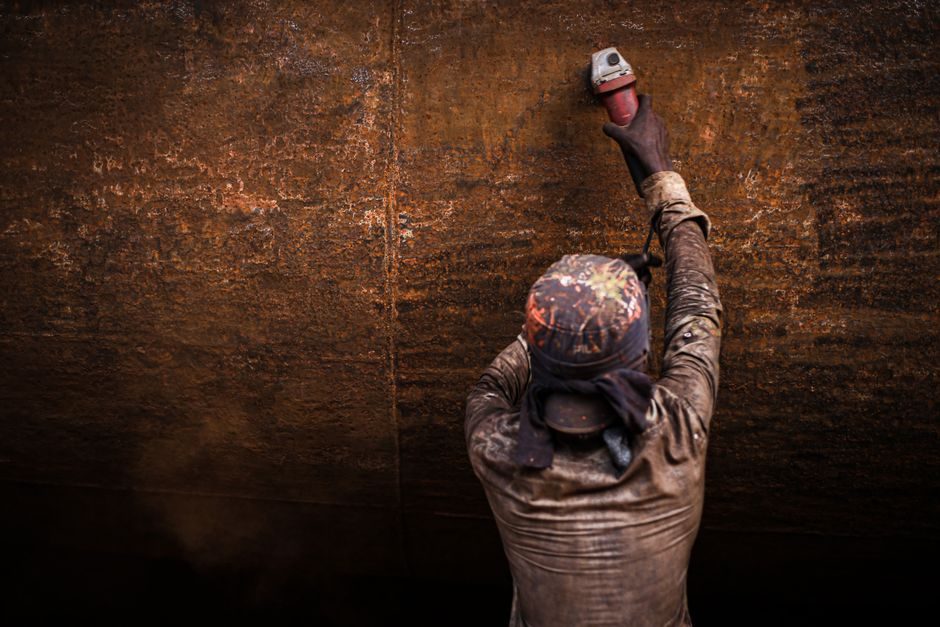
Global abrasives demand in 2026 is structurally tied to automotive paint preparation, aerospace blade finishing, and waterjet cutting, with the global abrasives market reaching USD 65.4 billion in 2024 and expanding further as vehicle production scales [S5]. For B2B buyers, the practical question is no longer whether to source coated or bonded abrasives, but how to map grain size, bond type, and abrasive mineral to a specific surface-finish requirement under current supply constraints.
Specification discipline in 2026 still rides on three documents: ANSI B74.12-2012 for macrogrit sizing in grinding wheels and general industrial use [S1], ISO 3310-1 for woven-wire test sieve construction in Europe, and ASTM E11 for U.S. woven-wire sieve tolerances [S3]. Aluminum oxide, silicon carbide, ceramic alumina, and diamond each occupy a different slot on the hardness-versus-friability curve, and procurement teams that fail to lock the grain size standard first end up re-qualifying batches on receipt.
Macrogrit Sizing: ANSI B74.12-2012 and the Rotap Calibration Anchor
ANSI B74.12-2012, the current U.S. national standard for the size of abrasive grain in grinding wheels, polishing, and general industrial uses, specifies a macrogrit band running from size 4 (coarsest) through size 220 to 240 (finest practical screen size) [S1]. For each nominal grit, the standard sets a maximum coarse limit and a minimum fine percentage, with the rule that no more than 3% of the abrasive by weight may be finer than the stated fine limit for most sizes [S3]. This dual-limit definition is what lets a procurement engineer reject a lot that "looks right" but actually carries excessive fines, which translates directly into surface roughness and wheel-loading problems on the shop floor.
Calibration of the Rotap-style sieve stack is itself a controlled artifact. Standard sand made from medium-density brown aluminum oxide is the reference media for sieve calibration under ANSI B74.12-2012, a choice that minimises shape and density variability when verifying that a test sieve still meets its opening tolerance [S1][S3]. European labs run the same workflow against ISO 3310-1 woven-wire tolerances rather than ASTM E11, and electroformed sieves are built to ASTM E161 while perforated plate sieves follow ASTM E323 or BS 140-1 [S3]. For buyers running cross-border QA, the standard-sand lot number and the sieve standard cited on the calibration certificate are the two fields that actually matter when an audit hits.
Material Selection Map: Aluminum Oxide, Silicon Carbide, Ceramic, and Diamond
Selection of abrasive mineral in 2026 remains a four-way decision driven by workpiece hardness, stock removal rate, and total cost per finished part. Aluminum oxide, the default workhorse for metalworking, woodworking, and automotive paint-prep, delivers high cutting efficiency but generates dust that drives extraction spec [S2]. Silicon carbide, harder and sharper, is specified for glass, ceramics, and stone, where its higher unit cost is offset by faster cutting on hard substrates [S2]. Ceramic alumina, with high thermal resistance and consistent performance, is the go-to for aerospace blades, automotive crankshafts, and premium tool-room wheels, accepting its brittleness as the price of long life [S2]. Diamond abrasives sit at the top of the hardness stack for precision grinding and polishing of carbide, stone, and advanced ceramics, where the high initial cost amortises over very long wheel life [S2].
A practical 2026 comparison lines the four families up against the criteria that drive a PO: typical surface roughness achievable, friability behaviour under heat, suitability for stainless versus carbon steel, and indicative cost per kilogram bracket. Conventional aluminum oxide wheels on stainless steel land in the rougher RA bands, while cotton-fiber and engineered ceramic wheels cut the RA values sharply as grain size tightens, with the 80-grit cotton-fiber band measuring 20-50 RA versus 65-175 RA for a conventional aluminum oxide wheel of the same nominal size [S4]. A Sigma Green engineered grain at nominal 60 grit reaches roughly 80 RA, illustrating the friability-driven RA compression that engineered grains deliver on stainless [S4].
Application Pull: Automotive, Aerospace, and Waterjet in 2026
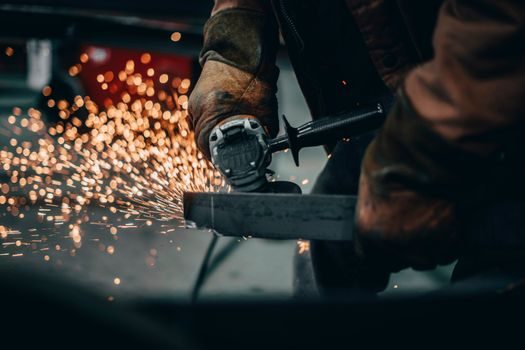
Automotive is the single largest end-market driver in 2026, with paint removal and surface smoothing on EV body lines absorbing a disproportionate share of coated-abrasive and non-woven disc volume [S2][S5]. The application is critical for the flawless finish consumers now expect, and European OEMs in particular are pushing environmental compliance on dust, water usage, and phenolic-bond off-gassing into the abrasive specification itself [S2]. Aerospace turbine blade finishing, a smaller-volume but higher-margin segment, runs on ceramic alumina and diamond belts with tight RA caps that buyers verify with Mahr Federal or equivalent profilometers per batch.
Waterjet cutting pulls garnet abrasive at industrial scale, where the natural-mineral, non-toxic profile of garnet fits sandblasting and waterjet booths that face dust-emission rules [S2]. Garnet is less durable than synthetic options, which translates into higher consumption rates per cut metre, so the procurement question is whether local garnet supply is reliable enough to accept the lower durability in exchange for simpler waste handling. For a related angle on how raw-material flow is rippling through 2026 B2B sourcing, see the aluminum ingot supply analysis, since aluminum oxide producers consume both aluminum and electrical energy in tonnage.
Standards Stack Buyers Should Cite on the PO
For stainless and other corrosion-resistant alloys, abrasive lots that will contact the workpiece should be checked for chloride and sulfur contamination, and the same lot should carry a certificate of conformity with the Rotap calibration traceable to the standard-sand reference [S1][S3].
For bonded wheels going into ATEX-classified grinding booths, the bond specification and maximum operating speed are dictated by ISO 525 and the wheel-marking system, while the dust-extraction interface downstream of the abrasive point falls under the same plant safety envelope covered in our construction-site oxygen detector spec map when grinding occurs inside confined-space tanks. Buyers specifying non-woven convolute wheels for satin finishing should additionally pull the surface-finish data sheet and the bulk-density figure, since engineered grains with controlled friability behave very differently from fused aluminum oxide in RA-band testing [S4].
Failure Modes and Constraints Buyers Hit in 2026
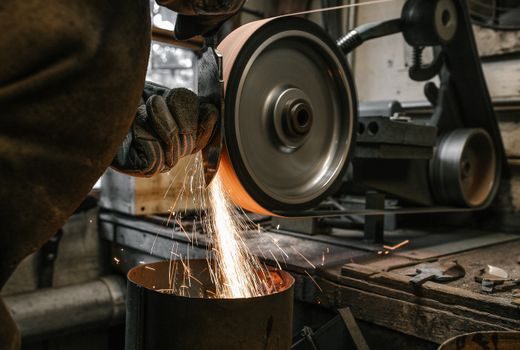
The three failure modes that show up in 2026 incoming-QA rejects are: oversized coarse particles slipping through a worn sieve (caught by re-screening against a certified sieve), excessive fines below the 3% limit under ANSI B74.12-2012 (caught by Rotap residue weighing), and bond inconsistency on resin-bonded discs that causes edge break-out on the first part [S1][S3]. Each of these is a paperwork-and-traceability failure before it is a metal-removal failure, so the corrective action is a tighter certificate-of-conformity loop rather than a different abrasive.
Supply-side constraints continue to bite on aluminum and silicon carbide feedstock, and waterjet-grade garnet logistics remain tight on trans-Pacific lanes. The relevant pricing context for downstream process engineers running grinding cells inside a controlled plant is captured in the industrial coatings 2026 sourcing map, where resin and abrasive feedstock inflation move on overlapping curves. For buyers that need to cross-reference abrasive specification against a broader 2026 raw-material grade map, the carbon steel selection guide is a useful counterweight on the workpiece side.
Trackable Signals to Watch Through the Rest of 2026
national standard) [S1], and the quarterly movement of the global abrasives market value relative to the USD 65.4 billion 2024 baseline [S5]. Monitoring both signals, alongside ISO 3310-1 sieve-cert renewal dates, gives a procurement team a defensible trigger list for re-bid events through 2026.
Spec-level background on the components involved: pressure transmitter, flow meter, and industrial valve.