
Eight 2026-vintage market research releases put the 2025-2026 abrasives market size between USD 44.71 billion and USD 58.3 billion, with the most-cited Mordor Intelligence baseline at USD 49.58 billion in 2025 and USD 52.06 billion in 2026 [S1][S2][S5][S6].
Forecast CAGR across the same cohort spans 4.3% (FMI, 2026-2036) to 7.5% (Research and Markets, 2026-2030), with the median sitting near 5.0-5.6% and terminal values ranging from USD 66.42 billion (2031, Mordor) to USD 85.2 billion (2036, FMI) [S1][S2][S3][S5][S6].
Synthetic Grains and Bonded Wheels Dominate the Mix
Synthetic raw materials captured 66.35% of 2025 global abrasives revenue and are projected to grow at 5.74% CAGR through 2031, per Mordor's segmentation; FMI's parallel read puts synthetic share at ~66% in 2026 [S1][S2]. Aluminum oxide led the abrasive-grain breakdown at 39.10% of 2025 market size, with silicon carbide tracking a 5.49% CAGR through 2031 [S1].
Bonded abrasives held 47.55% revenue share in 2025 (Mordor) and ~49% in 2026 (FMI), reflecting their role as the workhorse format for heavy grinding and industrial cutting [S1][S2]. Coated abrasives posted the fastest type-level growth at 5.46% CAGR to 2031, consistent with finishing and surface-prep demand from sheet-metal fab and woodworking lines [S1]. Super-abrasives (CBN and diamond) remain a smaller but higher-margin slice, driven by hard-alloy and additive-manufacturing post-processing, with the additive-manufacturing driver alone contributing an estimated +0.60% to Mordor's headline CAGR [S1].
End-Use Demand Centers: Auto, Aerospace, Electronics
Automotive and aerospace combined represented 28.65% of 2025 abrasives demand, while electronics and semiconductors are forecast at the fastest end-user CAGR of 5.88% through 2031 [S1]. Mordor attributes the largest single positive CAGR impact—+1.40%—to aerospace and automotive uptake, followed by metal manufacturing and fabrication at +1.20% and CNC/precision machinery adoption at +1.10% [S1].
EV drivetrain machining is the recurring use case: Tier-1 suppliers are specifying vitrified CBN and ceramic-bonded wheels for E-Axle, rotor-shaft, and battery-housing lines to hold tolerance and extend dresser intervals [S1]. Aerospace alloy work (titanium, Inconel, hardened stainless) keeps diamond and CBN wheels in the spec sheet for high-speed material removal, while wafer polishing and micro-finishing in semiconductor back-end pull fine-grade synthetic grains at sub-micron tolerances [S1][S2]. The abrasives market is a downstream input to pressure transmitter and flow meter machining lines, where surface-finish repeatability on hydraulic manifolds and orifice plates is now specified at the wheel-grade level rather than left to operator discretion.
Regional Distribution: Asia-Pacific Above 55%
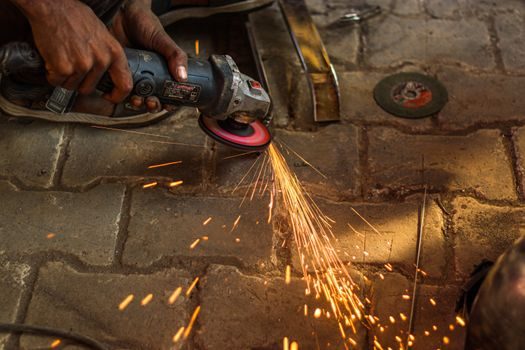
Asia-Pacific commanded 55.40% of global abrasives revenue in 2025 and is forecast at 6.24% CAGR through 2031—the fastest regional rate in the Mordor dataset [S1]. FMI concurs that Asia-Pacific is the largest regional concentration, driven by manufacturing base depth and export-oriented industrial structure in China, India, Japan, South Korea, and Southeast Asia [S2].
SNS Insider's February 2026 release values the U.S. market at USD 7.76 billion in 2025, anchoring North America as a meaningful but secondary region behind Asia-Pacific [S5]. The comparable regional pattern holds for adjacent industrial inputs—see Aluminum Ingot Suppliers 2026 for the upstream alumina/bauxite flow that feeds aluminum-oxide grain production, and Top Industrial Coatings Companies 2026 for the downstream surface-finish value chain that consumes those abrasives.
Specification Levers Buyers Actually Move
Buyers differentiate on four technical axes: grain type (aluminum oxide for ferrous, silicon carbide for non-ferrous and stone, ceramic alumina for high-pressure CNC, CBN/diamond for hardened alloys and carbide), bond system (vitrified for high-speed precision, resin for stock removal, metal for super-abrasive durability), grade/hardness letter, and structure (open vs. dense, controlling chip clearance and heat dissipation) [S1][S2].
Mordor's commentary links Norton Abrasives' reported scrap-rate reductions to pairing diamond tooling with automated load-sensing systems—evidence that the production-economics case for premium wheels now depends on closed-loop dressing and force feedback, not just grain chemistry [S1]. FMI's analyst view reinforces the same direction: Nikhil Kaitwade, Principal Consultant for Chemicals and Materials at Future Market Insights, states, "Abrasives will remain a volume-driven industrial input market, but value creation will shift toward engineered synthetic grains and application-specific bonded systems that deliver measurable productivity gains for OEM buyers" [S2].
Cost and Supply Risks: Bauxite, Alumina, Energy

Aluminum-oxide grain pricing tracks fused alumina and bauxite input costs, both flagged by FMI as margin headwinds for abrasive producers [S2]. The same volatility bleeds into bonded-wheel manufacturing where resin, vitrified ceramic bonds, and energy for high-temperature firing all sit on the cost stack.
Regulatory pressure on particulates and volatile organic compounds is pushing incumbents toward eco-friendly chemistries and bonded systems that reduce airborne dust and coolant load [S1]. For procurement teams spec'ing into metal-fab and industrial valve machining cells, the practical read-across is to lock multi-year supply on premium ceramic and CBN grades while leaving commodity aluminum-oxide spot-buying, since premium-grade price stability is higher than commodity-grain price stability in the published research.
Forecast Spread: Why the Numbers Diverge
The 4.3% to 7.5% CAGR spread across the eight reports is driven by three structural differences, not data error: terminal year (2030 vs. 2033 vs. 2035 vs. 2036), segmentation depth (Mordor and FMI split by raw material, type, grain, end user, and region; Precedence and Vantage use broader groupings), and methodology (bottom-up volume × price vs. top-down revenue reconciliation) [S1][S2][S3][S4][S6].
Precedence Research targets USD 74.99 billion by 2035, Vantage Market Research USD 82.4 billion by 2035, and SNS Insider USD 69.05 billion by 2033—all bracketing the Mordor USD 66.42 billion (2031) figure when normalized to a common terminal year [S1][S4][S5][S6][S7]. FMI's USD 85.2 billion (2036) is the most aggressive of the 2035-2036 endpoints, reflecting its longer forecast window rather than a higher annual growth rate [S2]. The practical takeaway for capital planners: use the median CAGR (~5.0-5.5%) for capacity decisions and stress-test the bookends.
Adjacent Demand: Construction, Electronics, Additive Manufacturing
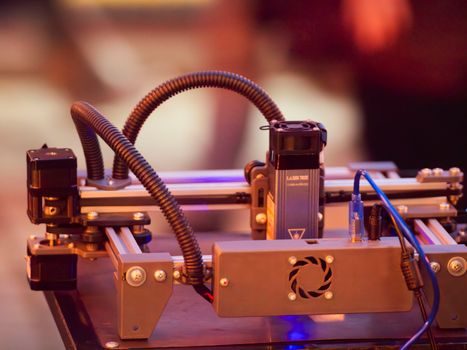
Beyond the auto/aero core, three adjacent demand vectors are flagged across the 2026 research set: infrastructure and commercial construction driving grinding and cutting disc consumption (FMI), electronics miniaturization pulling fine-grade synthetic grains for wafer and substrate finishing (Research and Markets, FMI), and additive-manufacturing post-processing requiring diamond and CBN super-abrasives for as-printed surface correction (Mordor) [S1][S2][S3].
Construction-side demand is the most cyclical and links directly to the Rebar Supply Shortage 2026 and ALC Wall Panel Price 2026 procurement stories, where cutting and surface-prep abrasive consumption scales with structural-steel and panel throughput. For plants adding PLC-controlled grinding cells or servo motor-driven dressers, the abrasive specification is now a controls-loop variable, not a static consumable.
Track the following 2026-2027 signals: (1) any revision to the Mordor 2026 baseline of USD 52.06 billion or the FMI 2026 baseline of USD 58.3 billion when the next update window opens; (2) Asian regional capacity announcements for fused alumina and silicon carbide, which will move the bauxite/alumina cost stack FMI flagged as the primary margin risk; (3) OEM disclosures of CBN and diamond wheel consumption per EV drivetrain, which will validate or downgrade the +1.40% aerospace/auto CAGR impact Mordor attributes to its headline forecast [S1][S2].