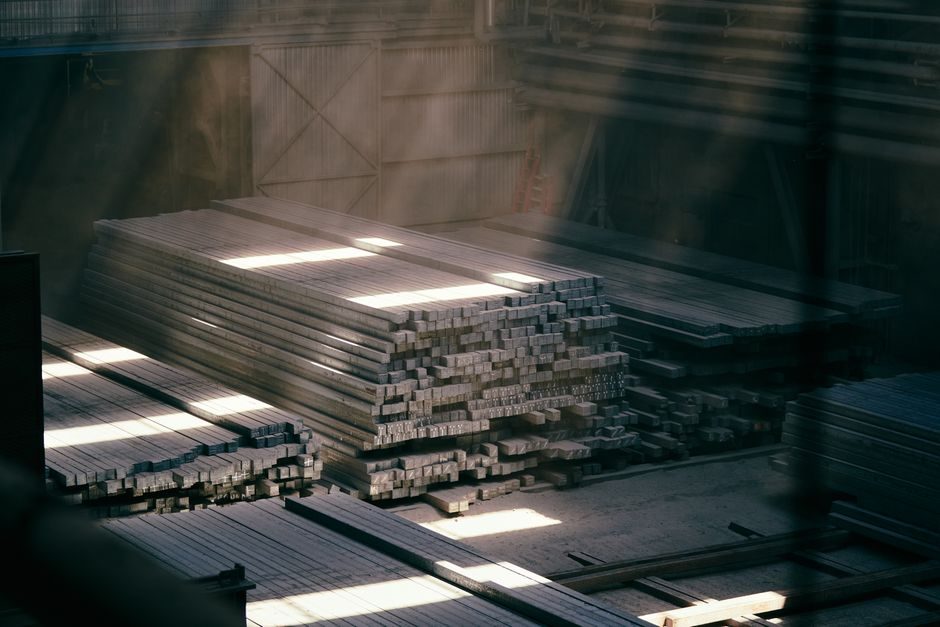
Chinese rebar futures on the Shanghai Futures Exchange closed 2.2% higher on 2016-10-21 after coking coal prices spiked as much as 45% since September that year, with iron ore for Tianjin port at US$58/ton and Dalian iron ore futures at 437.5 yuan (US$64.95)/ton [S3].
By June 2026, Shandong-export black rebar conforming to BS4449 420s/500s was listed at US$418.00-436.00 per ton on a 2-ton minimum order quantity, the price band that procurement teams should anchor against when validating spot quotes [S4].
Price and Inventory Trigger Points That Define a Rebar Shortage
A rebar shortage is not declared on headline news — it shows up in three numeric signals: a sharp move in coking coal (the dominant iron-and-steel cost driver), a simultaneous rebar-futures rally, and tightening delivery dates from mills. The reference event saw coking coal up 45% in roughly six weeks, rebar futures up 2.2% intraday, and Chinese analysts explicitly attributing the move to a severe shortage of coal and coke [S3]. For procurement, the threshold to escalate is any combination of a coking-coal swing of more than 30% in a quarter plus a rebar-futures week-on-week move above 2% with a backed-up mill queue.
Iron-ore cost is the second gate. Dalian iron-ore futures at 437.5 yuan/ton and Tianjin-port iron ore at US$58/ton show that raw-material cost can move without immediate mill-price relief because finished-steel contracts are typically priced monthly, not spot [S3]. Sourcing teams should track iron-ore alongside coking coal: when both are rising simultaneously for more than four consecutive weeks, expect an additional 5-10% rebar offer in the next mill cycle. A useful operational reference for downstream processing is the rebar bender capacity map, since field-bending capacity decides how much stockpile a contractor can absorb per shift.
Specification Risk: What A615, BS4449, and 420s/500s Mean for Procurement
ASTM A615 Grade 60 remains the workhorse spec for US reinforced concrete, with Grade 40 covering lighter-duty and A706 covering weldable applications, and the rebar size range running #3 (10 mm) through #18 (57 mm) [S7]. Chinese exporters frequently dual-list to BS4449 420s/500s, where 420 MPa yield is roughly equivalent to Grade 60 and 500 MPa yield maps to Grade 75 territory [S4]. The phrase "Black Steel Rebar for Bridge Building" in the same listing confirms that mill-quoted tonnage is mill-finish, not epoxy-coated, which materially affects corrosion allowance on coastal and de-icing-salt projects.
For project engineers, the spec table below summarises the most common short-supply rebar grades and their decision criteria:
<strong>ASTM A615 Grade 40</strong> — 40 ksi (280 MPa) yield, low-seismic, light residential; cheapest but limited to non-structural cores; expect tight supply when housing starts spike [S7].
<strong>ASTM A615 Grade 60</strong> — 60 ksi (420 MPa) yield, the dominant US structural spec; highest volume but also first to be allocated when mills prioritize [S7].
<strong>ASTM A706</strong> — weldable, low-carbon-equivalent, specified for seismic moment frames and bridge columns; lead times can extend 8-12 weeks in shortage conditions [S7].
<strong>BS4449 500s</strong> — 500 MPa yield, ductility class B; common in Middle East and African projects, exported heavily from Chinese mills, MOQ typically 2 tons [S4].
Sourcing Channels and Stockpile Math for the Next 90 Days
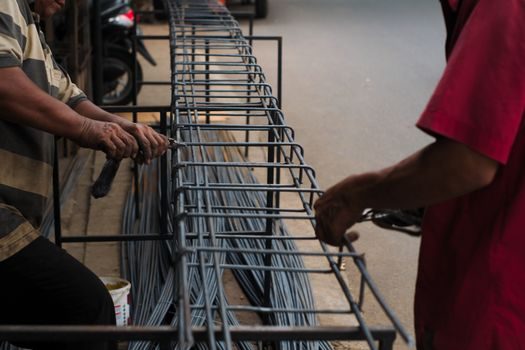
North American projects typically route rebar through service centres and rebar fabricators rather than direct mill buys. Superior Supply & Steel publicly carries 100,000+ tons of inventory across Gulf Coast locations in Sulphur, Lake Charles, New Iberia, Houma and Beaumont, with its own truck fleet for delivery control [S2]. Eaton Steel Bar Company positions itself as a hot-rolled and cold-drawn special-bar-quality distributor with a downloadable material handbook for spec verification [S5]. Harris Supply Solutions covers rebar sizes #3 through #18, epoxy-coated rebar, A615 Grade 40 / Grade 60, A706, and coiled/spooled rebar — the broadest rebar-only catalogue of the three [S7].
On the mill-direct side, Made-in-China listings show MOQ of 2 tons for BS4449 rebar at US$418-436/ton, which is the realistic landed-cost reference for procurement officers comparing service-centre quotes against import offers [S4]. The decision logic: if service-centre stock is available with delivery in under 14 days, accept a 6-10% premium over import landed cost; if mill queue is longer than 6 weeks, lock import tonnage at MOQ and budget an extra 4-6 weeks for customs, port handling, and galvanic-touch-up. The rebar coupler spec guide is a useful checklist when imported bar diameter or thread pattern does not match the original spec, since coupler selection decides whether you can splice the two batches without redesigning the cage.
Failure Modes and Constraints When Supply Tightens
Three failure modes repeat in documented rebar-shortage cycles. First, grade substitution: contractors accept Grade 40 in place of Grade 60 to keep schedule, which fails ACI 318 seismic-detailing requirements in moderate-to-high seismic zones — a non-recoverable design compromise. Second, diameter substitution: #5 rebar is replaced with #4 doubled, which changes development length and splice length per ACI 318 Section 25.4 — a rebar detailer must redraw, not just reorder. Third, mill substitution: imports arrive to BS4449 500s but project spec calls for A615 Grade 60; the chemistries are close but not identical, and the engineer's spec should be revised in writing, not papered over. [S7]
Logistics constraints compound the risk. Coking-coal and iron-ore tightness typically precedes finished-rebar tightness by 4-8 weeks, because blast-furnace throughput and casting capacity create a lag [S3]. Wabash Steel Supply and similar regional distributors can backstop small-quantity orders but typically do not stock full size ranges, so they cannot cover a mid-project re-spec [S6]. Specialty saws and band-saw blades from suppliers like Dallas Saw & Supply become a downstream-bottleneck issue when fabricators cut smaller rebar runs and need new tooling, adding 3-5 days per blade change [S8].
How to Specify a Stockpile and the Decision Gates That Protect Schedule

The minimum data points any buyer should pin down before signing a shortage-period rebar PO: grade (ASTM A615 Gr 40/60, A706, BS4449 500s), size (#3 to #18), finish (black, epoxy-coated, galvanised), MOQ (2-ton for Chinese mill-direct, often 20-25 ton for service-centre drops), and an explicit delivery-date clause with liquidated-damages language [S4][S7]. A second-tier gate is the traceability document: mill test report per heat, country of origin, and any dual-certification (e.g. A615 + BS4449) that allows the bar to be used in two project phases without re-tagging.
A 90-day stockpile math for a mid-size structural project (e.g. 800 tons of rebar over six months) is straightforward: target 35% buffer (280 tons) at contract signing, accept 3-5% over-allocation for cut-off and waste, and re-quote at the 60% draw-down mark to ride the next mill cycle. The underlying rebar reference covers mechanical properties and bend/test requirements; pair it with the rebar bender page to verify that your shop can process whatever grade you end up buying. If your project also pulls cable tray, you may find the Cable Tray Selection: Spec Gates, Variants, and Sourcing Map useful for the parallel electrical-package procurement.
Standards, Verification, and Cross-Check Before Pour
ASTM A615 covers deformed and plain billet-steel bars for concrete reinforcement, with Grade 40, 60, 75, and 80 yield-strength tiers, while A706 covers low-alloy steel bars with controlled carbon equivalent for seismic welding. BS4449 is the British/EN equivalent with grade 500 as the modern default. ACI 318 Chapter 25 governs splice, development length, and grade-mixing rules. The procurement rule of thumb: never accept a mill cert that lists only a "rebar" without a standard number, because traceability collapses the moment a non-conformance surfaces in the field. [S7]
A715-grade imports on A615 Grade 60 rebar spec pages are the cleanest cross-check; if the bar carries dual marking (A615 + BS4449), document the dual cert on the as-built.
Trackable signals for the next 60-90 days: coking-coal and iron-ore weekly price moves on the Dalian and SHFE exchanges, mill allocation letters from US and Mexican service centres, and BS4449 500s spot prices on Made-in-China — these three data feeds together are a leading indicator of whether the 2026 rebar shortage is easing or tightening. If your project also includes instrumentation, the Fiber Optic Sensor Selection: 4 Binding Gates for 2026 Spec Maps piece covers the parallel procurement decision tree.