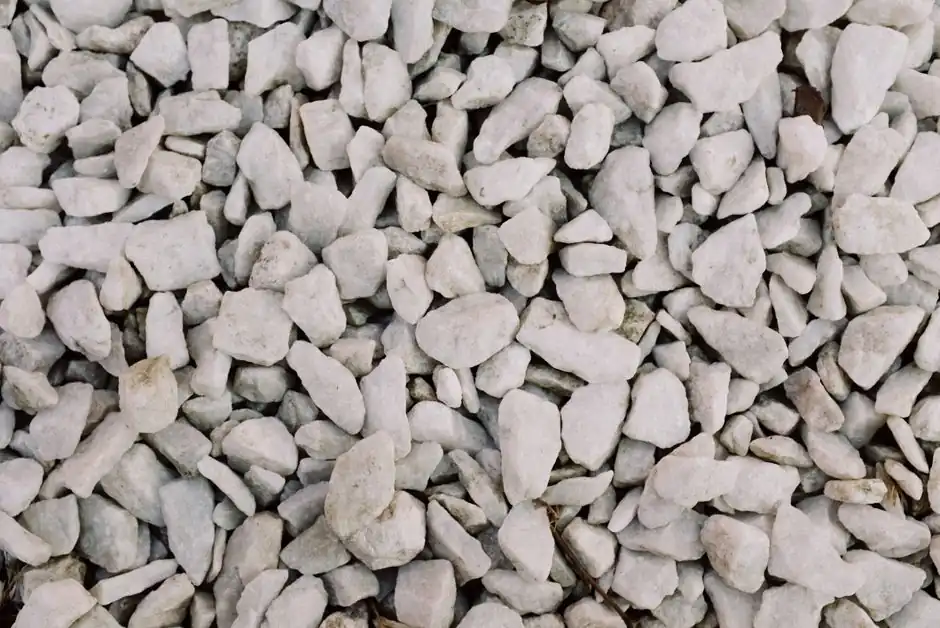
ACI 506R-16 (Guide to Shotcrete) tabulates three combined-aggregate grading bands, No. 1, No. 2, and No. 3, with nominal maximum aggregate sizes stepping from 3/8 in up to 3/4 in; the band chosen dictates the sieve-percent-passing envelope, the allowable total air content, and the practical pumping and rebound behavior of the mix [S2].
For engineers writing or reviewing a structural shotcrete spec, ACI 506R treats any mix with a specified compressive strength of 4,000 psi or higher as structural, and the aggregate grading in Table 1.1.1 of 506R-16 is the primary lever for hitting that strength target without inducing pump-line blockages or excessive rebound at the nozzle [S1][S2].
Three grading bands: nominal max sizes and sieve envelopes
Table 1.1.1 of ACI 506R-16 lists the three gradings, and the US Army Corps of Engineers' Standard Practice for Shotcrete reproduces them as the reference envelope: Grading No. 1 has a nominal maximum aggregate size of 3/8 in, No. 2 uses 1/2 in, and No. 3 extends to 3/4 in, with the No. 1 band requiring 100% passing the 3/8 in sieve and tighter upper-end control on the mid-sizes [S2][S7]. The 3/4 in band is most often selected for mass wet-mix structural placements where the larger stone improves pumpability, while the 3/8 in band is the default for overhead and vertical dry-mix work where coarser particles drive rebound and overspray [S2].
Combined gradings assume the producer blends fine and coarse fractions to land inside the envelope, not that a single stockpiled aggregate meets it; ACI 506R explicitly lists the table as "Grading limits for combined" aggregate, which is why most preblended bagged products publish the target No. 1 or No. 2 band as a single SKU code [S2][S4]. Preblended dry-process shotcrete products such as Spec Mix DP-01, DP-02, and DP-03 are designed to meet ACI 506R Gradation 1 or Gradation 2, and the manufacturer uses the band choice to match the depth of application rather than letting the nozzleman adjust in the field [S4].
Air content and how it couples to grading
ACI 506.2-95 ties total air content directly to the nominal maximum aggregate size: mixes with maximum aggregate less than 3/8 in are specified at 7% total air, while mixes with maximum aggregate greater than 3/8 in are specified at 6% total air, both measured on samples obtained from the concrete truck before shooting [S3]. The smaller-stone grading therefore carries roughly 1 percentage point more entrained air, which compensates for the higher paste demand and the higher risk of capillary voids behind closely spaced reinforcement when shooting overhead.
Engineers running preconstruction qualification panels per the ASA Shotcrete Panel program report that holding the ACI 506R Gradation No. 2 envelope, paired with a high-range water-reducing admixture, gives the most consistent wet-mix pumpability and the lowest in-place air variability on the panel cores [S5]. Because air content is a moving target once the mix hits the nozzle, ACI 506R's grading-coupled air targets are written for the pre-shoot truck sample, not the in-place cores [S3].
Structural vs non-structural: when the 4,000 psi line matters
ACI 506R-16 draws a hard line at 4,000 psi specified compressive strength: any shotcrete designed at or above that value is considered structural and inherits the full panel-qualification, nozzleman-certification, and in-place coring regime that ACI 506.2 references; below 4,000 psi the mix is treated as non-structural, with relaxed sampling and a much shorter preconstruction test record [S1]. Most U.S. Department of Agriculture Natural Resources Conservation Service applications fall into the non-structural band, which is why the NRCS Chapter 14 spec language explicitly tracks the 506R definitions rather than rewriting them [S1].
The practical effect on grading is that structural wet-mix projects overwhelmingly pick Grading No. 2 or No. 3 to reduce paste content, shrinkage, and heat of hydration, while non-structural repairs and architectural shotcrete frequently stay on Grading No. 1 to keep the rebound rate and the sand-cloud visibility on site under control [S2][S4]. Specifiers who need both behaviors in one project sometimes call a Grading No. 2 base lift and a Grading No. 1 flash coat, which is permissible under 506R as long as each layer is sampled and tested at the 4,000 psi line relevant to its design function [S4][S6].
Selection rules: grading, equipment, and placement geometry
The decision tree most nozzlemen apply on a North American job follows three inputs: nominal lift thickness, maximum aggregate size the reinforcement can pass, and whether the mix will be pumped (wet) or blown (dry). For overhead structural repair at less than 4 in per pass, Grading No. 1 (3/8 in nominal) is the default because coarse aggregate in that geometry drives rebound into the freshly placed material and drops in-place density [S2].
For 6 in or thicker wet-mix placement on a wall or pile, Grading No. 2 (1/2 in nominal) improves pumpability and reduces the heat signature during curing, which matters on mass placements such as tunnel linings and dam repairs [S2][S5]. Grading No. 3 (3/4 in nominal) is reserved for mass concrete-style structural shotcrete and for robotic boom applications where larger hose diameters and steady material feed keep the coarser stone from segregating at the nozzle [S7].
Dry-process preblended products add a second axis: the SKU code (DP-01, DP-02, DP-03) is a direct proxy for the gradations above, so the spec writer can pin a single product code to lock both grading and the resulting air-content target without writing a custom blend [S4].
Failure modes and limits engineers should not cross

Pushing nominal maximum size past what the reinforcement clearances allow is the most common grading-related spec error: if the gap between bars and the cover is less than roughly 3x the nominal max aggregate, the in-place material ends up with sand pockets and voids behind the bar shadow, and the 4,000 psi design strength is no longer conservative even if the truck-sample compressive cylinder passes [S1][S2].
Switching from one grading band to another in mid-shift without re-qualifying the mix is the second common error: air content drops by roughly 1 percentage point moving from Grading No. 1 to Grading No. 2, and the water demand and pump pressure change, so a nozzleman qualified on one band is not automatically qualified on the next [S3][S6]. The third risk is using Grading No. Grading No. 3 with a small-diameter delivery hose, where the coarser stone creates surging at the nozzle and drives the in-place air content above the limit, which ACI 506.2-95 caps at 7% total air content for nominal maximum aggregate size less than 3/8 in and 6% for sizes greater than 3/8 in [S3].
Comparison: the three ACI 506R gradings at a glance
Side-by-side, the three bands trade off pumpability, rebound, and paste demand in a predictable way: Grading No. 1 (3/8 in) has the lowest pumpability for wet-mix, the highest rebound rate in dry-mix, the highest air target at 7%, and the best behavior in thin overhead lifts; Grading No. 3 (3/4 in) is the most pumpable and the lowest in paste content, but it requires larger hose diameters, robotic boom placement, and a structural design that can use the larger stone without creating bar-shadow voids [S2][S3][S5][S7].
For spec writers, the most cited practical guidance is to stay on Grading No. 2 unless a specific project constraint forces the other bands: a structural wet-mix on Gradation No. 2, paired with a high-range water-reducing admixture, is the formulation that shows up most often in the ASA shotcrete panel evaluations and in the published comparison studies against cast-in-place concrete [S5]. Where dry-mix and preblended bagged products are used, the Spec Mix data sheet shows the same ranking by product code, with DP-01 pegged to Gradation 1 and DP-02/DP-03 to Gradation 2, so the spec language and the bag in the nozzleman's hand stay aligned [S4].
Sourcing and how the spec flows downstream

ACI 506R is a guide, not a specification; the companion document ACI 506.2 ("Specification for Shotcrete") is the citation a project spec should carry for the binding air-content and aggregate-size requirements, and most U.S. specifiers reference both together [S2][S3][S6]. For related selection work on construction material choices, the same data-density discipline shows up in adjacent decisions such as adhesive vs mechanical fastener cost analysis and chemical anchor selection for hospital concrete and masonry, where the spec writer pins a grade number rather than a generic performance claim, the same pattern ACI 506R uses for its three gradings.
Trackable signals for the next planning cycle: monitor ACI Committee 506's activity updates for any revision to the Gradation No. 2 envelope that would shift the 1/2 in band limits, and watch the ASA Shotcrete magazine technical tips for changes to the air-content targets that travel with the grading choice. For equipment-side context, the shotcrete machine selection at the pump end of the hose is what determines whether a given grading band can actually be placed at its design air content without surging or blockages.
Spec-level background on the components involved: pressure transmitter, and flow meter.