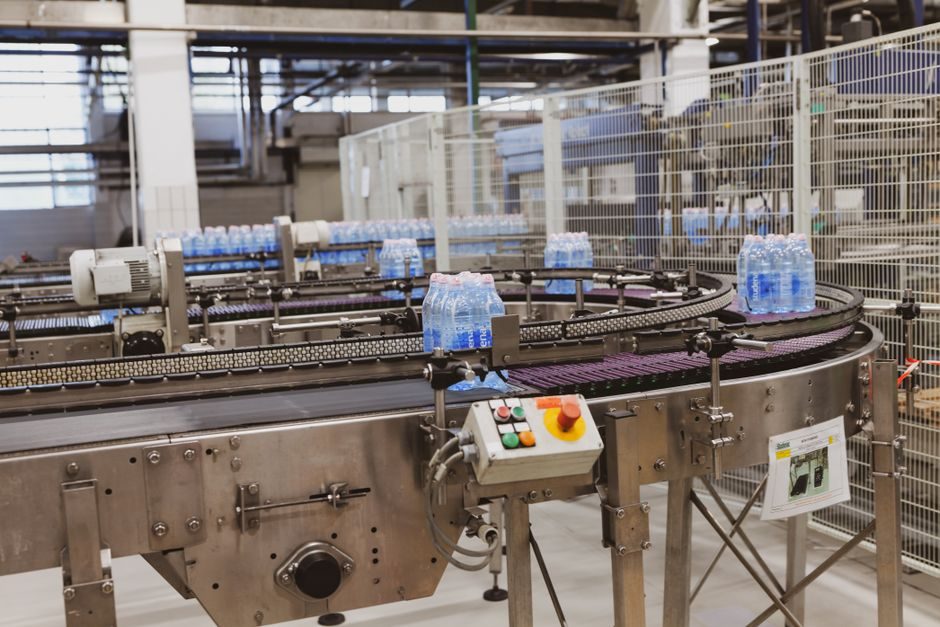
Commercial activated carbon is produced through two dominant thermal routes — physical (steam/CO2) activation and chemical activation — with feedstock selection driving the final pore size distribution and iodine number [S3][S6].
Coconut shell, bituminous coal, anthracite, and industrial wood charcoal are the four primary feedstocks, each yielding a different hardness, micropore fraction, and ash profile that buyers match to water, air, gold-recovery, or pharmaceutical duty [S2][S6].
Feedstock selection drives the downstream pore structure
Coconut shell charcoal delivers a hard, high micropore-content granule suited to gold recovery and point-of-use water filters, with Haycarb PLC operating coconut-shell plants out of Colombo, Sri Lanka, as one of the established Asian suppliers [S2]. Bituminous coal and anthracite feedstocks, by contrast, yield a broader pore-size distribution and are the standard material for municipal water treatment and air-emission control beds, where Carbon Activated Corporation lists coal-based grades alongside coconut-shell and wood-based lines [S6].
Wood-based charcoal, typically a softwood sawdust or lignocellulosic residue, is the preferred precursor for chemically activated powdered grades, because the low fixed-carbon content and open pore skeleton let ZnCl2 or H3PO4 penetrate uniformly [S3][S4]. Feedstock moisture is normally dried to below 15% in a rotary or paddle dryer before carbonization, since residual water in the kiln starves the activation reaction of thermal energy and shifts the burn-off profile [S3].
Steam activation: 800-1000°C, controlled burn-off
In the physical route, crushed and dried feedstock is first carbonized at 400-700°C in a rotary kiln or Herreshoff furnace under limited oxygen, then activated at 800-1000°C in a steam or CO2 atmosphere, with burn-off held to 40-60% to preserve mechanical strength [S3][S6]. Steam activation of wood charcoal is the route that Capital Carbon (Rajkot, India) runs to deliver 40+ powdered grades with a documented less than 1% rejection rate across its product range [S3].
Typical steam-activation residence time runs 30-90 minutes depending on target iodine number, with the activation gas injected counter-current to the carbon bed so that fresh steam contacts the most-activated material. The reaction C + H2O → CO + H2 is endothermic and self-limiting, which is why operators prefer steam over air — air-driven burnout is exothermic and can run away, sintering the micropore walls and dropping the BET surface area from 1000+ m²/g toward 600 m²/g in runaway excursions. Granular and pelletized post-activation grades are screened to common cut sizes including 4×10, 6×12, 8×16, 8×30, 12×40, and 30×60 mesh, the same cut series that Huamei Activated Carbon lists for its export-grade GAC line [S5].
Chemical activation: lower temperature, higher yield
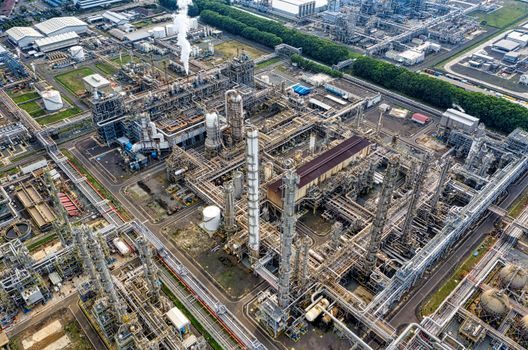
Chemical activation impregnates the dried feedstock with a dehydrating agent — typically ZnCl2 (historic), H3PO4 (dominant today), KOH or NaOH (for high-surface-area supercapacitor and MOF-composite grades) — at a 0.5-3:1 impregnation ratio, then heats the mix to 400-700°C under inert atmosphere [S3][S4]. The chemical agent suppresses tar formation, which is why chemical activation reaches 30-50% yield versus 20-30% for steam activation, a key reason powdered activated carbon (PAC) is almost universally produced this way.
After carbonization, the acid or salt is leached out in a wash step — phosphoric acid washes give a neutral pH finished carbon for food and pharmaceutical duty, while insufficient washing leaves acidic residues that disqualify the batch from USP/FCC-grade applications. The MOF@AC composite work published in 2024 documents that post-activation loading of metal-organic frameworks onto the activated-carbon substrate raises the effective surface area and adds selective adsorption sites, which is the direction the high-end energy-storage and gas-separation grades are moving [S4].
Form factor and post-processing: PAC, GAC, and pelletized
Finished carbon leaves the kiln as an irregular granular, which is then milled to powdered activated carbon (PAC, typically 80-325 mesh), screened to granular activated carbon (GAC, 4×10 to 30×60 mesh), or extruded with a binder to form 0.9-4 mm cylindrical pellets for low-dust gas-phase service [S5][S6]. Impregnated grades — loaded with KI, KMnO4, or amine solutions after activation — are specified for mercury vapor, H2S, and acid-gas removal, and are listed as a separate product line by Carbon Activated Corporation [S6].
For buyers comparing a coconut-shell GAC against a coal-based GAC against a wood-based PAC, the decision criteria reduce to four measurable parameters: hardness (ball-abrade number, higher for coconut shell), iodine number (mg/g, higher for chemical activation), ash content (lower for coconut shell and chemical-activation grades), and mesh availability (GAC cuts are largely coconut or coal, PAC is overwhelmingly wood). A specification sheet on activated carbon should always demand these four numbers plus pH, moisture, and apparent density, regardless of which feedstock and activation route the mill uses. Process engineers weighing the trade-offs between filter media and housing class should consult the precision filter buying guide 2026, since the micron rating of the carbon bed and the housing's pressure class set the backwash envelope together. Buyers specifying carbon for gold-recovery CIC/CIL circuits should match the coconut-shell hardness number to the torque sensor selection guide on the agitator shaft, because under-hardened GAC breaks down in the leach tank and fouls the interstage screens.
Reactivation and end-of-life economics
Spent GAC is rarely landfilled; the standard industrial practice is thermal reactivation in a rotary or multi-hearth furnace at 800-900°C in a controlled steam/air atmosphere, which restores 80-90% of the original adsorption capacity and shrinks the bed replacement cost by typically 40-60% versus virgin carbon [S2]. Haycarb PLC offers regeneration services as a contracted line item, with the reactivated carbon re-tested for iodine number and pH before return to the customer [S2].
The economic threshold for reactivation versus replacement is roughly a 10% drop in iodine number against the virgin baseline, or a 15% weight loss from attrition across the bed's life. PAC, because of its powder form, is almost never reactivated on-site — spent PAC is burned, sent to a cement kiln as a low-grade fuel, or landfilled where local regulation permits. Looking ahead, two signals are worth tracking: the published 2024 MOF@AC composite work is moving from lab to pilot, with selective adsorption for CO2 and VOCs as the targeted commercial application [S4]; and Chinese and Indian mill capacity continues to expand, with Huamei citing exports to 30+ countries and 1000+ active customers from a single-site operation [S5].
For the relevant spec sheets and selection criteria, see additive manufacturing material, carbon fiber, and carbon steel.