Reverse osmosis (RO) is defined by Mindler and Epstein (1986) as a pressure-driven separation of water from a saline solution across a membrane, the pressure being adequate to overcome osmotic pressure and to provide an economically acceptable flux [S3]. Commercial RO is dominated by two geometries — asymmetric membranes (often cellulose acetate) and thin-film composite (TFC) membranes with an aromatic polyamide skin on a polysulfone sub-layer [S3]. Smart manufacturing is being applied to both, but the value shows up most clearly on TFC lines.
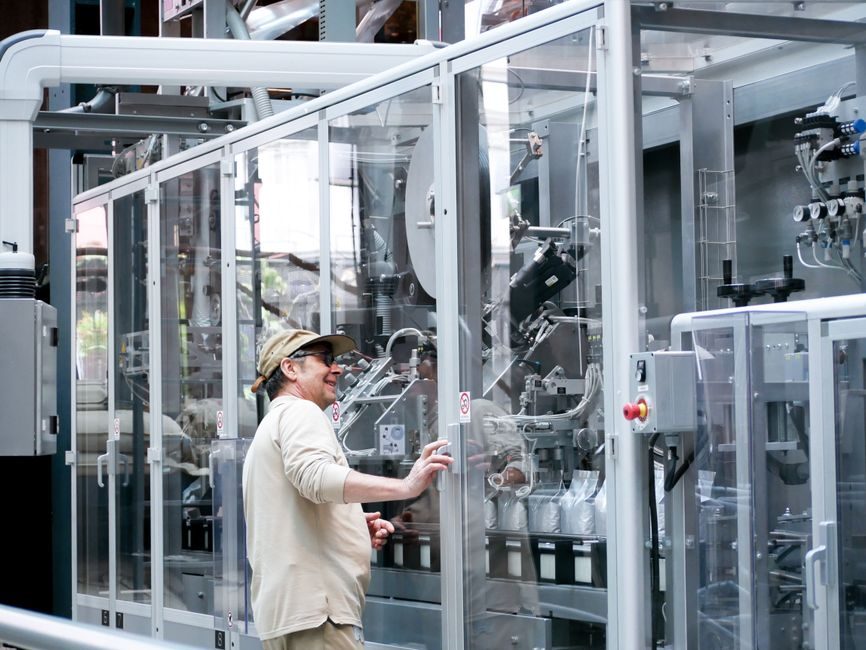
A 2026 capacity snapshot from Chengdu Meifute Membrane illustrates the new factory template: 50,000 m² research workshop, 8,000 m² scientific research building, 4 fully automated membrane production lines, and 200+ independent intellectual property rights, all built around an Intelligent Manufacturing Center that integrates IoT, smart robots, and a big-data management platform [S1]. The same site positions itself as the only China-based supplier with parallel RO, nanofiltration (NF), and ultrafiltration (UF) R&D and production capability [S1].
Why polyamide TFC is the substrate for automation
TFC RO membranes are constructed as an asymmetric polymer system in which the dense surface skin and the porous sub-layer are formed from two different polymers, typically aromatic polyamide over a graded polysulfone resin [S3]. Polyamide was first introduced in the early 1970s and remains the most common construction because of its lower pressure requirements and more flexible operating envelope relative to cellulose acetate [S5]. TFC polyamide brings hydrolytic stability, higher salt and organic rejection, and better resistance to biological degradation than cellulose acetate [S3].
The trade-off that automation must police is real: aromatic polyamide is intolerant of oxidants — chlorine, chloramine, bromine, ozone — and any free-chlorine residual damages the skin [S3][S5]. Cellulose acetate tolerates chlorine but hydrolyzes outside a pH window of roughly 5–8 and is biologically degraded if feed is not chlorinated, which forces the very oxidant dosing that kills TFC [S3]. Smart plants therefore lock feed-water ORP and free-chlorine into closed-loop control rather than relying on operator chemistry.
Smart line architecture: from dope casting to AIQC
A modern RO line treats the membrane as a four-layer stack — non-woven PET backing (~100–150 µm), microporous polysulfone support (~30–50 µm), ultrathin aromatic polyamide discriminating layer (~0.1–0.2 µm formed by interfacial polymerization), and a protective feed-channel coating — and instruments every interface. The 4 fully automated production lines at Meifute's intelligent manufacturing center handle this stack with IoT-linked robotics, while a big-data platform records line parameters against final rejection and flux performance, closing the loop on automated in-process quality control (AIQC) [S1].
Downstream, automation extends to the element build. Disc-tube RO (DTRO) and spiral-wound elements are assembled under the same digital management model that produces the flat sheet, and the same site reports DTRO service life exceeding 8 years in field conditions — a useful benchmark for any plant evaluating automation-driven consistency [S1]. Inline vision systems typically verify permeate spacer geometry, glue-line placement on the feed-side, and permeate-tube concentricity, while pressure-decay and bubble-point tests confirm element integrity before shipping.
Two automated chemistries, two decision branches
Choosing between asymmetric cellulose acetate and TFC aromatic polyamide is the first spec branch, and automation fits each differently. Cellulose acetate asymmetric membranes are cheaper and chlorine-tolerant, but the operating pH window is narrow (about 5–8) and biological fouling forces continuous chlorination of the feed [S3]. TFC aromatic polyamide runs across a much wider pH range, delivers higher salt and organic rejection, and resists biological degradation, but the feed must be dechlorinated before contact and the elements cost more [S3][S5].
For high-fouling wastewaters, the same supplier offers specialty disc-tube RO (DTRO) and disc-tube NF configurations that pair the TFC chemistry with open-channel hydraulics — the open channel lets the line tolerate suspended solids that would plug a spiral-wound element, and DTRO lifetimes beyond 8 years have been reported in industrial wastewater service [S1]. For seawater (SWRO) and brackish water (BWRO) the spiral-wound TFC element is still the workhorse, and smart lines are tuned to the tighter free-chlorine, pH, and silt-density-index envelope those applications demand.
Process-side automation that pairs with the membrane
RO plants are an automation chain, not just a membrane. A typical desalination train pairs a pretreatment block — microfiltration, pH adjustment, and cartridge filtration — with a high-pressure pump, the membrane vessel, and post-treatment (degasifier or mineral adjustment) [S3]. Smart facilities extend automation across this whole train, dosing antiscalant based on LSI projections, trimming recovery ratio to keep feed pressure just above osmotic setpoint, and pulsing CIP cycles when normalized flux drops below baseline.
Reverse osmosis is a pressure-driven separation of water from a saline solution across a membrane in which the applied pressure must overcome osmotic pressure and provide an economically acceptable flux [S3]; thin-film composite membranes typically pair an aromatic polyamide dense surface skin with a polysulfone porous sub-layer, with the dense skin rejecting salts while the permeate passes into the porous substructure [S3]; and because polyamide membranes are oxidant-intolerant, exposure to oxidants such as chlorine, chloramine, bromine, and ozone must be avoided [S5].
Where automation does not eliminate failure modes
Smart manufacturing reduces batch-to-batch scatter; it does not change the chemistry. Polyamide remains oxidant-intolerant: free chlorine, chloramine, bromine, and ozone degrade the skin over time and the plant must enforce a low ORP setpoint on the feed [S3][S5]. Cellulose acetate remains constrained to roughly pH 5–8 and is biologically vulnerable without continuous chlorination, which in turn kills any TFC stage downstream [S3]. Mineral scaling (CaCO₃, CaSO₄, BaSO₄, SrSO₄, SiO₂) is governed by recovery ratio and feed chemistry, and automation only enforces the limit — the limit itself is fixed by water analysis.
Cleaning chemistry is its own constraint. Polyamide TFC tolerates a pH 1–13 CIP envelope, while cellulose acetate is restricted to roughly pH 3–8, which means a plant that mixes the two chemistries cannot share a cleaning skid. Smart lines therefore segregate cleaning circuits by chemistry. Fouling on the polyamide surface — organic, colloidal, or biofilm — is the dominant runtime loss mechanism, and the only way automation suppresses it is by holding pretreatment performance to its design silt density index and turbidity limits.
Standards, sourcing, and how to read the 2026 market
ASTM D4194 and D4516 cover flat-sheet RO performance testing, while element-level test methods (clean-water permeability, salt rejection at standard conditions) trace back to the same ASTM lineage; element build standards (e.g. 8-inch × 40-inch nominal) come from the major OEM specification sheets. None of these are new in 2026, but the gap is now automation: a digitally traced coil carries a per-element permeate-flow and rejection signature that lets a buyer compare real clean-water data against the catalog curve. Meifute's published field cases — the Guangdong Sino-German Metal Eco-City 5,000 m³/d zero-liquid-discharge electroplating park, a 6,300 m³/d pharmaceutical zero-liquid-discharge project, a 12,000 m³/d textile dyeing zero-discharge project, and a 10,000 m³/d fine chemicals zero-discharge park — are the kind of traceable reference list smart-manufactured RO suppliers now publish by default [S1].
For R&D, neutron scattering combined with atomistic molecular dynamics (MD) is being used to map how water clusters in the polyamide active layer, and the 2017 contrast-variation study showed that polyamide–water interactions are equal to or stronger than polyamide–polyamide interactions in the water-rich system, with carboxyl-group density correlating to water permeability [S2]. That mechanistic link is what smart lines are now exploiting: tighter control of interfacial polymerization parameters (monomer concentration, cure time, temperature) lets manufacturers push carboxyl density into a target band, with the big-data layer catching drift before it shows up as flux loss in the field.
BUYER FRAMEWORK — when an RO membrane smart-manufacturing line is worth the spec: (1) the application is zero-liquid-discharge or high-recovery (>70%) where batch-to-batch consistency drives OPEX; (2) the feed has a documented free-chlorine removal step so the TFC chemistry is not destroyed; (3) the chemistry branch is decided up front — TFC polyamide for hydrolytic stability and rejection, cellulose acetate only where chlorine tolerance outweighs the pH-window limit; (4) the cleaning skid is segregated by chemistry, with a pH 1–13 CIP loop for TFC and a pH 3–8 loop for cellulose acetate; (5) the supplier publishes per-element clean-water data and traceable reference plants, which is now standard among automated Chinese RO/NF/UF producers [S1].
Trackable signals to watch through the rest of 2026: per-element clean-water flow and rejection datasets published by automated RO lines; expansion of IoT-linked robotics in TFC casting and interfacial polymerization; the spread of disc-tube RO into mainstream zero-liquid-discharge packages; and tighter ASTM D4194/D4516 testing throughput that lets buyers compare smart-manufactured elements against catalog curves. For background on specialty membrane selection — the structural analogy to a smart-manufactured RO/NF/UF line is a useful reference point, and the TFC chemistry commentary is a parallel read on how a layered composite is built and tested. Related plant-side reading: ball valve selection in high-pressure RO trains and heat-exchanger duty matching for RO heat-recovery loops.
For the relevant spec sheets and selection criteria, see additive manufacturing material.