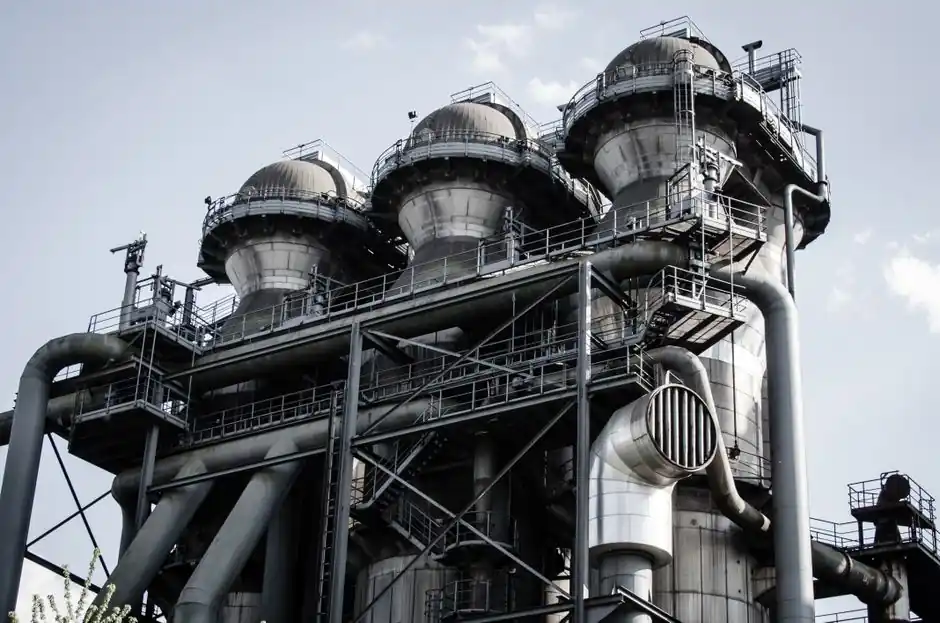
On 11 August 2026, Power to Hydrogen (P2H2) delivered and began installing a 500 kW hybrid AEM electrolyzer at the Port of Antwerp-Bruges, the first industrial port deployment of the technology [S3][S5].
The Antwerp system is the first commercial unit built on 250 kW stack modules and is engineered for sub-50-millisecond dynamic response, pressurized hydrogen output, and a scale-out path to 25 MW, P2H2 stated in its August release [S3].
Why 2026 is the commercial inflection point for AEM
Prior to 2025, AEM electrolysis was mostly validated at kilowatt-scale, with work concentrated on membrane chemistry and catalyst durability [S1]. Two events in 2026 changed that: Horizon Fuel Cell Technologies delivered a 5 MW AEM system in April 2026, and P2H2 installed its first 500 kW industrial unit at Antwerp in August [S1][S3]. The Antwerp project uses 250 kW stacks, sub-50 ms load-following, and pressurized output designed to cut downstream compression, with first-year commercial revenue expected from the launch offtaker Holthausen, a regional industrial-gas and hydrogen-truck supplier [S5].
P2H2's claim is that its hybrid AEM replaces PEM's iridium load with low-cost steel and nickel catalysts, cutting CAPEX by up to 65% versus comparable PEM systems [S3][S5]. The materials shift is real and is also independently described by Enapter, which states that AEM avoids iridium and titanium corrosion protection, supports a hydrogen purity of 99.9% (up to 99.999% with a dryer), and operates at 35 bar [S4].
How AEM stacks up against PEM and alkaline
The three commercial water-electrolysis routes are alkaline (ALK), proton exchange membrane (PEM), and anion exchange membrane (AEM), each with a different cost and operating profile. The table below uses only values present in the 2026 sources. [S4]
ALK systems are the lowest-cost incumbent but suffer slower dynamic response and limited ability to follow intermittent renewables; AEM is positioned to combine alkaline-like materials cost with PEM-like responsiveness, including sub-50 ms load-following at the P2H2 M-Class level and fast ramp on Enapter's modular units [S3][S4]. PEM retains the highest power density and the fastest response at the cost of iridium and titanium; P2H2's stated up-to-65% CAPEX advantage versus PEM is the headline cost number for the AEM camp in 2026 [S3][S5].
On materials, AEM uses transition-metal catalysts and avoids the PFAS-laden membranes that face upcoming restrictions, per Enapter [S4]. On water quality, AEM tolerates slightly alkaline feed water, reducing the leakage and handling issues tied to concentrated KOH loops in legacy alkaline stacks [S4]. On pressure, Enapter ships at 35 bar and P2H2 designs for pressurized output to simplify the balance of plant [S3][S4].
Stack design, controls, and balance-of-plant choices
P2H2's M-Class architecture is the most detailed AEM stack disclosure published in 2026: 250 kW modular stacks, sub-50 ms response, pressurized operation, and a documented path from a 500 kW Antwerp unit to 25 MW industrial plants [S3][S5]. Enapter markets standardized small-scale AEM modules with a compact footprint, marketed for decentralized hydrogen production [S4].
Dynamic operation matters because most green-hydrogen plants are tied to wind or solar. AEM membranes conduct hydroxide anions rather than protons, which is why the same cell can run on cheaper nickel/steel catalysts while still chasing PEM-class ramp rates, the technical mechanism P2H2 and Enapter both lean on [S3][S4]. Pressurized stack output is the second BOP lever, because it removes a compressor stage downstream of the cell; that lever is only useful if the membrane and frame can hold pressure, which is exactly the durability question AEM suppliers have spent the last five years answering [S3][S4].
Capital flows and the supply chain behind the stacks
Capital into AEM and adjacent green-hydrogen plays was front-loaded into Q1-Q2 2026. Shengshui Tech closed a $13.7 million-plus Series A in March 2026 to scale AEM water-electrolysis materials; HYDGEN raised $5 million in April 2026 to accelerate its AEM program; and the German state of Baden-Württemberg opened a €50 million (~US$59 million) funding call in February 2026 for green-hydrogen projects that AEM developers can bid into [S1]. In January 2026, Shell invested $18.8 million into supercritical-hydrogen player Supercritical, a deal that sits adjacent to the AEM stack ecosystem rather than inside it [S1].
The 2026 stack-supply picture also includes Enapter as the most-cited commercialized AEM OEM and Shengshui Tech as a Chinese materials specialist, while P2H2 and Horizon anchor the US and European system-build side [S1][S4]. For buyers, the practical read is that AEM is no longer a one-vendor story: two independent multi-megawatt systems (Horizon 5 MW, P2H2 500 kW with 25 MW in design) and a separate marinised AEM program with DRIFT Energy and Enapter announced in March 2026 cover land, port, and offshore use cases [S1].
Who AEM is, and is not, a fit for in 2026

AEM fits buyers who need dynamic load-following on intermittent renewable power, want to avoid iridium price exposure, and have access to slightly alkaline feed water; the 35 bar Enapter output pressure and P2H2's pressurized design both reduce downstream compression capex, which matters at the 1-25 MW scale [S3][S4]. It is a poor fit for projects that need proven multi-year stack lifetimes in continuous baseload duty, since 2026 announcements still describe AEM as having just moved from kilowatt pilots to multi-megawatt commercial units, and stack durability under sustained high-current-density operation is the open question every AEM OEM is still answering in field data [S1][S3].
For EPCs sizing the balance of plant, the interface decisions are the same as for any packaged electrolyzer: a pressure transmitter network on the hydrogen outlet to track the 35 bar envelope, flow meter skids on feedwater and oxygen, and pressure-letdown industrial valve assemblies on the cathode side. None of these change with AEM versus PEM, but the operating transients are sharper, so instrument range and update rate deserve a second look during HAZOP.
Standards, sourcing, and what to verify before signing a PO
Two 2026 claims deserve engineering scrutiny before any procurement file closes. First, the up-to-65% CAPEX delta versus PEM is a vendor number from P2H2, and the word "up to" is doing real work; buyers should request a like-for-like quote on stack $/kW, BOP $/kW, and $/kg-LHV at a defined capacity factor [S3][S5]. Second, the sub-50 ms response figure is unit-level and should be mapped to the plant-level ramp rate the grid connection agreement allows; cell-level speed does not automatically transfer to a 25 MW island-mode plant [S3].
For standards work, the well-known references for hydrogen production equipment (IEC 62282 series for fuel cell and electrolysis installations, ISO 22734 for hydrogen generators using electrolysis, ATEX 2014/34/EU for equipment in explosive atmospheres, and IEC 60079-x for electrical apparatus in explosive gas atmospheres) frame the certification conversation, but a specific 2026-revision date or amendment should be confirmed with the notified body rather than assumed. The China-side buildout adds another sourcing variable, since Chinese AEM capacity is described in 2026 as moving "from niche to mainstream" within a roughly three-year window, which compresses lead times but raises the bar on supplier qualification audits [S6].
For broader process-industry context, the bare-shaft pump vs packaged HPU trade-off discussion applies to the BOP feedwater and KOH circulation loops on any AEM plant, and the tank-farm temperature transmitter selection logic carries over to the buffer-tank and demineralized-water skid instrumentation. The aerospace investment casting capacity squeeze and titanium lead-time pressures reported for 2026 are worth a glance, because AEM's pitch depends on nickel and steel, not titanium or iridium, so a portion of the demand-pull on those constrained materials gets deflected to electrolyzer stacks if PEM orders slow.
Trackable signals to watch over the next two quarters: P2H2's public Antwerp commissioning in September 2026, the first third-party validated capacity-factor and stack-degradation data from the 250 kW modules, and any new Chinese multi-megawatt AEM delivery that would put a second independent OEM on the multi-megawatt scoreboard alongside Horizon's 5 MW unit [S1][S3][S5].