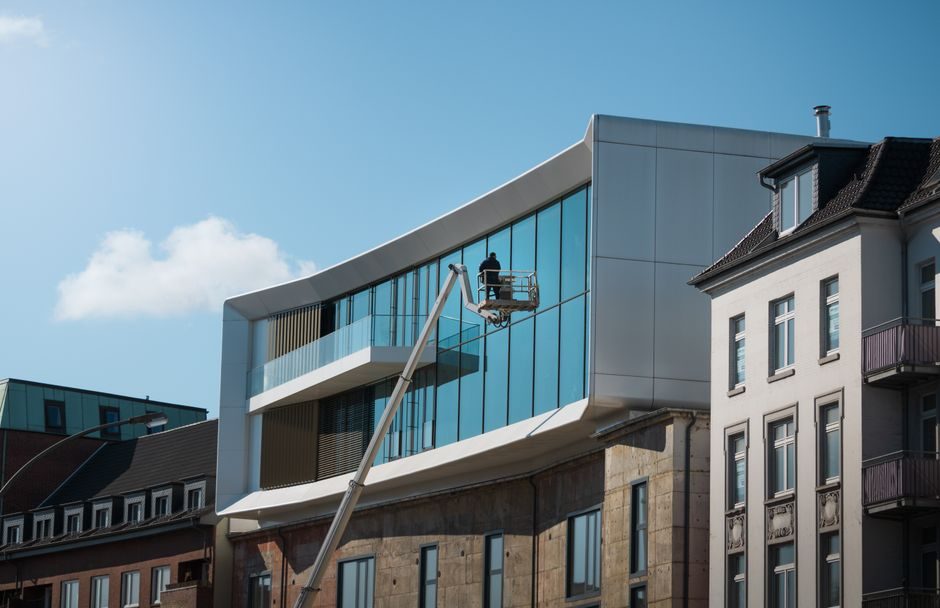
Scissor, articulated-boom, telescopic-boom, truck-mounted and vertical-mast lifts cover the bulk of the 5-90 m working-height band seen in current OEM catalogues, with chassis classes from 0.5 t indoor electrics to 48 t truck-mounted rigs [S2].
The category sits inside Material Handling Equipment alongside forklifts, telehandlers and boom lifts, with at least two major Sichuan- and Hunan-based manufacturers listing aerial work platforms, scissors lifts and boom lifts as primary export lines [S1][S3].
Five-Group Classification by Mechanism and Chassis
Spec sheets in mid-2026 group aerial work platforms into five working families: scissor lifts, articulated-boom lifts, telescopic-boom lifts, truck-mounted platforms and vertical-mast personnel lifts, each family having its own height and chassis envelope [S1][S2][S4].
Scissor lifts use crossed-arm vertical extension and dominate indoor slab work where the travel path is straight up; working envelopes typically run from 6 m platform height on compact electric slabs to 18-25 m rough-terrain diesel scissors. Articulated-boom lifts add a knuckle joint between the boom and platform, trading a little lateral reach for the ability to fold up and over fixed obstacles such as pipe racks or stair cores. Telescopic-boom lifts, often called straight booms, give the longest lateral reach in the self-propelled segment. Truck-mounted platforms, sometimes labelled as aerial work trucks, mount the boom on a road-going chassis — the PALFINGER TEC and P-series catalogues list working heights from 13 m on light 3.5 t vans up to 90 m on 48 t chassis [S2]. Vertical-mast lifts are single-person or two-person push-around or self-propelled units used in warehouse aisles and finish-trade work [S4].
Working-Height Bands and Reach Envelopes
Height segmentation is the first number a spec engineer will fix: most compact electric scissor and mast lifts live between 6 and 12 m, mid-range boom lifts between 12 and 28 m, and heavy truck-mounted platforms between 28 and 90 m [S2][S4].
PALFINGER's published mid-2026 figures put telescopic platforms in the 3.5 t class at 17-28 m, the >3.5 t telescopic class at 30-90 m with 20-41 m of lateral reach, articulated models in a 13-30 m band, and Kit/special-solution platforms at 11-24 m [S2]. Inside that 28-90 m heavy-telescopic envelope, the same OEM names the X-Jib articulating jib as a standard feature for overhead work and reach-around obstacles. Lateral reach, not just platform height, drives boom selection: 41 m of horizontal outreach on a 90 m boom changes which bucket position the operator can work from and forces the spec to include outrigger pad load rather than just rated capacity [S2].
Drive and Chassis Selection Matrix
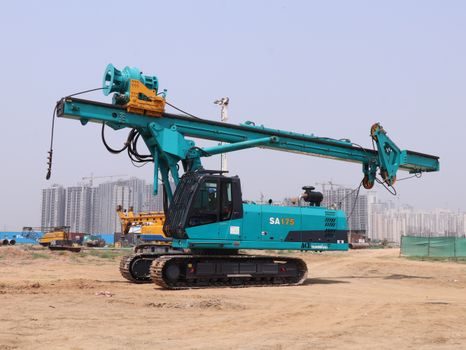
Drive type is the second hard constraint: indoor electric DC or lithium units for emission-free slabs, hybrid diesel-electric for outdoor fleets, and pure diesel 4x4 for unfinished ground, with chassis tonnage setting both road-legal payload and platform capacity [S2][S4].
The most common decision points on a 2026 spec sheet are: working height, lateral reach, platform basket load (typically 200-400 kg for two-person baskets), drive (electric / hybrid / diesel), chassis tonnage and indoor-emission rating. For truck-mounted platforms, chassis selection covers 3.5 t vans, 7.5-18 t rigid trucks and 26-48 t multi-axle carriers — the heavier the chassis, the larger the stabiliser footprint and the higher the residual payload available for tools and materials. PALFINGER's TEC range and its predecessors add an optional battery pack to the 3.5 t class, letting the same machine operate emission-free indoors on a hybrid cycle and run diesel on outdoor sites [S2]. Self-propelled aerial work platforms used inside warehouses and data-centre fit-outs are almost exclusively battery-electric, with non-marking tyres and ≤68 dB(A) drive sound levels typical for that class [S4].
Comparison: Class vs Working Height vs Reach vs Power
Comparing the five families on working height, lateral reach, drive and indoor suitability gives a one-page selection view that an estimator can apply directly to a project risk assessment and method statement. [S2]
The mid-2026 catalogue envelope: scissor lifts 6-25 m, 0-2 m reach, electric or diesel; articulated booms 12-30 m, 6-15 m reach, diesel or hybrid; telescopic booms 17-90 m, 10-41 m reach, predominantly diesel on the heavy class and hybrid on the 3.5 t class; truck-mounted platforms 13-90 m, 6-30 m reach, chassis 3.5-48 t, diesel or hybrid with optional battery; vertical-mast lifts 6-12 m, zero reach, electric only [S2][S4]. Indoor-rated electric units, which dominate the suspended platform and mast-lift segments, rule out diesel 4x4 scissor and rough-terrain booms on finished-floor sites. Forklift and telehandler alternatives, which sit adjacent to this category in most material-handling portfolios, are sometimes considered for low-level order-picking work but cannot replace a boom where horizontal outreach is required, as covered in the forklift TCO reference.
Use-Case Mapping by Industry
Construction and steelwork tend to specify telescopic booms for their reach, while facility management, events and utilities concentrate on truck-mounted units and on electric scissor fleets for interior fit-out. [S2]
Indoor fit-out, warehouse racking maintenance and data-centre cable work use electric scissor and vertical-mast lifts because of zero local exhaust, low noise and non-marking tyres [S4]. Outdoor construction, steel erection and bridge inspection use diesel 4x4 scissor and telescopic booms for ground clearance and outrigger pads. Utilities, street-lighting and rail overhead-line work dominate the truck-mounted platform market — the ability to drive the unit to site at 90 km/h and unfold on a single parking bay is the value proposition. Industrial plant turnaround work frequently calls for special-solution truck mounts: stationary installations for inside-building work, water-rated bases for bridge-pier work, and low-height tunnels-package profiles for transit tunnels [S2]. Heavy-lift logistics sites that also run truck cranes can share outrigger pad stock and load-chart sign-off workflows, which is why method-statement writing for adjacent truck crane installation projects is sometimes reused.
Safety, Standards and Compliance
Selection is bounded by EN 280 for mobile elevating work platforms, ANSI A92.20 in North America and ISO 16368 for the design principles, with operator training typically requiring IPAF or equivalent certification. [S2]
Mandatory safety hardware on a 2026-spec machine includes: tilt sensor with automatic cut-out, overload limiter on the platform, emergency descent at both basket and ground controls, dual-channel dead-man switch, and a basket load-cell that logs cycles for inspection. Outrigger pads carry interlock switches so the boom cannot be elevated until all stabilisers register ground load. For indoor-electric units, the machine's IP rating on the drive motors and battery enclosure governs whether it can be hosed down for clean-room or food-grade sites. Spec engineers also need to confirm that the basket-rated voltage drop and the on-board inverter are listed for the duty cycle, not just the peak current — undersized cabling is one of the most common field failures reported in warranty data.
Limits, Failure Modes and What Not to Specify
Common mis-specs include: choosing a scissor where lateral reach is required, picking a diesel unit for an indoor site, or using a single 3.5 t chassis for a 30 m+ working height where outrigger ground-bearing pressure rules it out. [S2]
Failure modes most often seen in service are: outrigger pad sinking on weak ground, boom deflection causing basket sway at full reach, hydraulic hose fatigue at the articulation joint, and battery thermal cutoff on cold-site electric units. Height-and-reach is not the only constraint: total weight when stowed, axle load distribution, transport width and stowed height all affect whether a unit can be towed on a standard low-loader or driven under a 4 m overpass. For aerial work truck fleets over 26 t GVW, drivers also need a Class C or equivalent licence in most jurisdictions, which has to be booked before delivery, not after. A practical anti-pattern: never specify a vertical-mast lift for façade inspection work on a stepped site — its zero-reach geometry forces repeated repositioning and adds fall-risk during re-entry.
Sourcing Signals and Manufacturer Landscape
Mid-2026 sourcing channels split into three buckets: Western OEMs with full type approval and dealer support, Chinese OEM-export brands on trade-portal listings, and US-based refurbishment / rental converters.
Western OEMs such as PALFINGER, Haulotte, Manitou, JLG and Genie cover the heavy-telescopic and truck-mounted segments, with full CE / ANSI documentation and worldwide parts support [S2]. Chinese OEM-export suppliers — Hunan Sinoboom Heavy Industry (registered 2013, Changsha), Sichuan Chengtou Heavy Equipment Technology Development (registered 2025, Chengdu) and Aida Machinery Equipment Corporation — list aerial work platforms, scissor lifts, boom lifts and forklifts as core lines on Made-in-China and direct portals, with ISO 9001 management certification [S1][S3][S5]. North American rebuilders such as Absolute E-Z Up focus on trailer-mounted material-handling lifts for short-term rental fleets [S4]. Trade-portal pages, including Sinoboom's company listing and adjacent Chinese OEM pages, remain the cleanest cross-check on which models an export partner will actually ship with full type approval rather than as a bare chassis.
Trackable signals over the next quarter: hybrid battery-pack retrofit programmes on 3.5 t truck mounts, low-emission-zone restrictions tightening in EU cities above 3.5 t, and stabiliser pad-pressure monitoring as a factory option on next-generation diesel scissor fleets. The shape of the AWP market in 2026 still points to telescopic-boom growth on the 25-40 m band, electric scissor densification inside logistics builds, and continued Chinese-OEM expansion into the 12-22 m rough-terrain scissor segment.