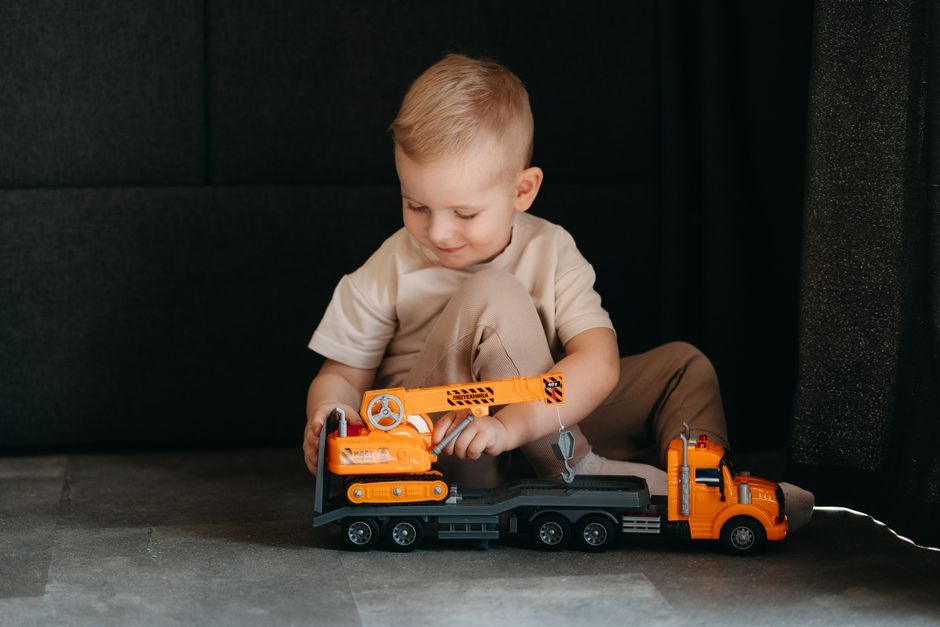
A truck-mounted loader crane installation is a defined engineering sequence — chassis selection, subframe fabrication, outrigger pad survey, hydraulic plumbing, anti-two-block (ATB) and load-moment-indicator (LMI) calibration, then a witnessed load test against the OEM load chart before first lift [S1][S2][S3].
Capacity bands in active commercial use span roughly 1 t to 25 t on popular Chinese-built chassis (Foton 1-16 t, Dongfeng 3-25 t) [S8][S9], and from 785 kg @ 14.75 m up to 19.06 t·m / 14.90 m max reach on Fassi xe-dynamic and e-dynamic models installed on Mack Granite, Mercedes Actros, and similar prime movers in Australia as of July 2026 [S2]. For related machinery on the same spec axis, see the truck-mounted crane reference page.
Chassis Selection and Subframe Engineering
The crane is not bolted to the truck frame rails — a fabricated steel subframe (cross members plus gusset plates) is welded or bolted between the rails to spread the lifted load and the crane's own dead weight across a defined wheelbase section, and the chassis cab-to-axle dimension is matched to the crane's stowed centre of gravity [S1][S3].
Operators running vocational fleets in construction, utility, and infrastructure work typically specify heavy-class chassis because serviceability and chassis durability are co-equal selection drivers with lifting capacity [S4]. The chassis rail section modulus (e.g. 8 mm web, 280 mm height) and the rear overhang after subframe fitment both constrain the maximum allowable crane rating per OEM mounting-bolt pattern, and Foton-based units in the 1-16 t class and Dongfeng-based units in the 3-25 t class dominate the entry- and mid-band market in municipal, coal, and landscaping service [S8][S9]. For machinery on a heavier haulage envelope, the dump truck reference frames the chassis-side decision.
Outrigger Pad Survey and Ground-Bearing Pressure
Outrigger pads must be set on ground capable of carrying the maximum wheel load the crane can deliver — typically calculated at the worst-case radius and chart-loading condition, not the rated tip load — and the pad size is selected so the ground-bearing pressure stays inside the surveyed soil class [S3].
Survey practice on Australian and UK loader-crane installations is to log a per-job ground check, then verify pad size against the OEM outrigger load chart; Truck Cranes Ltd's 65-years-combined maintenance practice bundles this with LOLER (Lifting Operations and Lifting Equipment Regulations) and PUWER (Provision and Use of Work Equipment Regulations) inspection routines, and live compliance data is delivered to the operator via QR-code record-keeping [S3]. Pad survey is the single most-failed pre-lift step on real sites: undersized pads on made-up ground account for the majority of stability-related near-misses reported to installers [S3].
Hydraulic Plumbing, ATB, and LMI Calibration
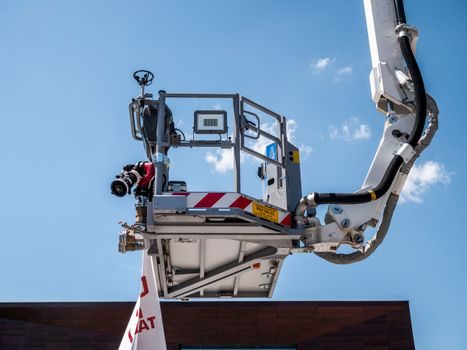
Loader cranes run open-centre or load-sensing hydraulics off a PTO (power take-off) or dedicated gear pump; plumbing routes, return-line filtration, and reservoir sizing all follow the crane OEM's installation drawing, and pressure-relief settings are stamped on a nameplate near the control valve [S1][S3].
Two safety circuits are non-optional on every commercial install: an anti-two-block (ATB) device that cuts hoist-up on contact with the block, and a load-moment-indicator (LMI) or rated-capacity-indicator (RCI) that alarms and locks motion at 90 % of chart and cuts at 100 % [S3]. The ATB rope or proximity switch and the LMI pressure transducer are calibrated at install, and the calibration is re-verified at every LOLER thorough examination (typically 12-month intervals, or after any structural event) [S3]. On Hyva, Fassi xe-dynamic / e-dynamic, and Tadano units, the crane electronics bus also feeds Magic Touch or equivalent auto-fold systems, which require the LMI to be live before the auto-fold sequence will complete [S1][S2].
Load-Chart Sign-Off and Witnessed Test Lift
Before handover, every installed loader crane is load-tested against the OEM chart at defined radii (typically 90 %, 100 %, and 110 % of rated load at mid- and max-radius positions), and the readings are recorded against serial number, date, and the installing technician's sign-off [S1][S2].
A documented 2026 install on a Fassi F365A.2.24 e-dynamic recorded 3910 kg @ 8.37 m on a rear-mount configuration, while the smaller F185.2.25 xe-dynamic recorded 785 kg @ 14.75 m for roof-truss delivery service — both passed final load testing and were released to the operator on the same day [S2]. A F235A.2.25 e-dynamic mount on a Mack Granite chassis logged 19.06 t·m and 14.90 m max reach, and was overload- and stability-tested at 2050 kg @ 10.3 m before release [S2]. These three numbers are typical of what an installer's QA dossier must contain to satisfy LOLER/PUWER on first commissioning [S3].
Compliance, Documentation, and After-Install Service
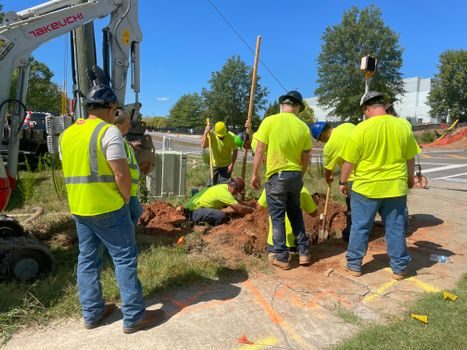
Documentation delivered to the operator at handover includes the CE / UKCA declaration, the OEM operator's manual, the as-installed load chart, the LMI calibration certificate, the ATB test record, the LOLER thorough-examination schedule, and the PUWER risk assessment for the specific vehicle and use case [S3].
Ongoing service intervals are typically 500-hour hydraulic-oil and filter changes, 12-month LOLER thorough examinations, and 6-month PUWER inspections, with on-site breakdown assistance available from the installer network for cranes, excavators, and hydraulic systems in the same fleet [S3]. Fassi, Mecanil grapplesaw attachments, and elebia remote-release safety hooks are common retrofit or replacement items on Fassi-equipped fleets, and the same installer handles attachment integration and re-test [S2]. For fleets running mixed lifting and loading equipment, the reach truck page covers a related in-plant handling envelope that often shares the same maintenance contractor.
Selection Criteria — Crane Class vs Chassis Class
Specifying a truck crane install is a four-criterion match: (1) maximum lifted load at the working radius the job requires, (2) chassis payload and rail-section modulus to carry the crane's dead weight plus the load, (3) outrigger spread versus legal width and typical site pad area, and (4) compliance regime (LOLER/PUWER in the UK, equivalent state WHS codes in Australia) [S1][S2][S3].
A worked comparison of three common install classes from July 2026 active dealer stock: light-duty Fassi F85B.0.22 / F155A.2.24 e-dynamic on a single-drive cab-chassis for civil-engineering and truss work; mid-duty F185.2.25 xe-dynamic to F365A.2.24 e-dynamic on Mack Granite / Mercedes Actros for power-generation and steel-handling fleets; heavy-duty 25-100 t Zoomlion QY25V532 / QY30V532 / crawler-class QUY100 installations for infrastructure and mining [S2][S5]. Used-equipment pricing on the Grove TMS760E sits in the US $125,000 - $299,500 range across three 2026 listings, useful as a benchmark for a like-for-like replacement budget on a 60-tonne-class truck crane [S6]. The same decision logic at heavier hauling capacity is mapped in the truck scale and crossed-roller guide reference pages.
Common Installation Failure Modes and When to Re-Work
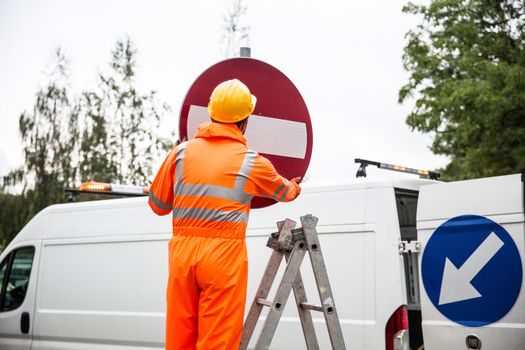
Five failure modes show up repeatedly on real installs: undersized outrigger pads on made-up ground, mis-calibrated LMI pressure transducers, ATB rope set too long, subframe bolted instead of welded where the OEM drawing specifies welding, and PTO/pump mismatch causing low standby pressure at cold start [S3].
Re-work triggers: any LMI drift above 5 % at the 90 %-of-rated calibration point, any ATB cut-out at a block-to-boom tip distance above 0.5 m, any oil-temperature rise above 25 °C over ambient in a 15-min idle, and any chassis-rail web crack detected at the subframe interface — all force a re-test and re-cert before the unit returns to service [S3]. When the fault is structural (cracked rail, bent subframe, hydraulic-cylinder seal-bore damage), the corrective action is replacement, not repair; field-repair guidance for similar component-level installs is in the embedded part installation walkthrough. Where the install is part of a larger foundation or piling campaign, the offshore wind foundation spec map sets the surrounding project envelope.
Trackable signals for the next 30-60 days: the Fassi F700 used on the Sydney Wynyard pedestrian link and the Jekko SPX424 active on Melbourne steel-work sites are reference installations logged in dealer project galleries as of 16 July 2026 [S2], and Zoomlion QY25V532 / QY30V532 new-unit pricing at US $40,000-50,000 per set from the Shanghai exporter channel is a live 2026 benchmark for the 25-30 t mobile class [S5].