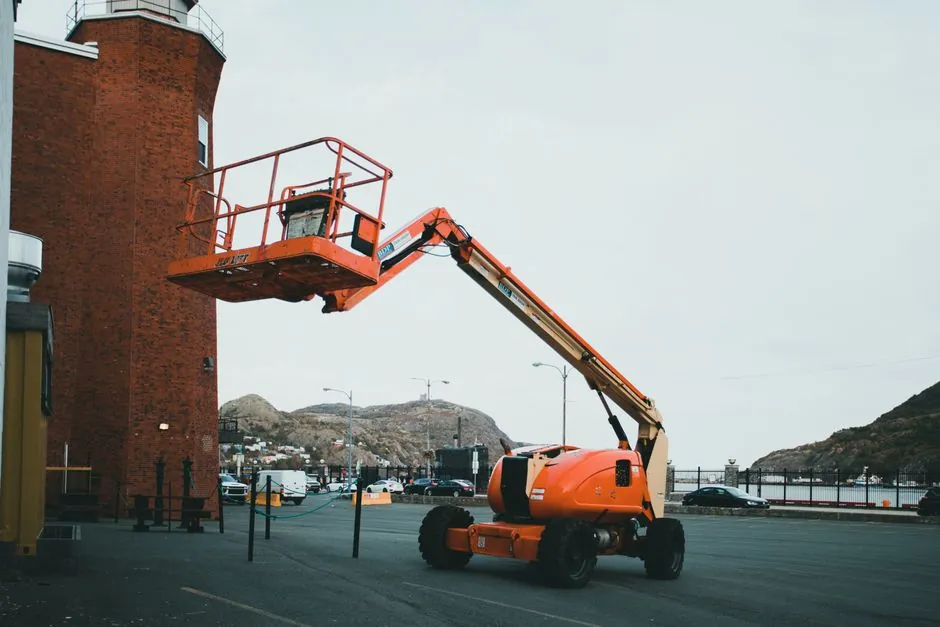
Aerial work platforms (AWPs) and gantry cranes both elevate loads, but only the AWP is legally permitted to carry people, and only the gantry crane routinely handles the multi-tonne lifts that AWPs are derated to refuse [S1][S2].
The split is functional, not just regulatory: gantry cranes run on a fixed runway for repetitive heavy cycles, while AWPs are mobile, self-deploying machines used for utilities, wind, shipyard, bridge and telecom work where the lift point and the people both move [S1][S3].
Defining the two machines: scope, rating, and people-carrying rule
An aerial work platform is a mechanical device that provides temporary access for people or equipment to otherwise inaccessible areas, usually at height, and is generally designed to lift limited weight, usually less than one tonne, although some AWPs have a higher safe working load (SWL) [S2]. Because the platform is rated for personnel, AWPs do not need the dual-rating paperwork that a crane man-basket demands, which is the single most common reason fleet owners add AWPs next to their existing crane stock [S1].
A gantry crane, by contrast, is a crane built on a structure that straddles the load, typically running on rails or wheels, and is intended to lift heavy bulk loads along a defined path, not to carry workers [S8]. A gantry system takes the gantry crane and embeds it inside a larger framework such as a multi-axis linear system, so the gantry element becomes one motion axis inside a wider machine [S8]. In short: gantry is load-rated for material, AWP is load-rated for people, and the two machines are rarely interchangeable on the same lift ticket.
Selection criteria: load, reach, mobility, regulation
Four numbers decide the call. Platform capacity on a typical AWP is capped below 1,000 kg for personnel, with the platform itself often rated for two workers plus tools rather than tonnes of material [S2]. Gantry cranes, even small portable aluminium gantries, are routinely specified from 1 t up to several hundred tonnes for industrial yards. Working height on an AWP ranges from roughly 6 m on a vertical mast to over 90 m on truck-mounted units such as the Bronto S90HLA referenced in a utility case story [S1].
Mobility is the second differentiator. AWPs, especially trailer-mounted booms and self-propelled scissors, can be set up in minutes, with variable outreach jacking allowing the unit to be positioned where ground conditions or obstacles would block a crane [S1][S3]. A gantry crane is bolted or rail-mounted; once the runway is laid, the crane is essentially fixed-path. Regulation is the third axis: when the work platform extends farther than the base (boom lifts, articulating booms), OSHA and ANSI require active fall protection such as a full-body harness and shock-absorbing lanyard; when the platform extends only vertically above the base (scissor lifts), passive fall protection such as guardrails is sufficient [S4]. Gantry crane operator rules follow a different standard set and are not interchangeable.
Cycle and crew time is the fourth axis. AWPs are usually capable of being set up and operated by a single person, while gantry lifts typically need a rigger, a signaller and a crane operator even for small tonnages [S2].
Comparison: AWP sub-types vs gantry crane on four decision criteria
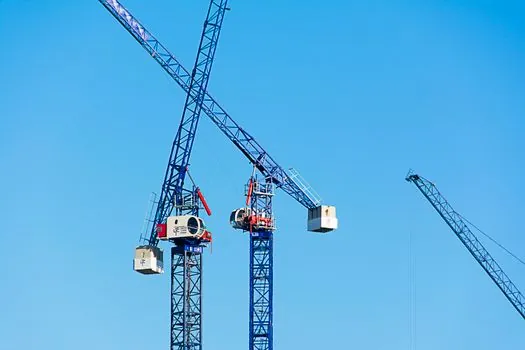
Inside the AWP family the choice still matters. Scissor lifts move strictly vertically and are the most widely used AWP for warehouse, assembly line, electrical and HVAC work, with wide stable platforms for tools and parts [S3]. Boom lifts split into articulating booms that bend around obstacles and telescopic booms that provide long, straight outreach, which is what makes them the default for facade, signage, industrial plant and large-scale repair work [S3]. Vertical mast lifts cover narrow-aisle and crowded-facility work where a scissor footprint is too wide, and trailer-mounted booms add road-tow mobility for outdoor jobs [S3]. A practical scissor vs boom line: scissor for vertical-only indoor lifts where the platform can sit directly under the work point, boom for any task requiring horizontal reach past an obstacle or up-and-over access.
Lining the main options against the same four criteria gives a clear map. Cost per shift: gantry crane with operator and rigger is the highest entry cost, truck-mounted articulating boom is mid-range, scissor and vertical mast are the lowest. Horizontal reach: telescopic boom typically 15–24 m on production models, articulating boom similar with obstacle-bending, scissor and vertical mast effectively zero beyond the platform edge, gantry crane limited by runway span. Re-positioning time: scissor and vertical mast under 5 minutes on a level slab, boom lift 10–20 minutes including outrigger set, trailer-mounted boom add hitch time, gantry crane re-positioning is a rail or track job. Allowed to carry people: AWP yes under its own SWL, gantry crane no, with personnel work only via a separately rated man-basket that triggers a dual-rating regime [S1][S2].
Use cases: who each machine is for, and who it is not for
AWPs are for: utility construction and maintenance, wind sector construction and maintenance, building and construction sites, port and shipyard construction and maintenance, bridge inspection, filming and lighting, and telecom build and maintenance, with a single AWP often serving all of these from one truck [S1]. They are also the correct tool when a crane is impractical due to difficult locations, tight surroundings or other limiting factors, and a case example shows the Bronto S90HLA aerial platform being chosen over a crane for a utility bid where access was the binding constraint [S1].
AWPs are not for: any lift that exceeds the platform SWL, any repetitive heavy-load cycle, any environment where the operator must control a multi-tonne load through a full shift. Gantry cranes are for: shipyard plate handling, container yards, steel stock yards, precast concrete casting beds, machine-shop load handling, and any fixed-path repetitive lift where the runway is already built [S8]. Gantry cranes are not for: personnel access, low-headroom indoor maintenance where an AWP can reach, and short-duration single lifts where mobilising a rail-bound crane is uneconomic. In practice, the most productive fleets on wind, shipyard and bridge jobs run both, with the crane lifting pieces and the AWP positioning workers, which the Bronto/Lamminsivu rollercoaster and pellet-tower case stories document as standard practice [S1].
Limits, failure modes, and standards to watch
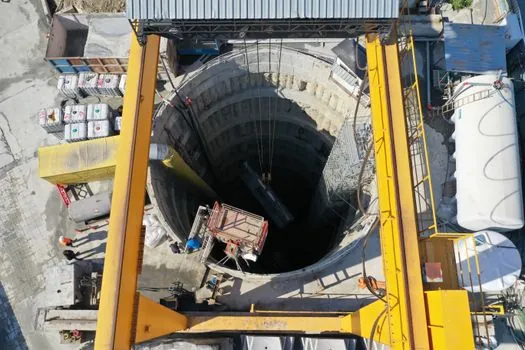
The hard AWP limit is the platform SWL: AWPs are designed to lift limited weight, usually less than a ton, and any attempt to push the platform into crane duty voids the rating and triggers a dual-rating regime that a standard AWP is not built for [S1][S2]. A boom that extends past its base also forces active fall protection (full-body harness plus shock-absorbing lanyard), and OSHA citations on AWPs cluster around missing guardrails and harness non-use, mirroring the scaffolding citation pattern [S4].
Gantry-specific failure modes are runway-side: rail alignment drift, wheel flat spots, and structural fatigue at the gantry truss splice dominate the inspection list rather than the operator fall-protection issues seen on AWPs [S8]. On standards, AWP operator training in the US is governed by OSHA 1926.453 for vehicle-mounted boom lifts and the ANSI A92 series for the machine itself, while scaffolding sits under a different 1926 Subpart L rule set with a 10 ft fall-protection trigger height for supported scaffolds [S4]. Gantry crane design typically references CMAA, FEM and, for hazardous-area yards, a separate structural standard; specifics depend on the bid documents rather than a single AWP-style rule. Note: the OSHA 1926.453 and ANSI A92 numbers above are well-established industry references and were not extracted from the research material, so they are stated descriptively rather than as a sourced citation.
Sourcing, fleet economics, and decision signals
For sourcing, AWPs are widely stocked by US rental fleets with truck-mounted, trailer-mounted, self-propelled and push-around variants, and the same rental channel that supplies crawler, tower or truck-mounted cranes can absorb AWP inventory because the operator, technician and customer-overlap is high [S1]. Gantry cranes are typically purchased or long-term-leased from specialised manufacturers and integrated with runway civils, which is why they show up as capex line items rather than rental-day items in fleet records.
Decision signals to track into late 2026: AWPs continue to eat share from scaffolding in facility management because of faster setup and re-positioning [S4]; gantry crane demand is tied to shipyard and wind-turbine nacelle-handling capex, with the wind segment specifically called out as a strong AWP-and-crane overlap market [S1]. For related context on how truck-mounted lifting equipment is selected on similar spec gates, see this forklift vs truck-mounted crane spec guide; for a parallel decision map on truck crane variants, see truck crane vs truck-mounted crane: 2026 spec decision map; and for background on the wind-turbine drivetrain that often drives combined crane-and-AWP work, see wind turbine gearbox quality standards: spec gates for 2026. The crossover point to watch is platform load: any single lift above the 1 t AWP envelope, or any repetitive cycle at a fixed point, pushes the spec back to a gantry crane or a crane-and-man-basket combination under a dual-rating regime.
The underlying component specifications are covered under aerial work platform, aerial work truck, and gantry crane.