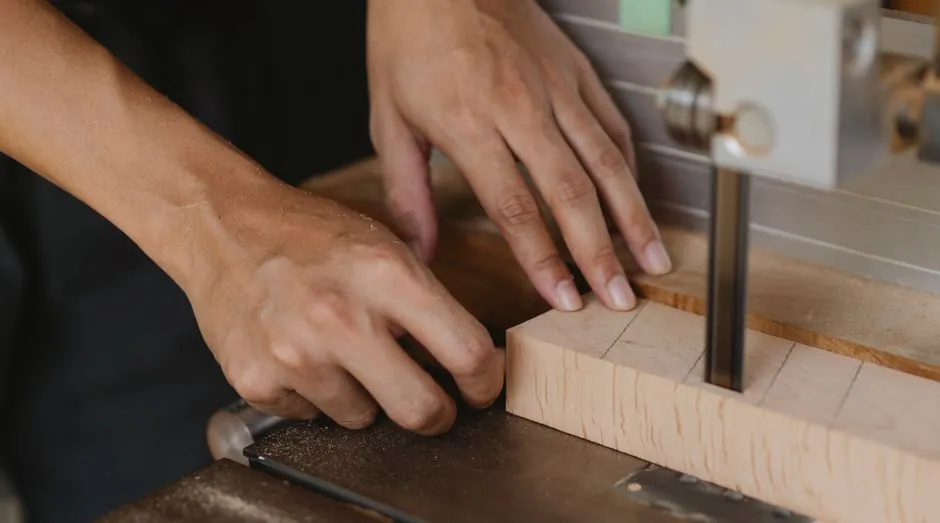
A riser cutting machine for aerospace castings is a heavy-duty shear, abrasive-wheel, or band-saw derivative sized to sever feeder heads from 20 mm up to 250 mm neck diameter, and the right architecture depends on alloy (aluminum, titanium-fed steel, nickel-base superalloy investment castings), cycle time, and AS9100 traceability.
Aerospace cleaning rooms differ from automotive lines in three ways: melt mix is broader, batch sizes per part number are smaller (often 50–500 pieces), and the documentation chain (cut pressure, blade life, dust-extraction status) must be logged per part. That re-weights the spec discussion toward servo-CNC and semi-automatic cells rather than high-throughput manual lever machines.
Drive class and riser-diameter mapping
Pneumatic riser cutters (0.5–0.8 MPa shop-air cylinders) cap out at roughly 80 mm riser neck diameter with 3–6 second cycle times, and they remain the default on small aluminum aerospace job-shop cells where lot sizes are under 200 pieces [S3].
Hydraulic riser cutters running 10–21 MPa system pressure and delivering 5–30 kN cutting force are the workhorse for necks above 80 mm, which covers most structural aluminum and steel aerospace components such as landing-giet fittings, engine housings, and large investment-cast turbine cases [S3].
Servo-CNC riser cutters with a lead-screw or rack-and-pinion axis hold cut-length repeatability inside ±0.5 mm and support recipe-based parameter switching between part numbers, which is a hard requirement when the same cell must process 10+ part numbers a week under AS9100 traceability [S3].
Cutting-action architecture for aerospace alloys
Shear-blade riser cutters deliver blade life of 5,000–15,000 cuts on gray and ductile iron but the life curve drops sharply on nickel-base superalloys and on titanium-containing steel risers, where abrasive-wheel or band-saw architectures become the safer bet [S3].
Abrasive-wheel riser cutters mount 300–600 mm wheels running 2,000–3,800 rpm and are the preferred architecture for steel castings and riser necks above 100 mm, but they trade a wheel life of roughly 200–400 cuts (a 400 mm wheel) for that capability [S1][S3].
Saw-type riser cutters (band-saw or cold-saw derivatives) appear on heavy steel foundry floors and on riser necks above 150 mm, where a slower cut and a clean, low-burr parting line often eliminate a downstream grinding pass, an important cost lever when the next operation is five-axis CNC milling of an aerospace surface [S3]. For the broader cut-off family that a procurement engineer evaluates in parallel, the riser cutting machine encyclopedia entry maps the same capacity ranges against blade diameter and frame geometry.
Throughput, automation tier, and cell economics
Manual lever or foot-pedal riser cutters still ship in volume for job-shop foundries pouring under 200 t/day, and they survive in aerospace only where labor cost is low, mix variance is high, and part numbers change daily [S3].
Semi-automatic riser cutters add a powered clamp plus two-hand safety actuation, cut cycle time per riser to 2–4 seconds versus 6–10 seconds on a manual lever machine, and they are the most common entry point for an aerospace foundry that wants consistent cut quality without full robotic integration [S3].
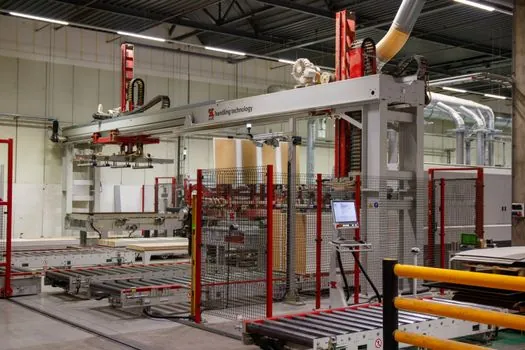
Fully automatic cells with conveyor or robotic pick-and-place feed become economically justified above roughly 1,500 t/year of single-part-number throughput, and on a 700 mm-class heavy vertical band saw that cell commonly pairs a 420 mm throat with 500 mm cut height, the geometry that handles the largest single-piece investment castings [S2][S3]. Where the same plant runs sand cores inline, the core machine reference page covers how core-setting and riser-cutting cells are typically sequenced inside a foundry line.
Standards, dust, and noise compliance gates
CE Machinery Directive conformity, ISO 12100 risk assessment, and IEC 60204-1 electrical safety are the non-negotiable baseline for any riser cutting machine delivered to a European or North-American foundry [S1].
For dust and noise, compliance with OSHA 29 CFR 1910.95 (noise, 90 dB(A) 8-h exposure) and with the ACGIH iron-oxide and respirable-crystalline-silica TLVs is the practical gate; abrasive cutting of cast iron produces metallic and silica-bearing dust that breaches occupational exposure limits within minutes without a correctly sized extraction unit (typically 4,000–10,000 m³/h for a single cell), and noise from a hydraulic shear sits in the 90–105 dB(A) range [S1].
Abrasive wheels must conform to ANSI/UAMA B7.1, and stationary grinding machines used as riser cutters fall under EN ISO 16089 in the EU [S2]. Aerospace lines that run in-process coding for serial-number traceability should also budget the coding machine interface into the cell PLC, so cut-cycle counts and code-read events land in the same dataset the AS9100 audit pulls.
Cutting-machine options for the wider aerospace cutting room
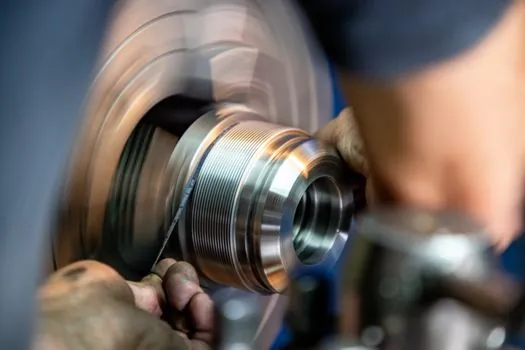
Waterjet cutting machines (BP-C 2D / 2D 1/2, BP-H 5-axis modular) cut composite materials, carbon and glass technical fibers, resins, polymers, and all kinds of metals without a heat-affected zone, which is the decisive advantage when the next station is autoclave layup or hand-trim of a flight-critical composite [S4].
Fiber laser systems such as the Smartline Fiber deliver the precision and edge quality required for thin-gauge aerospace sheet, while gantry-type CNC water-jet machines are specified where vibration control and extended-axis accuracy matter for large composite or honeycomb panels [S4][S5][S6].
For sheet metal in the 0.5–10 mm range with tight tolerances and clean edges, a fiber laser remains the industrial benchmark; for steel plate in the 6–50 mm range where speed dominates, plasma or oxyfuel still compete on cost-per-meter, even though they sit outside the riser-cutting scope [S7]. The general cut-off family, including band saw, abrasive, and swing-frame variants, is catalogued on the cutting machine reference page, and adjacent tooling decisions land in the welding cutting tool encyclopedia entry.
Selection criteria for an aerospace procurement engineer
Match drive class to the dominant riser neck diameter first: pneumatic up to 80 mm, hydraulic 80–250 mm, and servo-CNC where part numbers rotate and recipe traceability is required [S3].
Match cutting action to the alloy: shear blades for gray and ductile iron, abrasive wheels for steel and large necks, band-saw or cold-saw derivatives for the cleanest parting line on heavy steel or nickel-base castings [S1][S3].
Match automation tier to throughput: manual under 200 t/day with high mix, semi-automatic for the 200–1,500 t/day band where AS9100 documentation is needed, full robotic cell above 1,500 t/year of single-part-number volume [S3].
Budget the hidden cost lines: a mid-capacity hydraulic riser cutter carries capital cost 5–10× a manual chipping station, and the consumable bill (abrasive wheels every 200–400 cuts versus multi-thousand-cut shear blades) flips sharply with architecture choice [S1].
Limits and failure modes to spec in advance
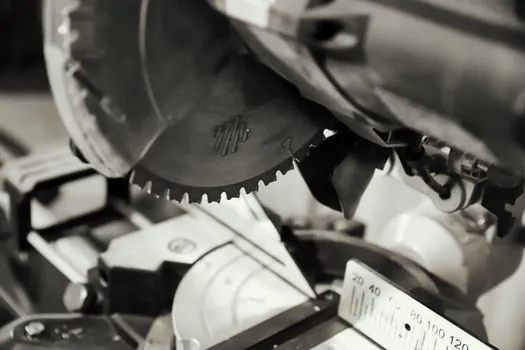
A 510 mm (20 inch) abrasive wheel tops out at about 150–180 mm round on gray iron; trying to push beyond that diameter bends the wheel, while a heavy foundry vertical band saw in the 700 mm wheel class reaches roughly 420 mm throat and 500 mm cut height and is the geometry that actually reaches large investment-cast turbine cases [S2].
Abrasive-wheel change-out cycles of 80–300 cuts dominate the consumable-cost line on wheel-based cells, and the dust-extraction ducting, not the machine, is the more frequent downtime cause on mis-specified cells; spec the 4,000–10,000 m³/h extraction unit at the same time as the cutter, not as a retrofit [S1][S3].
Hydraulic oil, filter elements, dust-extraction filter bags, and shear-blade re-grinding are the four recurring monthly cost lines that swing the total-cost-of-ownership comparison between architectures, and they are the reason a 5–10× capital premium for a hydraulic cell is often recouped inside 18–24 months on a steady aerospace part [S1].
Trackable signals to watch next
Track the next AS9100 audit cycle on your cleaning room, the next abrasive-wheel price refresh from the cell's current supplier, and the next layout review of the riser-cut and shot-blast sequence, since robotic cell ROI above 1,500 t/year of single-part-number volume is the threshold where a half-year payback is realistic [S3]. For a parallel spec discussion on a different melt mix, the riser cutting machine selection for automotive parts map covers the same drive-class and automation-tier matrix for ductile-iron and aluminum automotive castings.