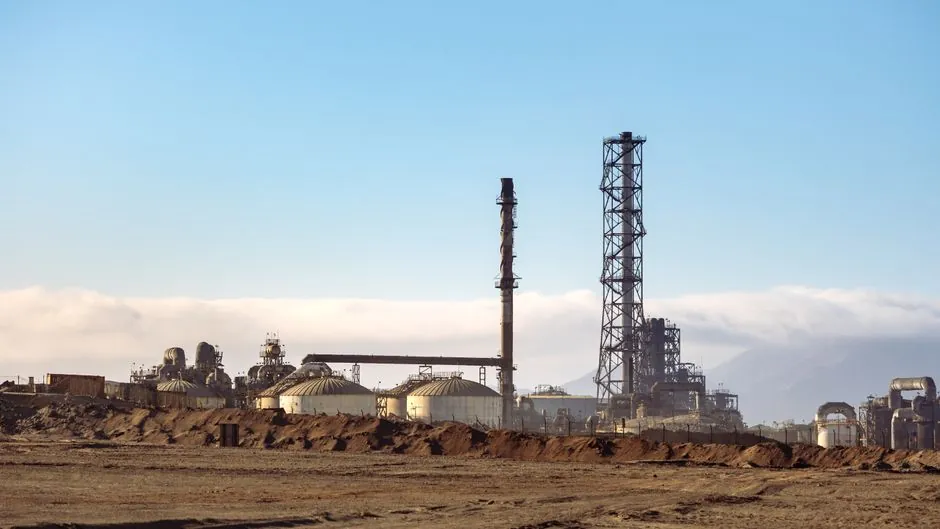
Foundry thermal sand reclaimers liberate organic binder residues at retort temperatures of 1,200 to 1,500°F, and an afterburner (thermal oxidizer) is the standard downstream device for destroying the resulting VOC, CO, and odor streams before the baghouse exhausts to atmosphere [S1].
Reclaimers are offered in capacities from 1/4 to 6 tons of sand per hour, with operating cost below $7.00 per ton on indirect-fired rotary retort designs, and the retort exhaust hood plus cooling-drum hood and air-classifier fines are usually manifolded into a single dust collector before any afterburner stage [S1][S4].
What the Afterburner Sees: Retort and Cooler Exhaust Composition
The reclaimer retort heats sand to 1,200 to 1,500°F to oxidize organic binders, and the resulting exhaust is moisture, CO, light hydrocarbons, partially oxidized binder fragments (phenols, furfuryl, isocyanate residues from phenolic-urethane systems), and fines [S1]. Three natural-gas-fired burners mounted in the upper and lower furnace shells, both internally insulated with ceramic fiber, drive the retort indirectly so that flame does not impinge the sand grains; the exhaust chemistry downstream of the dust collector is therefore similar to a low-Btu, particulate-lean stream of process air rather than a raw furnace flue [S4].
Reclaimed sand leaves the rotary cooler only 10 to 30°F above ambient, and the hot side of the cooler transfers heat into a separate cooling-air exhaust stream that is again handled by the same dust-collection train, meaning the afterburner, when fitted, is typically placed downstream of the dust collector and ahead of the induced-draft fan rather than directly on the retort [S1]. On coated foundry sands, the default emission factor used by US regulators is 0.28 lb of VOC per ton of metal poured, a value carried directly into permit limits on the whole mold-and-core sand stream [S5].
Temperature, Residence Time, and Outlet Targets
Combustion-chamber design for an afterburner serving this stream is governed by the same three numbers used elsewhere in industrial VOC oxidation: combustion temperature, residence time, and outlet Total Organic Carbon (TOC). One engineered installation specifies a combustion temperature of 750°C with 1.0 s residence time inside a chamber lined with insulating brick and ceramic-fiber panels, with a counterflow heat exchanger preheating intake air from 30°C up to 350°C before it reaches the burner [S2]. General-purpose oxidizer designs claim complete VOC combustion at temperatures as low as 650°C, and on oily loads TOC outlet is held below 50 mg/Nm³, with selected applications reaching 30 mg/Nm³ [S3].
US foundry permits reviewed by the Michigan Department of Environment, Great Lakes, and Energy (EGLE) prescribe that the sand-reclamation afterburner be operated at or above 1,350°F (about 732°C), tying the setpoint directly to the VOC and HAPs limits in the active Permit-to-Install rather than leaving it to a generic best-practice value [S5]. The lower bound of 650°C in non-permitted oxidizers and the 1,350°F (732°C) bound in permitted foundry service bracket the operating window a process engineer should expect to see stamped on a nameplate or in a control-loop setpoint.
Energy Recovery and Why It Changes the Operating Window
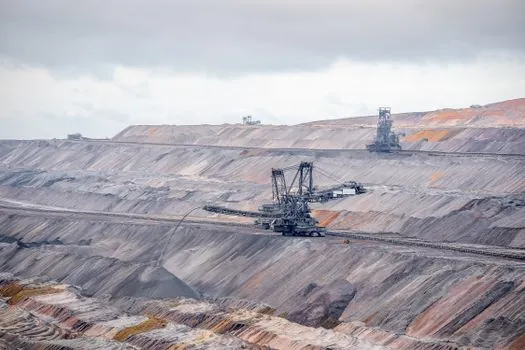
Thermal afterburners are paired with energy-recovery systems because the oxidation temperature is well above what the gas can sustain on its own once the inlet VOC load is lean. A primary recuperative heat exchanger can preheat the contaminated air to 350°C from a 30°C inlet using the hot cleaned flue, and the manufacturer literature for this class of equipment cites energy savings of up to 70% versus a non-recovered design [S2][S3]. A separate integration is found on some European thermal sand-recovery lines, where heat-recovery on the calciner exhaust is sized to bring emissions under local legislation without any afterburner at all, useful context when a project's inlet load is borderline and capital cost is the constraint [S9].
For sand-reclaimer duty specifically, the practical implication is that the afterburner is sized for the post-dust-collector gas flow, not the raw retort off-gas; this is why a single 8,000 CFM baghouse downstream of the cooling drum and classifier is the normal integration, and a move to a 25,000 CFM baghouse (as permitted at one US steel foundry) is a downstream capacity decision that does not change the afterburner firing rate [S5]. A modulating natural-gas burner, in the European painting-process reference case sized at 700 Nm³/h of inlet air with VOC at 5,000 mg/Nm³, is typical of the load range an afterburner on a small-to-medium reclaimer would see [S2].
When the Afterburner Is Required and When It Is Not
Permitting drives the decision in the US. The Michigan EGLE inspection record on a steel foundry operating a thermal sand reclaimer requires an afterburner maintained at or above 1,350°F as a permit condition, with annual sand throughput limited to 18,913 tons and metal melt limited to 20,000 tpy under 40 CFR 63.10880(f) [S5]. The same inspection record lists the default VOC factor at 0.28 lb/ton of metal poured, which is the load the afterburner must destroy on a continuously compliant line, and HAPs limits of 8.9 tpy single HAP and 22.4 tpy aggregate HAPs are the boundary conditions for opt-out from Major Source NESHAP/MACT 5E to Area Source MACT 5Z [S5].
Some non-US reclaimer lines are sold with guaranteed emissions under local legislation and no afterburner as part of the standard delivery, with the heat-recovery plant itself sized to do the work [S9]. The decision rule an engineer should apply is straightforward: where binder systems are predominantly organic (phenolic-urethane, furan, epoxy/CO2), or where the site is on a US NESHAP/MACT opt-out path, an afterburner is normally required; where the heat-recovery boiler outlet temperature already exceeds the auto-ignition of the residual VOC and residence time inside the boiler exceeds 0.75 s at that temperature, an explicit afterburner can be omitted, but that is a project-by-project demonstration [S3][S9].
Sand-Specific Concerns: Binder Chemistry and Carryover
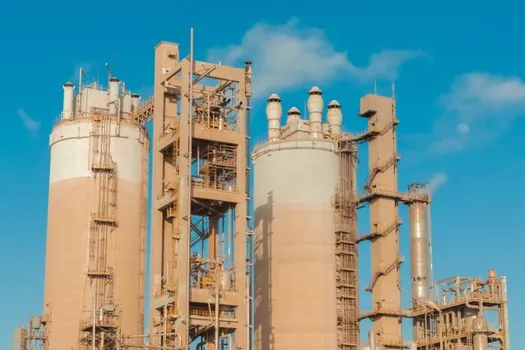
Thermal reclamation on the rotary retort is intended to oxidize the organic binder film on the sand grains so the reclaimed product can be re-bonded, and any VOC that escapes the retort unoxidized becomes the afterburner's inlet load [S1]. The 20-mesh screen on the cooler discharge catches tramp metal and oversize, but fines below 20 mesh pass through the air classifier and report to the dust collector; these fines carry the highest concentration of partially oxidized binder, so the dust-collector hoppers are the most odor-active part of the line, and the afterburner should be plumbed to receive air displaced from hopper venting as well as the main exhaust [S1][S4].
On systems with a separate rotary cooler and an air-classifier dedusting branch, three exhaust streams are normally manifolded: the retort exhaust hood, the cooler transfer hood, and the cooler discharge dust hood, and a single 400°F-construction dust collector upstream of the afterburner is the typical integration in the standard 1/4 to 6 tph envelope [S4]. For foundries pouring corrosion-resistant or stainless grades (NAICS 331513), any chloride or fluoride from binder residues converts to HCl/HF in the afterburner, which is why stainless exhaust stacks and lined ductwork appear on painting-line references even at small flow rates such as 700 Nm³/h [S2][S5].
Comparison of Afterburner Integration Options
Four practical options exist for putting an afterburner on a thermal sand reclaimer, and the right pick is set by the inlet load and the regulatory cap rather than by the brand of reclaimer: [S2]
Option A, dedicated afterburner downstream of dust collector, sized for the full combined exhaust: fits US NESHAP/MACT opt-out paths and any line using organic binders, and the canonical setpoint is 1,350°F (732°C) with TOC outlet at 30 to 50 mg/Nm³ [S3][S5].
Option B, afterburner on the retort exhaust only, with cooler and classifier exhausts dumped to baghouse directly: cheaper capital but permits higher odor from cooler air, and is rare on permitted lines in the US.
Option C, no afterburner, heat-recovery boiler on the retort exhaust sized to oxidize residual VOC: viable where the boiler exit gas is held above 750°C with 0.75 s residence, and the line is sold with an emissions guarantee under local rules [S9].
Control, Safety, and Stack Hardware
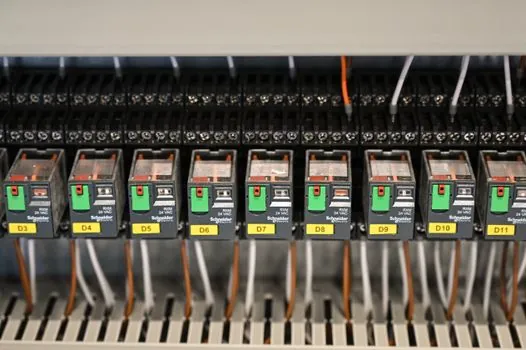
Reclaimer lines run on a single PLC-based control cabinet, and the afterburner should be interlocked into the same PLC with the dust collector's differential-pressure transmitter and the induced-draft fan VFD, so a flame-extinction trip on the burner shuts down the retort burners and the input screw conveyor in a defined sequence [S4][S7]. The afterburner itself is sold with an independent control system and a flame-extinction safety system, typically with a UV or ionization flame scanner, a trial-for-ignition sequence, and a pre-purge of at least four chamber volumes before ignition [S3]. A 400°F-construction dust collector ahead of the afterburner is the most common bill of materials, and a stainless-steel exhaust stack downstream of the afterburner handles the high-temperature, possibly corrosive cleaned flue [S2][S4].
Trackable signals for a new project are: the binder system and resin percentage on the mold line, the retort temperature setpoint, the afterburner combustion-chamber setpoint (1,350°F is a safe target on US permitted lines, 750°C is the typical European reference for a 1 s residence time design), the TOC outlet guarantee from the afterburner supplier, the dust-collector CFM and construction temperature, and whether the permit references 40 CFR 63.10880(f) or an equivalent state rule [S1][S2][S3][S5]. The interaction between heat-treat furnace emissions and afterburner retrofit follows the same combustion-chemistry logic even though the upstream source is different, and the AFS grain fineness number carried on the reclaimed sand is the most direct indicator of how much binder surface area the retort has to oxidize per ton.
For component-level specifications, see construction machinery and equipment, lamps and light fittings, and lighting equipment and electric lamps.