For warehouse automation builds, pneumatic conveying systems move dry bulk materials through sealed pipelines at 15–30 m/s in dilute phase or 1–8 m/s in dense phase, with the air-to-material ratio driving most of the selection decision [S3][S5].
Three flow regimes (dilute, dense, and semi-dense) and two pressure modes (positive pressure and vacuum) define the decision matrix, and each combination maps to a specific material class, distance band, and throughput target documented across OEM engineering guides published between March and August 2026 [S3][S4][S6].
Dilute-Phase vs Dense-Phase: When Each Wins in a Warehouse
Dilute-phase vacuum conveying operates at air velocities of 15–30 m/s with low material-to-air ratios and suits lighter, free-flowing materials over short to medium distances, typically under 400 m, and integrates cleanly with PLC-controlled warehouse cells [S3][S5]. Dense-phase positive-pressure systems run at much lower conveying velocities (commonly 1–8 m/s) with high material-to-air ratios, and they are specified for abrasive, friable, or hygroscopic bulk solids where particle degradation and line wear dominate the cost of ownership [S3][S4].
For warehouse automation under 1,000 kg/hr, dilute-phase vacuum dominates because the rotary valve or venturi feeder, cyclone receiver, and filter receiver all fit inside a standard equipment mezzanine; dense-phase systems are rarely economical below 5–10 t/hr because the blow vessel, airlock trains, and booster blower package add fixed cost that only amortizes at higher duty cycles [S4][S6].
Component Stack: Blower, Feeder, Line, Receiver
A positive-displacement blower (typically a rotary lobe or screw type) generates the pressure or vacuum that drives the line, and blower selection depends on the system type, material bulk density, and conveying distance rather than on a generic cfm rating [S1][S5]. Feed devices break into three families: rotary valves (most common for continuous dilute-phase positive-pressure service), flap or butterfly valves (used with vacuum systems where the blower sits downstream of the receiver), and venturi eductors (for low-rate, sanitary applications where no moving parts can be tolerated in the product zone) [S1][S2].
Conveying lines are typically standard carbon steel or stainless pipe, sized against material bulk density, particle size, and target velocity; elbow geometry is where most premature failures originate, and long-radius (R = 5D to 10D) ceramic-backed elbows are now standard for high-velocity bends carrying abrasive minerals or glass-filled compounds [S1][S7]. Material-air separation at the discharge end uses either a cyclone separator (for coarser, free-flowing granules) or a filter receiver (for fine powders below ~100 µm where cyclone cut-point efficiency drops off), and the choice drives both dust-collection load and the HEPA / FDA compliance boundary for food and pharmaceutical warehouses [S2][S5].
Selection Criteria Mapped to Warehouse Use Cases
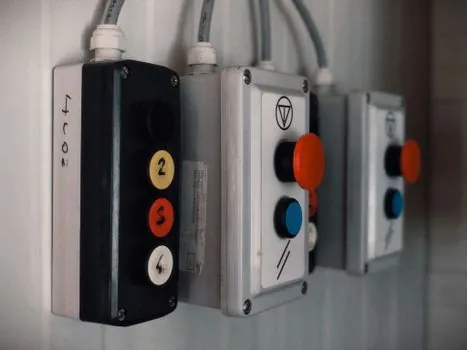
Material bulk density under 500 kg/m³, particle size under 3 mm, and conveying distance under 200 m with multiple bends points engineers toward dilute-phase vacuum; a high-bulk-density abrasive above 1,000 kg/m³ with friable flakes and runs over 300 m points toward dense-phase positive pressure, regardless of throughput [S3][S4]. Automation readiness is a separate axis: vacuum systems integrate with warehouse PLCs through a single pressure transducer and a discharge valve, while dense-phase systems require sequencing across blow vessel, top-up valve, booster, and line purge, which typically demands a dedicated control cabinet rather than repurposed conveyor I/O [S2][S6].
For a typical distribution-center scenario moving plastic pellets from railcar to silo to bagging station, dilute-phase vacuum with a rotary-lobe blower, ceramic-backed elbows, and a filter receiver is the conservative 2026 reference design, and it matches the typical application list documented in vendor engineering guides (polymers, lime, soda ash, plastic pellets, and dry milk) [S1][S5]. For a more constrained layout, see the selection framework for storage cages in automotive parts logistics, which uses the same material-and-throughput-first logic that drives conveying choices.
Comparison: Dilute-Phase Vacuum vs Dense-Phase Positive Pressure
On conveying velocity, dilute-phase vacuum runs 15–30 m/s and dense-phase positive pressure runs 1–8 m/s, a roughly 4–10x difference that directly controls particle attrition and line wear [S3]. On typical warehouse throughput bands, dilute-phase vacuum covers roughly 0.1–10 t/hr, while dense-phase positive pressure is usually specified above 5–10 t/hr, with the crossover depending on material friability and line length [S4][S6].
On control complexity, vacuum systems need a single blower VFD and a discharge valve signal, while dense-phase systems require blow-vessel sequencing, booster control, and line-purge logic, which typically means a dedicated control panel rather than shared conveyor I/O [S2][S6]. On integration with packaging and palletizing cells, dilute-phase vacuum is the lower-friction option for greenfield warehouse automation because the upstream and downstream equipment (bagging machines, silos, palletizers) can share a single PLC programming layer without protocol conversion [S1][S2]. On the conveying pipeline side, the same diameter pipe carries very different pressures in each mode, and designers should size the line to the dense-phase case if a future conversion is on the roadmap.
Failure Modes and What Warehouse Audits Catch First
Line plugging is the dominant failure mode in dilute-phase systems and almost always traces back to undersized conveying velocity, moisture in the line, or a material whose bulk density shifted outside the original design band, not to the blower itself [S1][S4]. Elbow erosion at the outer radius of standard 90° bends is the second-most-common failure and is the reason ceramic-backed or replaceable elbow liners are now standard on abrasive service, not an upgrade option [S1][S7].
Rotary valve air leakage on the positive-pressure side is a documented cause of throughput loss and is the reason modern dense-phase systems use blow vessels with dedicated vent lines rather than depending on rotary valve airlock sealing at high differential pressures [S3][S6]. For dust-control compliance, the filter receiver's differential pressure gauge is the field sensor that tells maintenance when to service the filter elements, and it should be wired into the warehouse SCADA so a rising dP trend triggers a work order before the receiver goes into overflow [S2][S5].
Standards, Sourcing, and Documentation Trail
For food and pharmaceutical warehouse builds, system documentation typically references FDA-compliant contact materials, 3-A sanitary standards for filter receivers and cyclone separators, and ATEX zone classification for any blower package installed near a dust cloud, while general industrial builds reference ISO standards on pressure piping and the blower's own CE / UL package [S3][S5][S7]. ATEX 2014/34/EU governs equipment for use in potentially explosive atmospheres, and any pneumatic conveying line handling combustible dust should be assessed against the relevant IEC 60079 series for the zone classification, since the line itself is a credible ignition source when material sticks and overheats [S5][S7].
Two trackable signals to watch going into Q4 2026: vendor-published case studies on dense-phase retrofits of existing dilute-phase lines in distribution centers, and any change to ATEX guidance on pneumatic conveying lines handling combustible dust in enclosed warehouse spaces.
For the relevant spec sheets and selection criteria, see conveying, and pneumatic.