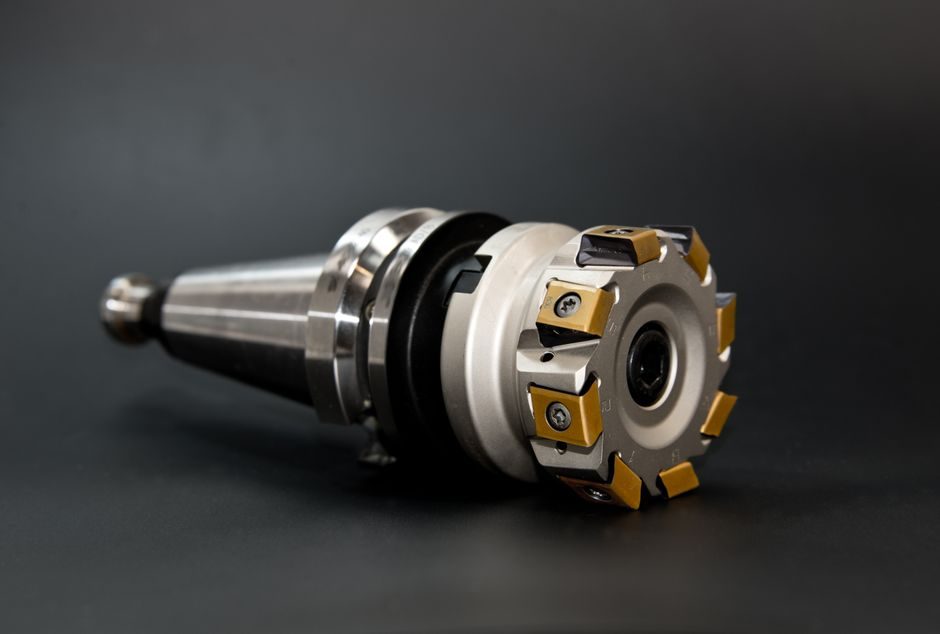
NVIDIA leads the global accelerated-computing market with a product line that targets data-centre workloads across training and inference, per the company's 2026 positioning materials [S3].
China's domestic ASIC alternative — Baidu Kunlun — completed its independent funding round in 2021 at a post-money valuation of roughly 13 billion RMB, with CPE Yuanfeng leading and IDG, Legend Capital and Yuanhe Puhua following [S4].
A B2B sourcing index for the literal term "accelerator" lists 252 manufacturers and 756 products, dominated by forklift pedal subassemblies, rubber vulcanisation additives and chemical masterbatches rather than silicon devices [S2] — a critical disambiguation that spec-driven buyers must handle before issuing an RFQ.
Defining the term: silicon accelerator vs industrial "accelerator"
AI chips — also called AI accelerators or compute cards — are modules dedicated to the matrix-multiplication workloads that dominate deep-learning training and inference, with non-compute tasks left to the host CPU; the three structural families are GPU, FPGA and ASIC [S5].
The mass-parallel GPU is the cheapest option per operation but draws higher power; FPGAs with built-in DSP blocks and on-chip memory are more power-efficient but command a higher unit price, while ASICs target a fixed workload at the best perf-per-watt but lose flexibility once taped out [S5].
Industrial procurement portals index the word "accelerator" as a completely different commodity: rubber-vulcanisation additives, forklift accelerator pedals and pre-dispersed masterbatch chemicals — none of them silicon — and a buyer who searches without a part-number qualifier will receive chemical and mechanical quotes instead of compute hardware [S2].
Tier 1: GPU compute vendors and their product pattern
NVIDIA's accelerator line is built around the data-centre GPU, with the company publicly stating that it is "fundamentally changing how computing works and what computers can do" while modernising a multi-trillion-dollar data-centre industry [S3].
The GPU family fits the matrix-heavy branch of the AI workload stack: dense linear algebra on FP16, BF16, INT8 and FP8 tensors, with high-bandwidth HBM attached to each device; typical 2026-era SKUs in this family include data-centre parts at 700–1000 W TDP with NVLink and PCIe Gen5 host interfaces.
When the workload skews to fixed-function inference at scale, the GPU TDP and memory bandwidth become overhead — which is the design space where FPGA and ASIC accelerators compete, not where another GPU wins on raw FLOPS [S5].
Tier 2: China's domestic ASIC and FPGA line
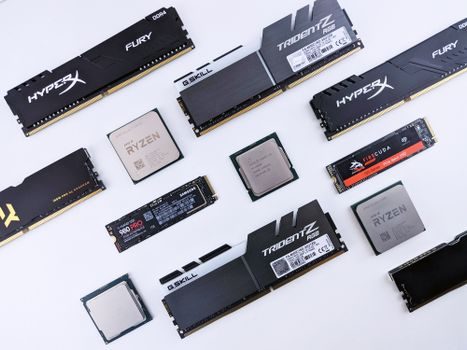
Baidu Kunlun is the first cloud-scale, full-function AI chip designed in China, unveiled on 2018-07-04; Baidu's own internal benchmark claims roughly 30× the performance of an FPGA-based AI accelerator [S4].
Independent financing of the Kunlun business closed in March 2021 at approximately 13 billion RMB post-money, with CPE Yuanfeng as lead investor, and IDG Capital, Legend Capital and Yuanhe Puhua co-investing [S4].
For Chinese hyperscaler and state-owned cloud deployments, the Kunlun roadmap offers a non-NVIDIA path; for buyers outside that supply chain, the practical procurement question is which merchant-silicon ASIC (Google TPU, AWS Trainium, etc.) covers the same perf-per-watt envelope [S5].
Tier 3: industrial "accelerator" components on B2B portals
Made-in-China indexes 252 manufacturers under the accelerator keyword, with representative entries including Hefei Huanxin Technology Development (charger, control handle, accelerator, controller, indicator; 76 employees; 2,000+ m² plant area; 29.56 Mil USD annual revenue) listing pedal-type accelerator units at US$20–27 per piece with a 2-piece MOQ [S2].
Hangzhou Manlong Forklift Parts offers an accelerator-type product at US$49 per piece (1-piece MOQ), while Hefei Tiezhong Machinery lists forklift accelerator subassemblies at US$30–285 per piece — the price spread reflects the difference between a simple throttle-position sensor and a complete pedal-and-sensor module [S2].
The chemical branch of the same index is led by Guangzhou Jingsha Rubber Trade (synthetic rubber, rubber accelerator, carbon black, rubber antioxidant, rubber additives) at US$1/kg with a 25 kg MOQ, and SIDLEY CHEMICAL at US$0.9–1.5/kg with 1,000 kg MOQ for construction-chemical accelerators [S2].
Selection criteria: matching the silicon family to the workload
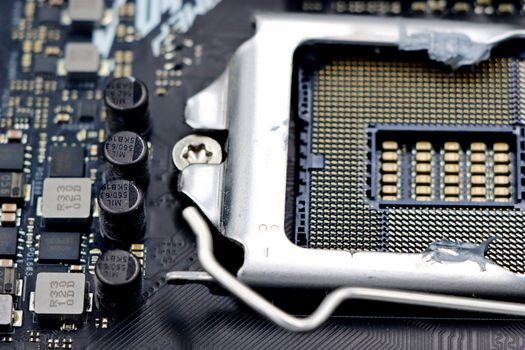
For training jobs that re-shape every few weeks and demand FP16/BF16 throughput on dense layers, a data-centre GPU remains the lowest-friction choice; the silicon perf-per-watt penalty is the price of programming flexibility [S5].
For inference at fixed model architecture and tight power budgets, an FPGA with on-chip DSP and local memory delivers the best perf/W ratio, accepting a higher unit cost and longer compile time [S5].
For hyperscale or sovereign-cloud deployments at a fixed model topology, an ASIC tape-out amortises the NRE across millions of inferences and delivers the lowest steady-state perf/W — the path Baidu took with Kunlun in 2018 and that drove the 2021 spin-out at ~13 billion RMB [S4].
The cost stack for the silicon branch in 2026 — wafer, packaging and HBM — is analysed in detail in the AI chip manufacturing cost breakdown reference, while the downstream system margin is mapped in AI server supply chain 2026.
Procurement pitfalls: keyword collision and sourcing hygiene
An RFQ issued under the bare term "AI accelerator" will pull rubber-additive suppliers, forklift-pedal makers and silicon vendors into the same inbox; the fix is to attach a part-number prefix (GPU, ASIC, FPGA, HBM) and a protocol or interface spec (PCIe Gen5, NVLink, Ethernet) on the first line of the query. [S5]
Cross-checking the silicon vendor list against the industrial index shows why: Hefei Huanxin's 2,000+ m² plant area, 76 employees and 29.56 Mil USD revenue is mid-tier industrial-pedal scale, not data-centre scale — the unit price of US$20–27 confirms the form factor [S2].
Buyers who need a 700–1000 W PCIe/NVLink compute device should be talking to the silicon tier, while buyers who need a 12 V throttle-position sensor for a Class III forklift should be talking to Hefei Huanxin or Hangzhou Manlong — two completely different supply chains that share a single English keyword.
Standards and conformance map for silicon accelerators
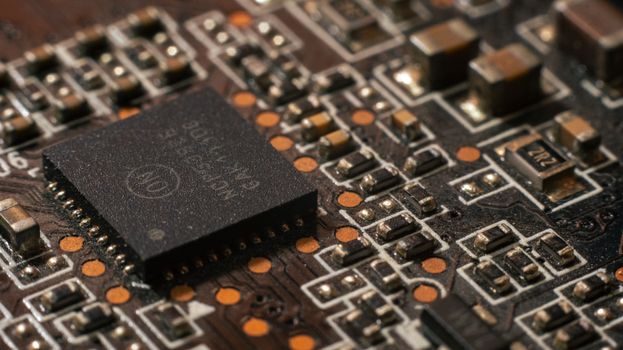
Data-centre GPU and ASIC accelerators are typically qualified to the form-factor and electrical envelopes defined by PCIe SIG, NVLink and OCP (Open Compute Project) specifications, while the host systems follow NEBS Level 3 for telecom and TIA-942 for data-centre topology. [S1]
Power-supply conformance is covered by IEC 62040 for UPS feeds and 80 PLUS efficiency tiers for the PSUs themselves; safety listings (UL, CB) and EMC (FCC Part 15, EN 55032) are required for deployment in North America and Europe respectively.
Buyers specifying accelerators for industrial-edge sites should also check the enclosure rating (IEC 60529 IP class) and vibration/shock profile (IEC 60068-2) — neither of which applies to a cloud-region deployment but both of which apply to a factory-floor inference box.
For an edge AI appliance, the sensor and valve I/O stack that surrounds the accelerator follows the same IEC 61131-3 and fieldbus conventions as a PLC — the accelerator plugs in as a high-speed compute coprocessor while the pressure transmitter and flow meter loops continue to run on the deterministic scan.
Buyers who are sizing the rack power and cooling envelope for a new accelerator cluster should track the AI server supply chain 2026 note for EMS footprint and tariff exposure, and cross-check the AI chip manufacturing cost breakdown when negotiating wafer and HBM cost-down milestones.