AI server shipments in 2026 are throttled less by GPU availability than by three coupled constraints: HBM memory, TSMC CoWoS advanced packaging, and the grid interconnection queue at hyperscaler sites [S1][S2][S3].
HBM3E supply for calendar 2026 is already allocated at SK hynix, Samsung, and Micron, and HBM4 shipments began in Q4 2025, while CoWoS capacity at TSMC is being expanded specifically to close the logic-plus-memory packaging gap [S3]. On the demand side, Gartner projects 40% of AI data centers will be power-constrained by 2027, and new-grid approval timelines in Northern Virginia, Silicon Valley, and Northern Europe have stretched to 24–36 months regardless of hardware availability [S2].
HBM3E is sold out through 2026, HBM4 ramps Q4 2025 onward
HBM3E remains the dominant memory for current-generation accelerators, with Micron confirming it has completed price and volume agreements for its entire calendar 2026 HBM supply and expecting tightness to persist beyond 2026 [S3]. SK hynix closed HBM supply discussions for the following year during its record Q3 2025 quarter and began HBM4 shipments in Q4 2025, while Samsung reported record Memory revenue on the same HBM3E and server SSD pull [S3].
The HBM pull is squeezing adjacent memory output: the HBM-to-DDR5 trade ratio shifts wafer capacity toward stacked die, which tightens DDR5 server DIMM supply in parallel [S1][S3]. AMD's Instinct MI355X illustrates the new coupling, pairing 288 GB of HBM3E with TSMC 3nm and 6nm FinFET logic in a single accelerator bill of materials [S3]. For procurement, ordering accelerators and ordering HBM are now the same conversation.
CoWoS packaging, not wafer starts, is the second gate
TSMC stated in its Q3 2025 earnings commentary that it is working to narrow the gap between CoWoS demand and supply while continuing to add capacity through 2026, and described AI-related frontend and backend capacity as very tight [S3]. NVIDIA's own commentary echoes this: Blackwell demand is expected to exceed supply for several quarters, with continued constraints on both Hopper and Blackwell systems [S3].
The practical implication for system integrators is that wafer access no longer guarantees finished accelerators. A supplier can hold a 3nm or 2nm allocation and still ship late if CoWoS slots are queued behind larger AI customers, which is why advanced packaging must be tracked as a separate component line on the BOM rather than rolled into the foundry forecast [S3]. Microchipusa's industry brief flags CoWoS alongside HBM, DDR5, SSDs, MLCCs, optics, and power connectors as the eight categories where AI hardware scarcity has spread beyond the GPU itself [S1].
Grid power and PSU selection now set the buildout ceiling
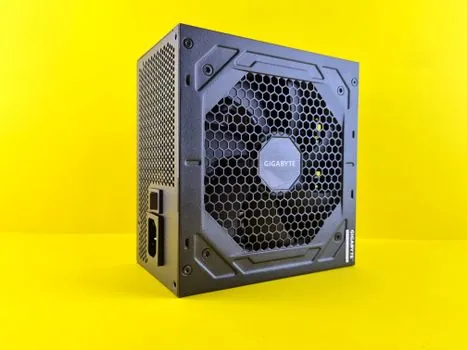
An 8x H100 SXM5 node draws roughly 10.1 kW under inference load, with GPUs accounting for about 56% of node power, and that ratio scales linearly into the megawatt range once PUE is included [S2]. The Spheron analysis places a 1,000-GPU cluster at approximately 1.76 MW of continuous draw, a 5,000-GPU cluster at 8.8 MW requiring medium-sized utility substation capacity, and a 50,000-GPU cluster at 88 MW with a 36+ month approval horizon [S2].
Next-generation hyperscaler campuses are being scoped at 100 MW to 750 MW+, which puts a single AI data center into direct competition with municipal feeders and pushes power cable and substation specifications closer to utility-grade than commercial-grade [S2]. On the rack side, NVIDIA and CSP-driven rack-scale infrastructure is the format trend TrendForce highlights for 2026, meaning lighting-equipment and electric-lamps levels of standardization are now extending to PSUs, busways, and rack-level distribution units [S4]. For buyers, this shifts the spec conversation from per-GPU TDP to total rack power, distribution topology, and utility interconnect lead time.
Inference, not training, is what locks the power budget
Training campaigns are bounded compute jobs that finish and idle the cluster, so their power cost is a project expense with a defined end date. Inference is a steady-state load: once a model is deployed, the GPU fleet runs continuously, the electricity bill becomes an operating expense, and the grid allocation has to be sized for the deployed footprint rather than the peak training cluster [S2]. The IEA's 2025 "Energy and AI" report projects data center electricity consumption could double globally by 2030, with AI workloads driving the majority of incremental demand, and that curve is dominated by inference [S2].
This is why Gartner's 40% power-constrained-by-2027 figure is described as a lagging indicator: the constraint is already binding on teams planning new capacity today, and the IEA doubling projection implies that even successful efficiency gains will be absorbed by larger models and higher query volumes [S2]. The procurement corollary is that any AI server quote in 2026 needs a parallel power-and-cooling feasibility check, not just a delivery date.
Adjacent component squeeze: DDR5, SSDs, MLCCs, optics, connectors
Because HBM pulls wafer capacity away from DDR5, server DDR5 DIMMs are tightening in parallel, and the same demand pressure is bleeding into enterprise SSDs used for AI training data lakes and inference caches [S1][S3]. MLCC demand is rising with 48 V rack architectures and high-density power conversion on AI motherboards, while 800G and emerging 1.6T optical transceivers are supply-limited by laser and DSP component output, and high-current connectors and busbars for rack power distribution are competing with EV and grid storage lines for the same copper and plating capacity [S1].
For a spec-side comparison, the 2026 AI server stack breaks down across four procurement axes: HBM3E and HBM4 memory (tightest, fully allocated), CoWoS advanced packaging (tight, expanding), grid power and substation capacity (tightest long-lead item, 24–36 months in major markets), and adjacent components such as DDR5, SSDs, MLCCs, optics, and connectors (tight, with allocation extending into 2027) [S1][S2][S3]. Each axis has a different lead time, a different contracting horizon, and a different escalation path, which is why a single supplier scorecard no longer describes the risk.
What a 2026 AI server spec actually has to lock in
A workable 2026 AI server specification has to commit in parallel on accelerator generation (Hopper, Blackwell, or a CSP ASIC), HBM generation and stack height (HBM3E today, HBM4 from late 2025 onward), CoWoS slot allocation through TSMC or an OSAT partner, and a power-and-cooling envelope that is signed off by the utility before the rack order is placed [S3][S4]. TrendForce's 2026 Global AI Server Market and Supply Chain Trends report frames this as rack-scale infrastructure investment by NVIDIA and CSPs, with geopolitics reinforcing a G2 ecosystem that benefits thermal, power, and serial-server infrastructure suppliers [S4].
Samsung is named in the same TrendForce report as a potential leader in the next-gen HBM4 race, which is a relevant signal for buyers hedging between SK hynix, Micron, and Samsung for 2027 allocations [S4]. Compared with general-purpose server builds, the AI server category is carrying a structurally tighter component basket and a longer utility-interconnect lead time, and the two effects compound rather than offset.
Trackable signals for the rest of 2026

Three signals will indicate whether the constraint set is easing or hardening: TSMC's quarterly CoWoS capacity commentary and any revision to the 2026 expansion plan, the next HBM supply update from SK hynix, Samsung, and Micron on 2027 allocations, and the first utility-side approval cycle data for new hyperscaler campuses in Northern Virginia, Silicon Valley, and Northern Europe where 24–36 month queues are now the baseline [S2][S3]. A fourth useful signal is TrendForce's next AI server shipment revision, which will indicate whether the construction machinery and equipment supply chain for data center shells is keeping pace with the accelerator and memory allocations above it [S4].
For related coverage, see Copper vs Aluminum Busway: Price, Conductivity, and the 2026 Spec Decision.