
Air picks for masonry demolition run on compressed air at roughly 90 psi (6.2 bar) and deliver 1,500 to 2,000 blows per minute (bpm), with a round or hex shank matched to the cylinder bore of the specific tool [S1][S2].
The handheld class sits around 2.5 kg, and the application envelope is concrete, cement, masonry stone, and brick wall breaking operations where rotary hammers are too aggressive or compressors are already on site [S1][S2].
Shank Geometry and Cylinder Match
Round shank chisels are the most common air pick retention style and are sold explicitly for the G10 air pick, which is a small-format demolition tool used for chipping brick, mortar joints, and concrete [S1]. Hex and SDS-style shanks exist on larger picks, but the G10-class tools pair only with a matching round retainer, and substituting a hex chisel in a round cylinder damages the piston and the retainer spring [S1].
Pneumatic picks in this class use a reciprocating piston driven by a rotary-screw or reciprocating compressor, so the shank is the mechanical handshake between the air supply, the cylinder, and the masonry face, and a worn shank is the most common cause of lost impact energy on site [S3].
Impact Rate, Air Demand, and Weight
Standard masonry air picks deliver 1,500 to 2,000 bpm and draw roughly 10 to 15 cfm at 90 psi, which is well inside the envelope of a portable 185 cfm rotary-screw compressor [S3]. The Mabi air pick from the Scrap'Air S55 ground-work line weighs 2.5 kg and is sold specifically to unpack hearth material and clear underground networks where a heavier breaker would damage adjacent masonry [S2].
For comparison, a 5 kg electric demolition hammer typically runs 1,100 to 1,400 bpm on a 1,050 W motor, so the air pick wins on blow frequency and weight-per-blow at the cost of needing a compressor and a 3/8 in. air hose [S3]. Noise reduction is a published advantage of the pneumatic format because the exhaust can be muffled at the compressor, which matters on occupied masonry renovation sites [S3].
Brick and Mortar Specs That Drive Pick Choice
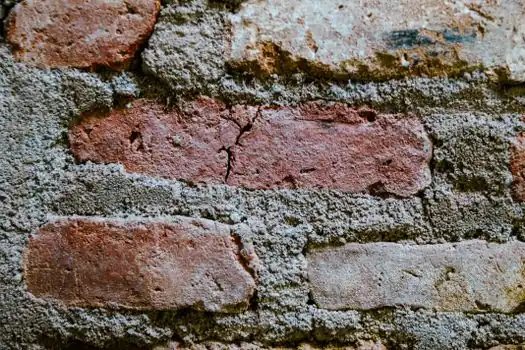
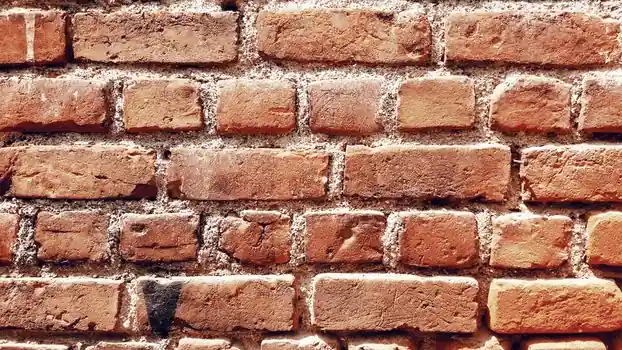
Face brick for veneer is specified by type and grade, with FBX (tight dimensional tolerance) and FBS (looser tolerance) as the common types, and SW (severe weather) and MW (moderate weather) as the grades; FBX-SW is the best choice for repelling rainwater and also the hardest brick to clean, which pushes contractors toward a finer-bpm pick rather than a brute breaker [S4].
Mortar type matters as much as brick type. Type N mortar is the weakest of the four common types (M, S, N, O) and is recommended in most masonry manuals for face brick, while Type S is required for structural CMU; the building code blocks Type N in Seismic Design Categories D, E, and F, so any pick used on CMU load walls must be sized for S-mortar joints, not N-mortar veneer [S4]. Initial Rate of Absorption (IRA) above 30 g / 30 sq. in. (30 g / 194 sq. cm) means the brick is too dry and will draw water out of fresh mortar, while IRA below 30 means the brick is too wet and the bond will be weak, and a mis-set pick on either extreme can crack the brick face or leave the joint half-bonded [S4].
Compressor Pairing and Hose Sizing
Pick selection is really an air-supply problem once shank and bpm are fixed. A single 2.5 kg air pick at 1,800 bpm needs a compressor rated for at least 12 cfm free-air delivery at 90 psi, and the 3/8 in. air hose should be capped at 15 m before pressure drop starts starving the cylinder [S3]. Rotary-screw compressors in the 185 to 375 cfm class can run two to three picks simultaneously, which is the typical setup for a masonry gut-renovation crew on a brick cavity wall [S3].
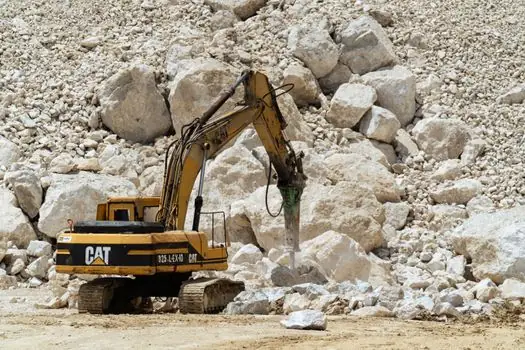
Air picks are also specified for applications beyond wall demolition, including mining, quarry work, general demolition, construction, and public works, so a pick that fits the G10 round-shank format is also reusable on asphalt patch work and frozen-ground excavation [S3].
Comparison of Masonry Demolition Tool Classes
Side by side on four decision criteria, the air pick, the electric demolition hammer, and the rotary hammer cover different envelopes. On blow frequency, the air pick runs 1,500 to 2,000 bpm versus 1,100 to 1,400 bpm for a 1,050 W electric hammer and 0 to 4,500 bpm variable on a rotary hammer in chisel mode [S3]. On weight, the 2.5 kg air pick is lighter than a typical 5 kg electric hammer but heavier than a 1.5 kg rotary hammer in chisel-only mode [S2]. On power source, the air pick needs a compressor and hose, the electric hammer needs a 120 V outlet, and the rotary hammer needs a 120 V outlet with an SDS-Plus bit budget. On noise, the air pick is the quietest on the operator's ear because exhaust is silenced at the compressor rather than at the tool body [S2][S3]. For an in-depth spec walk on rotary-hammer-style demolition, see the Demolition Hammer Selection for Interior Finishing: 2026 Spec Map.
Who Air Picks Are For, and Who Should Skip Them
Air picks are the right tool for masonry renovation crews that already own a rotary-screw compressor, for brick-cavity clean-outs where a 5 kg hammer would crack the inner wythe, and for public-works crews that need a 2.5 kg chipper they can run all day on existing air infrastructure [S2][S3]. They are the wrong tool for residential remodeling without a compressor on site, for vertical rebar exposure where a rotary hammer's chisel mode cuts faster, and for any operator who has not been fit-tested for hand-arm vibration, since sustained 1,800 bpm exposure exceeds the daily A(8) action limit in under two hours.
Workmanship Constraints That Decide Pick Size
Wind-driven moisture through mortar joints carries 200 times as much water into a brick cavity as vapor diffusion through the brick body itself, so a contractor who over-scales the pick and shatters the head joints has undone the weatherproofing that the mason just built [S4]. Bed joint mortar must be placed beveled from back to front to prevent slumping into the cavity, and head joints must be fully buttered, so the pick is normally sized one step smaller than the joint width to avoid spalling the brick arris [S4]. Type N mortar is the weakest of the four standard types and is the easiest to bond but is banned in seismic categories D, E, and F, so any pick used on a load-bearing CMU wall must be matched to S-mortar joint hardness, not N-mortar veneer softness [S4].
Linked Spec References for the Masonry Crew
For crews already running pneumatic nailers for form work, the air-supply logic carries over directly, and a Pneumatic Nail Gun Selection for Landscaping: Gauge, Magazine, and Air Supply Specs walk-through covers cfm budgeting and hose sizing for 90 psi tools. For wall-cutting work that often follows air-pick chipping, a Tunnel Circular Saw Selection: Spec Map for Wall, Wire, and Handheld Cuts maps the blade and power-source trade-offs. For crews cross-tying into HVAC or landscaping fastener work, the Stud Welder Selection for HVAC Installation reference covers the same cfm and duty-cycle logic on a different tool family. [S4]
For a deeper look at the broader tool family, the air pick reference page covers piston geometry and shank standards, and a typical masonry insulation specification lists the substrate hardness the pick has to clear before insulation boards are fixed to the inner wythe.
Track three signals over the next quarter: (1) the 90 psi cfm rating of any new 2.5 kg air pick from the G10 / S55 class against the published 12 cfm baseline [S3]; (2) compressor rental rates for 185 cfm rotary-screw units in markets running brick-cavity renovation work; and (3) any update to Type N / Type S mortar rules in seismic category D, E, and F jurisdictions, since that decision alone flips the right pick size for CMU walls [S4].
Component reference pages worth checking: air impact wrench.