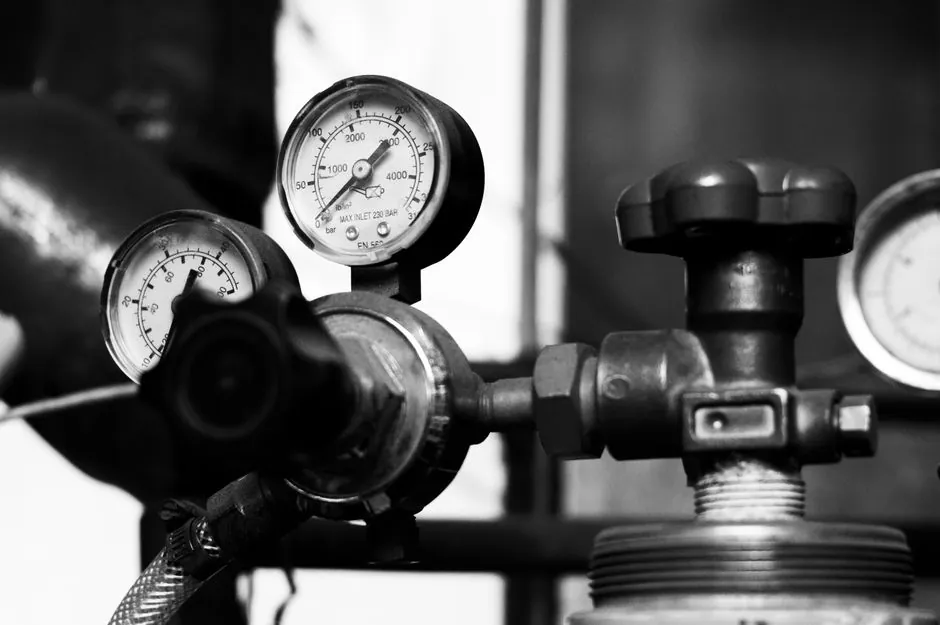
Air-operated solenoid valves switch from fully closed to fully open in low milliseconds once the coil is energised, and they accept both DC and AC voltage supplies, which is why they dominate compact pneumatic manifolds, HVAC control loops, and clean automated fluid handling [S1][S2][S3].
That same electromagnetic architecture is also the source of the technology's hard limits: a 2.5-inch indirect-acting solenoid typically reaches only a Kv of about 40 cubic metres per hour, and most solenoid packages cannot match the pressure rating of a ball, gate, or angle-seat valve of equivalent size [S3]. For an engineer sizing a new line, the decision is rarely "is the solenoid good" but "is this service inside its pressure, flow, voltage, and cleanliness envelope" [S3][S4].
Where the Speed and Voltage Flexibility Actually Come From
Inside an air solenoid valve, a coil and a movable magnetic plunger form the actuator: with the coil de-energised a return spring holds the plunger against the orifice, and once energised the magnetic field lifts the plunger, opening the port in less than a second, and in most modern designs in the low-millisecond range [S1][S2][S3]. The "all solenoid valves operate within milliseconds of receiving an electrical signal" figure is the engineering basis for using them on fuel-injection, hydraulic-pressure regulation, and HVAC airflow trim, where slower valves would disturb the loop [S3][S8].
Coils are wound for a wide range of AC and DC supplies, and the same valve body often ships in 12 VDC, 24 VDC, 110 VAC, and 230 VAC variants, which is why the same SKU can drop into a 24 V cabinet, a 110 V machine tool, and a 230 V compressor panel with only a coil change [S1][S7]. Low holding power, typically well under 10 W for small direct-acting units, lets designers run them on PLC outputs, relay logic, or even battery-backed control, which is the reason a solenoid valve still beats a motorised ball valve in remote or power-limited panels [S1][S2].
Advantages That Hold Up in Real Plants
Fast on-off cycling: response is in the low milliseconds for direct-acting designs, which is the only choice when the loop is faster than a human can intervene, such as in pneumatic safety shutoff or compressor unloader control [S3][S8].
Low energy and compact envelope: typical direct-acting coils draw well under 10 W, the valve body is small enough to manifold on a sub-base next to the cylinder, and replacement coils cost a fraction of a new valve, so a single spare coil often services an entire machine [S1][S4].
Remote, automated, and intrinsically safe signalling: because the actuator is a coil, the valve can be driven from a PLC output, a pushbutton, a limit switch, or a remote I/O island, with no mechanical linkage to the operator, which is the reason solenoid valves sit on most clean-room, process, and OEM machine wiring diagrams [S1][S2][S4]. Fail-safe options are standard: normally-closed and normally-open configurations both exist, and a loss of power can be designed to close on overpressure media or open on heating-dump circuits, which is why the same architecture covers both ESD and vent functions [S1][S4].
Mounting and media flexibility: the body can usually be installed vertically or horizontally, common elastomer choices cover air, water, light oils, and many gases, and the solenoid coil can be replaced without breaking the pipework, which keeps mean time to repair short in construction machinery and equipment and OEM skids [S1][S5].
The Real Disadvantages, Not the Marketing Ones
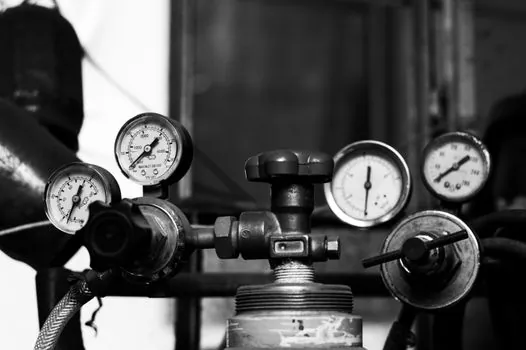
Pressure and flow ceiling: a solenoid simply cannot match the pressure rating, Kv, or pipe size class of a ball, gate, butterfly, or angle-seat valve at the same line size, so once a line goes above the solenoid's PN rating or above roughly a 2.5-inch body, engineers step up to a pneumatically actuated ball valve or a rotary control valve [S3][S4][S8]. A 2.5-inch indirect-acting solenoid near Kv 40 m³/hr is small next to a similarly sized ball valve, which is why solenoid valves concentrate in branch lines, instrument air, and pilot circuits rather than in main process headers [S3].
Voltage sensitivity and coil burnout: the magnetic field is set by the supply voltage, and if the feed is too low the valve chatters or partly closes; if it is too high the coil overheats and fails, which is the single most common field failure and the reason spares lists always carry a solenoid coil [S1][S2]. Once a coil is fitted, the control signal generally has to remain energised for the entire open period, which is fine for a PLC but wasteful in long-cycle applications where a latching or pilot-held arrangement is better [S1].
Contamination intolerance: solenoid valves are clean-media devices. Dirt, scale, water hammer debris, or oil aerosols will score the seat and the plunger, so a filter regulator upstream is not optional, and in dirty air the alternative, an air-piloted diaphragm-poppet valve, usually outlasts a solenoid because of its wider fluid passages and fewer precision parts [S5]. Air-piloted valves also win on intrinsically safe sites, since they are triggered by a 3-to-5 psi pilot signal with no electrical energy inside the valve body, a useful substitute wherever ATEX zone restrictions rule out a hot coil [S5].
Limited proportional control: the base unit is on/off; true modulating control needs a proportional solenoid, and that variant is more expensive and still slower and less accurate than a dedicated positioner on a globe or angle-seat valve [S3][S4]. Field data also flags noise: compressed-air release and poppet impact can exceed 80 dBA, which is a problem in medical and laboratory rooms where air-piloted alternatives with soft-shift manifolds are usually preferred [S5].
Decision Matrix: Solenoid vs Ball vs Air-Piloted vs Angle-Seat
Engineers choosing between the four dominant on-off architectures in clean pneumatic and light-fluid service can line them up against four decision criteria drawn from the comparison literature: response time, pressure/flow capacity, suitability for hazardous or intrinsically safe areas, and total installed cost including maintenance [S3][S4][S5][S8].
On response time, the air solenoid valve is the fastest, in the low-millisecond range, the air-piloted valve is in tens of milliseconds because the pilot has to charge a small chamber, and the ball and angle-seat valves, even when pneumatically actuated, are slower because the actuator has to stroke a rotary or plug element [S3][S5][S8].
On pressure and flow, the order inverts: ball, gate, and angle-seat valves cover the highest pressure classes and the largest line sizes, while the solenoid sits at the bottom of the range and is used for branch and instrument duty; the air-piloted poppet valve sits between, with high shifting force and good flow but still below a full-size ball valve at the same diameter [S3][S4][S5].
On hazardous-area suitability, air-piloted valves are intrinsically safe because they need no electrical energy at the valve, the solenoid valve requires an Ex-rated coil and proper cable entry to ATEX/IECEx requirements, and the pneumatically actuated ball valve inherits the same Ex rating as its solenoid pilot, so the cabinet cost is the real differentiator [S5].
On total installed cost, the solenoid valve wins on first price and on spare-part standardisation across a plant, the ball valve wins on long service life in contaminated or high-cycle service, the air-piloted valve wins on low maintenance and long life in wet and dirty plants, and the angle-seat valve wins on high-temperature steam and aggressive chemicals where an elastomer-seated solenoid would fail [S3][S4][S5][S7].
When an Air Solenoid Valve is the Right Call, and When it is Not
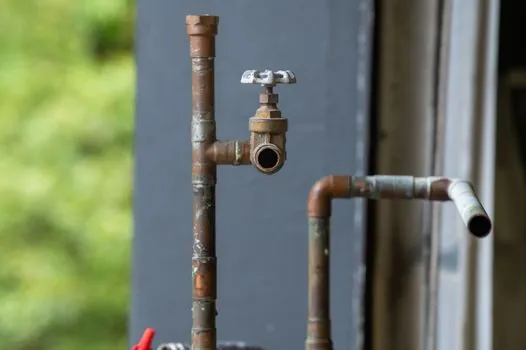
An air solenoid valve is the right call for clean, dry, oil-free instrument air at line pressure inside the valve's PN class, where the duty is on/off rather than modulating, where the response must be in milliseconds, where the cabinet already supplies a standard 24 VDC or 110/230 VAC rail, and where the user is willing to fit a filter regulator and keep a spare solenoid coil on the shelf [S1][S2][S3][S7]. It is the wrong call in main process headers above its pressure rating, in dirty or particulate-laden air, in long-cycle on/off applications where the coil would be energised for hours, in intrinsically safe zones where an air-piloted valve would remove the need for an Ex-rated coil, and in modulating control loops where a proportional solenoid or a true positioner would give better loop accuracy [S3][S4][S5][S8].
A practical rule of thumb from the comparison data: if the line is 1 inch or below and the media is clean, specify the solenoid; if the line is 2 inches or above or the media is dirty, look at an air-piloted poppet or a pneumatically actuated ball valve first, and only step back to the solenoid if the response or the cabinet signal forces the choice [S3][S4][S5][S7].
Standards, Spec Disciplines, and Field Signal to Track
Most industrial solenoid-valve bodies are dimensioned to ISO 1179 (BSPP) and ISO 228 port standards, common elastomer choices are NBR, EPDM, FKM, and PTFE, and the coils for hazardous areas are certified to ATEX 2014/34/EU categories 2 and 3, with IEC 60079-0 and IEC 60079-31 covering general Ex requirements and dust protection respectively; the valve itself is usually rated to an IP65 or IP67 enclosure class once properly installed and cabled [S1][S7].
For a 2026 spec write-up, the trackable engineering signals are: the rising share of NAMUR-mount solenoid valves replacing traditional direct-mount coils on process valve skids, the wider use of low-power 0.5 to 2 W coils driven directly from PLC outputs without interposing relays, and the steady replacement of 110 VAC solenoids by 24 VDC variants on OEM export machinery, all of which are visible in current product catalogues and 2025-2026 selection guides [S7][S8]. Engineers should also expect, and spec for, a NAMUR connection, a manual override, and an IP65+ enclosure as default rather than as upgrades, since those three items now define the difference between a 2026 service-friendly install and an older 2010s install [S7][S8]. For related selection context, see this spec-first map of compressed air market share and top manufacturers in 2026 and a practical walk-through of air solenoid valve installation on the bench.