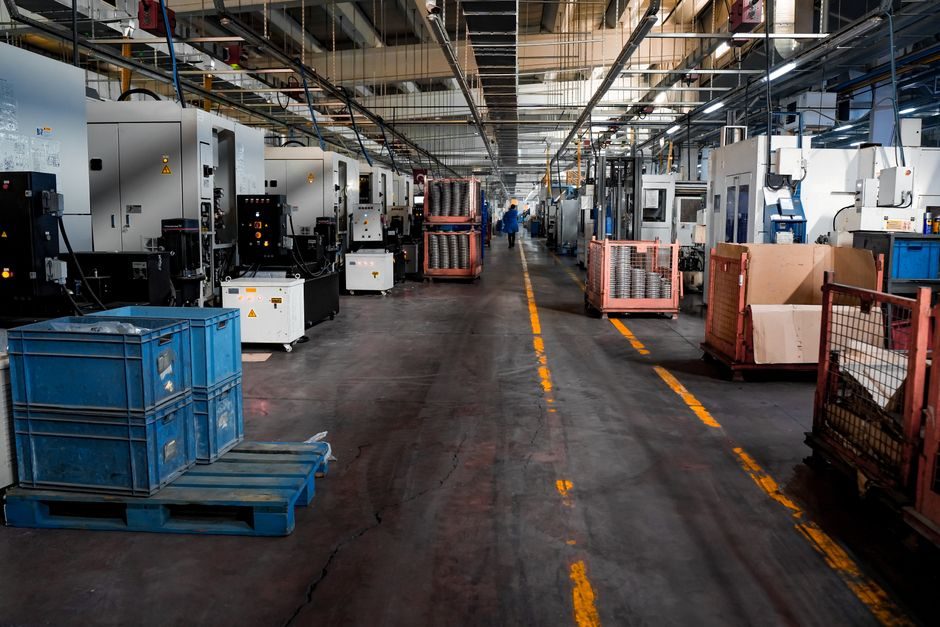
Aluminum die casting machine selection reduces to five engineering gates — clamping force, chamber architecture, alloy window, shot envelope and automation/control class — and the right press class is the smallest spec that meets all five without over-spending on tonnage or cycle capability [S3][S5].
Specifying a 1,250-tonne cold-chamber unit for a 380 g housing, or a 25-tonne hot-chamber press for a 3 kg structural bracket, is the most common procurement error in 2026 — both cost throughput and create scrap rates above 4 % [S5]. The reference set used to build this gate list comes from current OEM catalogues (Ningbo Dongfang, Sanji, Long Hua, Lanson) and contract manufacturers active on 2026-06-22 [S3][S5][S6].
Gate 1 — Clamping Force vs Projected Area, Not Part Weight
Clamping force is rated in kN (or tonnes-force) and is a function of projected area, not part mass. A 900 kN press is commonly sold for thin-wall aluminum housings under roughly 300 cm² projected area with 40–60 MPa injection pressure; a 1,250-tonne class machine such as the LH-HPDC 1250T covers structural castings up to ~600 cm² with the same pressure profile [S5].
Two failure modes follow from wrong tonnage: flash and die deformation (under-spec) or excessive wear on the locking tie bars and energy penalty (over-spec). Chinese OEM tier-one machines (Sanji Machinery, Long Hua, Ningbo Dongfang) publish kN curves rather than single-point tonnage, so the engineer should size at the upper end of the projected-area window plus a 15 % margin for die wear [S3][S5].
For a working background on the underlying press class and what each rating physically clamps, see the die casting machine reference page.
Gate 2 — Hot Chamber vs Cold Chamber Architecture
Aluminum alloys attack iron-based goosenecks and plungers above ~660 °C melt temperature, which is why aluminum HPDC in 2026 is almost universally cold-chamber; hot-chamber machines on aluminum remain a niche, low-volume exception and most catalogues explicitly segregate the two product lines [S3][S4][S5].
Cold-chamber presses in the current 2026-06-22 OEM range cluster into three size bands: 25–40 tonnes (mini/bench), 80–160 tonnes (mid-range structural), and 800–1,250 tonnes (automotive structural). Ningbo Dongfang lists 25-tonne and 80-tonne cold-chamber units at $10,000–22,000, while Long Hua's 1,250-tonne LH-HPDC is listed at $258,850–258,950 FOB [S5].
Hot-chamber machines (J212 series, 38–40 tonne class) are still made for zinc and lead alloys, not aluminum — they appear in the same catalogues only because the equipment platforms overlap [S5]. For a focused aluminum-die-cast reference, see aluminum die casting machine.
Gate 3 — Alloy Window and Pouring Temperature
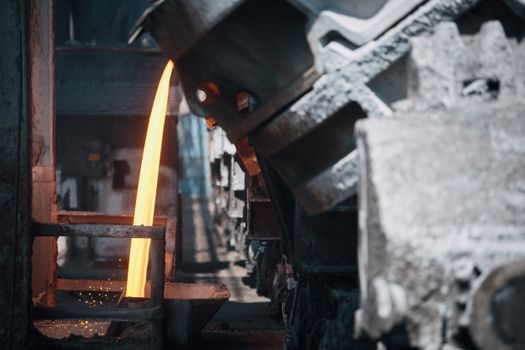
Aluminum die-casting alloys in production use cluster around A380, A383, ADC12 (JIS H 5302) and AlSi9Cu3 (EN AC-46000 / 3.2373), with pour temperatures between 620 °C and 700 °C and die temperatures held at 180–250 °C through water/oil channels [S1][S2][S4].
Alloy choice drives the injection profile more than the machine class. A380 fills well at 2.0–3.0 m/s plunger velocity, while AlSi9Cu3 can take 3.5–4.5 m/s on thin walls under 2 mm. Picking an alloy that the foundry cannot pour cleanly within its de-gassing and melt-hold window is a second common procurement pit, independent of press size [S1][S4].
Lamar Tool & Die Casting and Geispen Group both publish their alloy menus (Al, Zn, Mg and exotics) and finishing chain in-house, which is the relevant evidence that alloy compatibility is a process-engineering decision before the press is even ordered [S4].
Gate 4 — Shot Weight, Plunger Diameter and Cycle Time
Shot weight is the single most-quoted machine spec, but it is only meaningful paired with maximum plunger stroke and intensification pressure. A 25-tonne mini-press is rated in the 0.5–1.5 kg shot range; the 80-tonne mid-press covers 2–5 kg; 1,250-tonne automotive presses are built for 8–18 kg shots with intensification up to 1,400 bar [S3][S5].
Cycle time is a derived number: dry cycle, real cycle, and takt time each tell a different story. A 1,250-tonne class unit running structural castings typically lands at 60–120 s real cycle, while a 25-tonne unit running thin-wall housings is closer to 8–15 s. The selection gate is whether the daily part count divided by real cycle plus OEE losses (typical 70–85 % in die casting) fits the order book.
For plants that also run zinc or magnesium, the same bench can house a magnesium-die-cast tool under tighter inert cover; see magnesium die casting machine for the alloy-specific pressure window.
Gate 5 — Automation, Control Class and Auxiliary Footprint
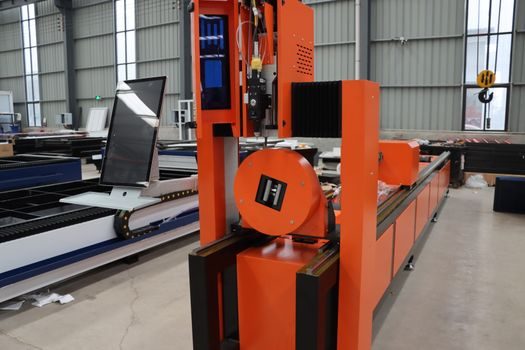
2026-06-22 OEM control stacks split into three tiers: relay/PLC, HMI + closed-loop injection, and full servo-hydraulic with real-time shot profile logging. The LH-HPDC 1250T ships as "Fully Automated" with high-volume/high-capacity framing; smaller Chinese OEM presses (Lanson, Sanji) are typically sold as open platforms ready for third-party robotic extraction and spray [S3][S6].
Auxiliary footprint matters as much as the press itself: ladling furnace, auto-spray, extractor robot, trim press, cooling conveyor, and impregnation/powder-coating line define the cell, not the machine. Plants running aerospace or medical castings often require vacuum-assisted HPDC — for that architecture, see vacuum die casting machine and the vacuum die casting machine selection guide [S4].
For a side-by-side gravity-cast comparison at lower pressure, the gravity die casting machine and the gravity die casting 2026 price and cost guide lay out the tonnage vs alloy matrix that complements an HPDC line.
Quick Comparison: Three Press Classes for Aluminum
Three criteria decide the press class for an aluminum part: projected area (drives tonnage), part mass (drives shot weight), and alloy flow length / wall thickness (drives intensification pressure). The table below uses values published in 2026-06 OEM catalogues [S3][S5].
Class A — 25–40 t mini cold-chamber: best for projected area ≤150 cm², shot ≤1.5 kg, walls ≥2.0 mm. Typical price band $10,000–$22,000 FOB. Limitation: short tie-bar spacing restricts die footprint, and plunger intensification rarely exceeds 900 bar, so thin-wall structural parts are out of reach [S5].
Class B — 80–160 t mid cold-chamber: best for projected area 150–500 cm², shot 2–5 kg, walls 1.5–3.0 mm. Typical price band $30,000–$90,000 FOB. This is the dominant class for consumer electronics, lighting housings and small automotive brackets [S3][S5].
Class C — 800–1,250 t structural cold-chamber: best for projected area 500–1,500 cm², shot 8–18 kg, walls 1.2–2.5 mm. Typical price band $250,000–$500,000+ FOB. The LH-HPDC 1250T at $258,850–$258,950 is the published benchmark for this band. Class C is over-specified for Class A or B work; payback periods stretch beyond 5 years if a smaller press would do the job.
Limits, Misuses and the Zinc Confusion

Aluminum HPDC has a hard ceiling around 1,500 tonnes in serial production — beyond that, machine cost rises faster than the marginal gain in projected area, and most automotive structural nodes are now better served by 800–1,250 t presses with multi-cavity dies. Selecting a hot-chamber press for aluminum is a category error, not a cost choice: melt attack on the gooseneck will force a rebuild inside 50,000 shots. [S1]
Zinc and aluminum are routinely confused in supplier catalogues because the equipment platforms overlap. Ningbo Dongfang's J212 hot-chamber line is zinc/lead, not aluminum; the 80-tonne aluminum machines in the same catalogue are cold-chamber [S5]. A spec writer who treats "die casting machine" as one product class is the most common source of mis-procurement in 2026. The zinc die casting machine reference page lays out the alloy-specific operating window.
Standards, Sourcing and Traceable Signals
No single ISO standard covers HPDC machine selection; the engineer should instead reference the die-casting alloy standards (JIS H 5302 for ADC12, EN 1706 for AC-46000, ASTM B85 for A380-family) and the OEM-published kN/stroke/intensification curves [S1][S2][S4]. CE marking on the 1,250-tonne LH-HPDC since 2024-08-28 is the relevant EU conformity signal for European-bound cells.
Trackable signals to watch through 2026-Q3: (1) Sanji Machinery and Long Hua expanding 1,000+ tonne cold-chamber product lines; (2) Ningbo Dongfang and Lanson adding servo-hydraulic closed-loop injection to mid-range presses; (3) contract manufacturers such as Geispen Group and Lamar Tool & Die Casting publishing more alloy-specific process windows in their technical sheets [S3][S4][S6].
Aluminum die casting machine selection, run through these five gates plus a Class A/B/C pick, lands the press class in one pass: projected area → tonnage, part mass → shot envelope, alloy → pour/intensification profile, automation tier → control package, and cell footprint → auxiliaries. The cheapest press that passes all five gates is the right press; the most expensive press that passes them is over-engineered scrap waiting to happen.