
Aluminum ingot is the cast product of molten primary aluminum tapped from electrolysis cells fed by alumina refined from bauxite, and it is the principal feedstock shipped into downstream rolling mills, extruders, foundries, and alloy houses that supply the construction, transport, and packaging sectors.
Upstream Chain: Bauxite, Alumina, and the Cell-to-Casting Boundary
The upstream leg of the aluminum ingot value chain runs from mined bauxite through Bayer-process alumina to Hall-Héroult electrolysis cells, and only molten metal that meets iron, silicon, and trace-element ceilings is poured into sow or T-bar ingot shapes for shipment to downstream consumers [S3].
Alcoa offered third-quarter 2014 term shipments at a $408/mt premium to LME cash, CIF Japan, for primary aluminum ingot shipped to Japanese main ports, while Russia's Rusal quoted a $405/mt premium to LME cash for the same Q3 shipment window into Japan — together establishing how the upstream producer premium is layered over LME cash to set delivered ingot cost [S3].
Japan's spot aluminum trade remained thin at the time the LME three-month aluminum price hovered near $1,800/mt, with Japanese market sources noting that construction demand would be the swing variable lifting buying interest if LME fell below that threshold, tying upstream price formation directly to downstream construction pull [S3].
Downstream Chain: ADC12 Die-Casting, Can Sheet, and Alloy Specialization
Chinese domestic spot ADC12 aluminum alloy offers held steady in late 2015 after a prior-week fall, with the price move tracking a plunge in primary aluminum ingot prices rather than any shift in physical buying interest, an illustration of how downstream die-casting alloy tags follow the upstream ingot benchmark with thin pass-through [S3].
Aluminum-bismuth alloy ingot and rod products, registered as CB31125011 in chemical catalogues, sit on the specialty end of the downstream chain: these free-machining and low-melting Al-Bi compositions are cast from a modified foundry path rather than the primary cell path, and are specified for bearings, fusible alloys, and specialty machined parts where the upstream 99.7% Al base is alloyed with bismuth to tune machinability and density [S4].
The Can Manufacturers Institute (CMI) told the US Commerce Department in June 2017 that aluminum can sheet and the underlying aluminum ingot are not a national-security risk warranting tariffs, an argument that explicitly links the upstream ingot to the downstream can-sheet mill and the beverage-can end use as one continuous supply chain [S3].
Alloy Ingot vs Primary Ingot: Selection Criteria for the Buyer
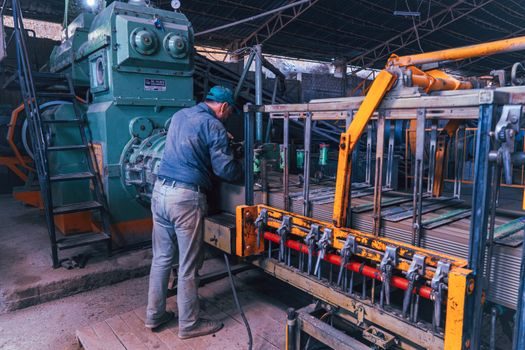
Selection between primary P1020A/A00 ingot and alloy ingots such as ADC12 or Al-Bi is driven by the downstream forming process: P1020A feeds remelters and rolling mills where the buyer wants tight control of Fe, Si, Cu, Mn, and Zn residuals, while ADC12 (≈11% Si, ≈2% Cu, ≈0.3% Mg, balance Al) is shipped as a ready-to-die-cast alloy for automotive and hardware components [S3].
The Can Manufacturers Institute note that can-sheet producers draw on a specific sub-grade of P1020A-class ingot with controlled Fe:Si ratio for can-stock rolling, which is why the CMI filing argued the entire can-chain — ingot, sheet, can — should be treated as a single security category rather than split across tariff lines [S3].
For comparison, the aluminum alloy family branches at the casting stage from primary P1020A ingot into 1xxx (commercially pure), 3xxx (Mn-bearing can stock), 5xxx (Mg-bearing sheet), and 4xx.x/3xx.x/ADC12-type casting alloys, so the choice of upstream ingot grade pre-determines which downstream mill or foundry is a fit buyer.
Price Formation: LME Cash, Producer Premium, and Regional Differentials
Spot imports of primary aluminum ingot into Japan ran thin in early April 2014 as buyers paused to gauge the impact of the LME's postponed new warehouse process rules, an example of how regulatory events on the upstream exchange can throttle physical ingot flow into downstream Asian ports [S3].
January aluminum demand in the US and Canada, measured as shipments by domestic producers plus imports, totaled an estimated 2.018 billion lb and was down 2.9% versus January 2013 according to the Aluminum Association's preliminary figures, a baseline that frames the semi-fabricated downstream pull on upstream ingot supply [S3].
Premium-driven contracts remain the structural pricing mode: the $408/mt Alcoa offer and the $405/mt Rusal offer for Q3 2014 were both flat on a CIF-Japan basis, and the convergence of two large upstream producers within $3/mt of each other is the typical pattern by which the LME cash + premium formula locks in delivered ingot cost to Japanese downstream extruders [S3].
Logistics, Port Stocks, and the Qingdao Precedent
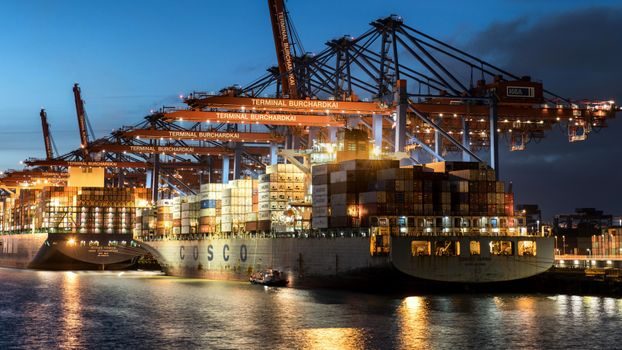
Chinese traders and analysts reacted cautiously in early June 2014 when Qingdao port halted shipments of aluminum and copper amid a probe into loan irregularities involving stocks in port warehouses, an event that exposed the financing-stock risk in upstream-to-downstream physical aluminum logistics and the speed at which port disruption can ripple into ingot availability [S3].
The Qingdao episode reinforced downstream-buying behavior of holding minimum inventory and sourcing on shorter contracts, since the metal held as collateral in upstream-adjacent warehouses was effectively immobilized and had to be redirected into the merchant supply chain [S3].
Buyers evaluating a cable tray sourcing program that depends on rolled aluminum stock should be aware that the same upstream ingot logistics — port stocks, LME warehouse rules, CIF premiums — feed the strip and sheet mills that ultimately produce the cable-tray side rails and rungs.
Who Aluminum Ingot Is For — and Where It Is Not the Right Spec
Aluminum ingot in P1020A/A00 form is the right spec for remelters, can-sheet mills, extrusion billet producers, and primary foundry operators who need a tight Fe/Si ceiling and who run their own alloying; it is the wrong spec for a buyer who needs a finished casting, extrusion, or sheet, since downstream conversion losses and alloying cost are passed through poorly when a non-mill buyer sources ingot directly [S3].
Alloy ingots such as ADC12 are the right spec for die-casters running automotive, hardware, or motor housings who want to skip in-house alloying; specialty Al-Bi alloy ingot is the right spec only for low-melting and free-machining applications such as fusible-alloy triggers, specialty bearings, and machinable instrument hardware [S3][S4].
Specifying aluminum die casting capacity without first locking the ADC12 or A380 ingot supply is a common sourcing failure, since foundry uptime is gated by tonnage-grade alloy availability more than by the die-cast machine itself.
Standards, Sourcing Signals, and Trackable Next Nodes
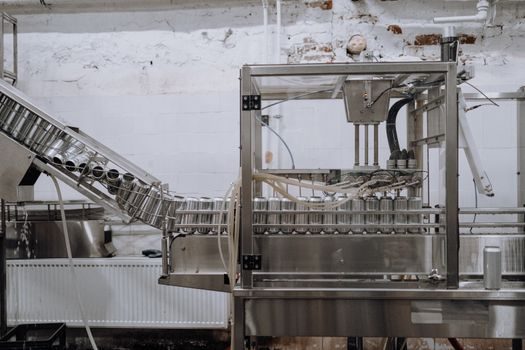
Primary aluminum ingot and alloy ingot are typically traded against the ASTM B179 specification for cast aluminum alloys in the form of ingot, and against the LME P1020A contract specification for primary unalloyed ingot; downstream converters additionally reference AA (Aluminum Association) designations such as 1050, 3003, 5052, and ADC12 (≈AA 383) for their mill-input buy [S3].
Trackable signals for the next sourcing window are: (1) the LME three-month aluminum price relative to the $1,800/mt level that Japanese construction-demand observers flagged as the buying trigger; (2) the spread between Q3 CIF-Japan producer premiums quoted by major upstream producers, which ran $405–$408/mt over LME cash in the most recent reference set; and (3) any port-side logistics action at major Chinese or Japanese hubs that mirrors the Qingdao pattern, since financing-stock immobilization has historically been the fastest route to a downstream ingot squeeze [S3].
For downstream mill operators planning power cable aluminum conductor rod output, the upstream P1020A flow into the rod mill is the binding constraint, and the same LME + premium benchmark that prices Japanese ingot will price the EC-grade rod feedstock.
The underlying component specifications are covered under aluminum ladder.