
Cable tray selection is governed by four hard gates: mechanical load class (NEMA VE 1 / IEC 61537 light-medium-heavy), corrosion environment, cable fill cross-section, and the type of cable being carried (power, control cable, shielded cable, or drag-chain flexing service).
Specifiers who skip any one of these gates end up over-paying, under-venting, or specifying the wrong material finish. The five mainstream tray types — ladder, perforated (ventilated), solid-bottom, wire mesh / basket, and channel — each have a defensible duty envelope, and the wrong pick is a documented reliability risk, not just a budget miss.
Five Tray Types and Their Duty Envelope
Ladder tray with I-beam side rails and rungs at 150–300 mm spacing is the default for long straight runs of power cable above 25 mm diameter, because the open bottom allows heat dissipation and easy cable exit; the Eaton B-Line Redi-Rail rung design explicitly uses fastener holes so rungs can be added, removed, or repositioned for added cable capacity without drilling [S4].
Perforated (ventilated) tray is the middle-ground pick for moderate heat-generating cable runs; return-flange variants are sold in three load classes — Heavy Duty Return Flange, Medium Duty Return Flange, and Light Duty — and provide better cable ventilation than solid-bottom while protecting against small falling debris; the design reportedly takes up to 25 percent less vertical space than equivalent ladder at the same fill (2025-07) [S7].
Solid-bottom tray is the choice where EMI containment, drip protection from above, or support of small-diameter sensitive signal cables matters; without ventilation, fill must be derated, so the cable ampacity correction is the spec to chase, not the tray catalogue number. Wire-mesh (basket) tray is the data-comm / light-control workhorse, fast to install and reconfigurable, and is the type Revit MEP users repeatedly model as a custom system family because the stock wire-tray straight run is solid [S8]. Channel tray is the smallest format, sized for single-circuit runs to instrumentation or small motors, typically ≤100 mm wide.
Selection Criteria: Load, Environment, Material, Fill
Load class is the first gate. IEC 61537 and NEMA VE 1 both bin trays by working load in N/m over support span; common spans run 1.5 m, 2.0 m, and 2.5 m, and the same tray at a longer span drops one or two classes. If the spec is written at 2.0 m span but installed at 2.5 m, deflection — not strength — usually governs, and a heavier side-rail gauge is the only real fix. [S2]
Environment is the second gate, and the one that quietly drives the line item. Hot-dip galvanized steel (HDG-F, ~85 µm zinc) is the workhorse for indoor industrial; stainless steel 304 / 316L is mandatory for food, pharma, coastal, and chloride exposure; FRP (fibreglass-reinforced polyester) is specified where the tray runs through electrolytic cells, plating lines, or near DC traction stray-current sources, because FRP is non-conductive and immune to galvanic corrosion. Indian and GCC suppliers including SUPER STEEL INDUSTRIES (rebranded SUPER CABLE TRAY PVT LTD in 2023) ship HDG perforated tray as their stock line, with material traceability back to MS / CRC / HRC base steel (2026-08) [S6][S9].
Material and fill close out the gate set. Where multi-circuit control cable runs share a tray with VFD power cable, a solid-bottom or dividers plus an EMC barrier is the safer pick over ladder; this is the same logic that shows up in the Shielded Cable Buying Guide 2026: AWG, Shield Type, and Duty Match for VFD-driven runs.
Comparison: Ladder vs Perforated vs Solid-Bottom vs Wire-Mesh vs Channel
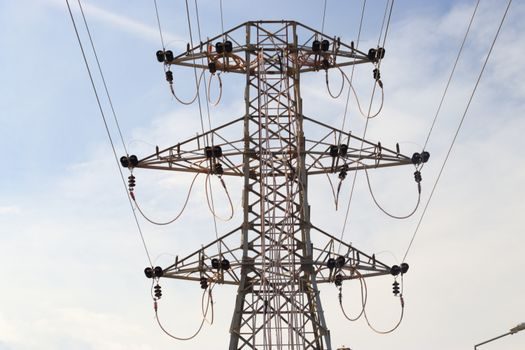
Five-option comparison on the four decision axes a buyer actually has to defend in front of a reviewer:
Load capacity — ladder and heavy-duty perforated are the highest (suitable for 100+ kg/m on 2 m span); solid-bottom is mid; wire-mesh is light to medium; channel is the lowest, typically <10 kg/m. Ventilation / heat dissipation — ladder best, perforated close behind, wire-mesh good, solid-bottom worst (no convection path). Corrosion resistance — depends on finish, not type: HDG, 304 SS, 316L SS, and FRP are the four real material options regardless of tray profile. Ease of install / reconfiguration — wire-mesh fastest with snap-in brackets; ladder fastest for long straight runs; channel fastest for branch drops. EMI / mechanical protection — solid-bottom wins; ladder is the worst for stray EMI coupling into nearby signal cables.
Quantitative note from the perforated vendor sheet: ventilated tray uses roughly 25 % less vertical envelope than ladder at matched cable fill, a useful number when ceiling plenum height is constrained (2025-07) [S7]. A second figure from the trade data: Indian perforated-tray export orders from Mundra and Nhava Sheva ports in mid-2026 are quoted on FOB / CIF terms with USD pricing on demand, MOQ not specified for most stock items (2026-07) [S9].
Who Cable Tray IS For, and Who Should Not Use It
Cable tray is the right raceway for any installation that touches more than six cable runs in a straight, that needs frequent re-pull, or that needs ampacity correction for grouped circuits. It is the wrong raceway where cables must be mechanically protected from impact (use conduit), where the routing has tight 90° bends every metre (use conduit or a CAD-fit custom tray), or where the run is a single short drop — channel or conduit is cheaper and faster. Ladder tray is also the wrong pick when a tray passes through a classified hazardous area with no documentation that the manufacturer has matched the tray finish and support hardware to the zone requirements. [S2]
A second "do not" case: do not specify perforated tray where small rodents are a real risk (data-centre raised floors, food plants), because the ventilation holes do not stop ingress. Use solid-bottom with gasketed cover, or sealed conduit. This is a documented practical limit, not a code citation.
Real Use Cases by Industry
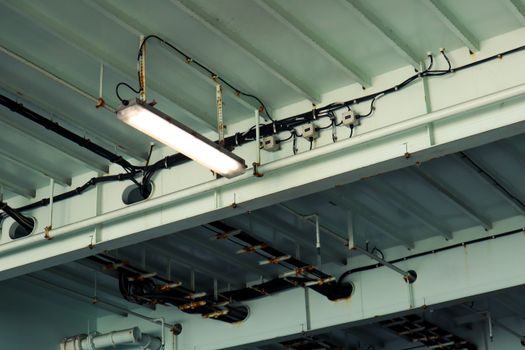
Heavy industrial (refineries, steel mills, cement): HDG ladder or heavy-duty perforated, 2.0–2.5 m spans, 316L SS or FRP in chloride or acid splash zones. Data centres and commercial builds: wire-mesh / basket tray as the default, with solid-bottom only at the underfloor PDU drop. Utility and substations: HDG ladder for HV cable, FRP where stray current is documented. Offshore and marine: 316L SS or hot-dip galvanized after-fabrication (HDGAF) ladder with stainless support hardware, no mixed metals. [S7]
The Eaton Redi-Rail system with its moveable, mechanically fastened rungs is aimed squarely at long industrial runs where future cable additions are expected — the rungs can be relocated, added, or removed without drilling, which is the practical productivity claim on the product page [S4]. For plant 3D modelling in Plant 3D, the Python Cable Tray app generates parametric cable tray catalogs from the spec, supporting both metric and imperial; the vendor's blog dates a "Cable Tray Bill of Materials" workflow post to 2026-03-29 and a "Smart Tray – Flip Tray with Smart Tray" post to 2024-07-26 (2026-05) [S2].
Limitations, Failure Modes, and Sourcing Watch-Outs
Common field failures: tray deflection between supports because span was increased in the field, zinc burn-off at field-cut edges where touch-up was skipped, galvanic corrosion where aluminium tray sits on steel support without an isolating pad, and cable derating ignored on solid-bottom tray leading to insulation thermal ageing. Sourcing pitfalls include MOQ mismatch — many stock trays on export portals list MOQ as "Not Specified" with USD 1 placeholder pricing, which means a real quote is gated by the inquiry (2026-07) [S3][S9].
A second sourcing watch-out: fibre-cable tray is a distinct subcategory, not just "smaller ladder"; a 2026-05-31 supplier index on Alibaba lists more than 100 vendors carrying dedicated fibre-cable tray, with leading suppliers reporting up to 56.5 % response rate and US$10–50 Million total revenue; the segment is heavily supplied out of China, and the 12 / 24 / 48-core ADSS aerial duct / FTTH fibre is the common end-product [S10]. Specifying a generic ladder for ADSS optical cable works mechanically but wastes tray width and load class headroom.
For a wiring-duct-style comparison inside the same raceway family — solid PVC duct run alongside cable tray in control panels and conveyor cells — the Wiring Duct Selection Criteria for Conveyor Cells: A 2026 Spec Map lays out the parallel logic for the inside-panel raceway, and the Flexible Drag Chain Cable Selection Guide for 2026 covers the moving-end cable that often terminates inside that same tray run. Cross-link these three when the spec touches a conveyorized line.
Shortlist logic, distilled: if the run is long, hot, and power-heavy, specify ladder. If it is mid-duty and ventilation matters, specify heavy-duty perforated. If the cables are small-diameter and signal-grade, specify wire-mesh. If the run is a short branch to a single device, specify channel. If the environment eats steel, specify 316L or FRP. Document the working load in N/m, the support span in metres, the material and finish, and the fill percentage — those four numbers on the purchase order are what catches a wrong pick at the quote stage, not at the install stage.