Cold storage envelopes are dominated by insulated metal panels (IMPs) with polyisocyanurate (PIR) cores delivering approximately R-8 per inch of thickness, not by monolithic aluminum veneer [S1]. Aluminum veneer panels, defined as single-sheet aluminum skins laminated or coil-coated for architectural cladding, have an R-value near 0 and serve decorative or protective roles only, which is why specifying them as a cold room wall is a category error.
The selection question, restated correctly, is: when does aluminum veneer add value to a cold storage warehouse, and what thickness, alloy, and coating system should be specified when it does. For reference on the dominant envelope system, the aluminum veneer panel encyclopedia entry defines the product as a non-insulated cladding layer; this article applies that definition against cold storage design constraints.
Cold Storage Thermal Envelope Is Set by IMP, Not by the Veneer
Polyisocyanurate foam core IMPs are produced in 4 in, 5 in, 6 in, and 8 in thicknesses targeting R-32, R-40, R-48, and R-64 respectively, with target operating ranges of 35 to 55°F for 4 in panels down to minus 20°F and below for 8 in panels [S1]. A standard 0.5 mm to 1.0 mm aluminum coil used as a rainscreen contributes effectively zero additional R-value, so adding it to a 6 in PIR IMP does not move the thermal needle; any specifier who treats aluminum veneer as an insulation upgrade is overspending on a non-functional layer.
Where the IMP carries the thermal load, the steel or aluminum face sheet on the IMP is already providing the interior hygienic skin, the vapor barrier, and a finished surface that can be washed down [S2]. Specifying a separate aluminum veneer over an IMP is only justified when the project calls for an architectural expression that the standard IMP rib profile cannot deliver, or when the IMP is in a retrofit role against existing concrete masonry that needs a new exterior face.
Decision Criteria for Adding Aluminum Veneer Over an IMP Substrate
Three measurable criteria govern whether aluminum veneer is worth specifying at all on a cold storage project: coating system, substrate gauge, and joint detailing. Coil-coated PVDF (polyvinylidene fluoride) finishes on 3003 or 5005 series aluminum, applied at 0.7 mm to 1.2 mm thickness, are the minimum spec for exterior cold storage exposure; polyester and SMP (silicone-modified polyester) coatings break down faster under the temperature-cycling and condensate exposure found at loading dock transitions [S3].
Substrate gauge matters because cold storage exterior walls see thermal cycling between minus 20°F interior surface zones and ambient summer heat of 90 to 100°F on the opposite face. 0.7 mm aluminum is the practical lower limit for flat lock or tongue-and-groove veneer systems; anything thinner oil-cans visibly across the temperature swing within 12 to 24 months [S1]. Joint detailing must include a drained and back-ventilated rainscreen cavity of at least 10 mm behind the veneer so condensate that forms on the cold side of the aluminum can drain out instead of migrating into the IMP joint.
Panel Type Comparison: PUF, PIR, EPS, and Where Aluminum Fits

Three foam core families dominate cold storage IMPs. PUF (polyurethane) gives the best R-value per millimeter and is the workhorse of 2 to 8°C chiller zones, with panel thicknesses of 80 to 100 mm. PIR (polyisocyanurate) adds better fire performance for regulated facilities and works in the same 80 to 150 mm range. EPS (expanded polystyrene) is the lowest cost option, common in walk-in coolers and produce storage, with similar thickness ranges but lower R-value per inch. Across these three, foam density (typically 2.0 to 2.5 pcf for PIR) and face sheet spec matter more than the foam label itself [S4].
Aluminum veneer compares poorly against all three on thermal performance, equally on fire performance (since it is non-combustible but adds no insulating value), and favorably on UV resistance and architectural finish range. PVDF-coated aluminum skins carry 25 to 30 year exterior color-fastness warranties; standard polyester-coated steel IMP faces chalk visibly within 10 to 15 years in similar exposure. For cold storage warehouses where owner-architect priorities include curb appeal at the office front and a branded look on the dock canopy, that finish longevity is the actual reason to add an aluminum veneer layer.
Who Aluminum Veneer Is For, and Who Should Skip It
Aluminum veneer over IMP is for owner-architect teams specifying Class A industrial speculative builds, branded food distribution centers, and pharma cold storage where regulatory clients inspect the building exterior as part of vendor qualification. The aesthetic upgrade has measurable ROI when the warehouse sits in a logistics park where tenants pay premium rent for image, and when the spec calls for 25 year finish warranties instead of standard 10 year chalk-fade repaint cycles on polyester-coated steel [S3].
It is not for: budget-driven single-temperature freezers, interior cold room partitions where no one sees the wall, retrofit cold rooms over existing CMU where the budget should go to a thicker IMP rather than a decorative skin, or blast freezers operating at minus 30 to minus 40°C where the floor and ceiling budget already consume the project contingency. In these cases, the storage rack and storage cage decisions inside the envelope deserve the engineering hours that veneer specification would consume.
Failure Modes and Limits Specific to Cold Storage Veneer
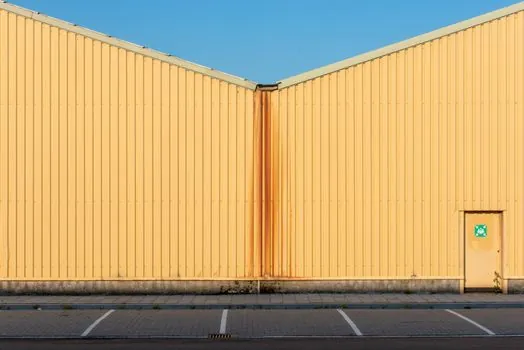
Condensation behind the veneer is the single most common failure. If the rainscreen cavity is missing or clogged, moisture that condenses on the cold side of the aluminum migrates into the IMP joint and refreezes, which delaminates the IMP face from its PIR core within 3 to 7 years. The fix is non-negotiable: a drained, vented cavity of 10 mm minimum, with bug screen at top and bottom openings, and a 6 mm minimum vent gap at the top of each panel run [S2].
Galvanic corrosion at fasteners is the second failure mode. Bare steel screws into aluminum in a humid cold environment fail by galvanic attack in 5 to 8 years, even with zinc plating. Specify 300 series stainless steel fasteners with EPDM gaskets; do not rely on manufacturer default zinc-plated carbon steel screws. Differential movement is the third issue: aluminum expands at roughly 23 x 10⁻⁶ per °C, roughly twice the rate of steel, so panel lengths above 3 m require slotted fastener holes or engineered expansion joints on the long axis [S3].
Standards, Code Anchors, and Sourcing Notes
ASTM E 84 flame spread index governs the interior face fire performance of cold storage IMPs in U.S. installations, with most PIR cores achieving 25 or below and qualifying for Class A [S2]. For aluminum veneer exteriors, ASTM B 209 covers aluminum sheet and plate, and AAMA 2605 governs PVDF coating performance. U.S. cold storage demand has been tracked by CBRE and NAIOP; the typical refrigerated warehouse consumes 24.9 kWh per square foot per year versus 6.1 kWh for dry warehouses, so any thermal compromise from a poorly detailed veneer rainscreen shows up directly in operating cost [S3].
For project teams evaluating a 2026 cold storage build, two trackable signals are worth watching. First, PIR core IMP pricing through Q4 2026, since polyiso supply tightened in 2024 to 2025 and price moves affect the cost trade between thicker PIR and a separate aluminum rainscreen. Second, the rollout of higher-R-value foam cores (PIR variants quoted at R-8.2 per inch) that allow thinner panels in deep-freeze zones, which reduces the case for adding any non-insulating exterior layer [S1]. A specifier who can wait for the next quote cycle on thicker IMP alone may eliminate the veneer line item entirely. For an unrelated but spec-driven comparison on adjacent cold-chain equipment, see this bulldozer vs motor grader stage-based selection breakdown.