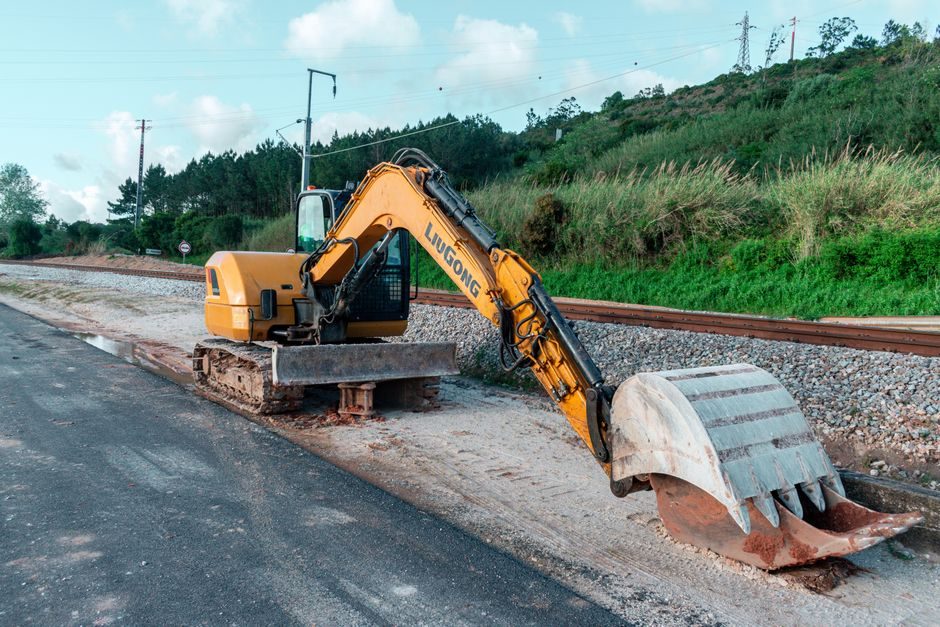
Relong Tech lists six amphibious excavator models on DirectIndustry — the RL-AE04, RL-AE08, RL-AE15, RL-AE20, RL-AE20D, and RL-AE25 — covering an operating-weight band of 4,000 kg to 42,300 kg and bucket capacities between 0.5 m³ and 1.0 m³, with maximum digging depths of 9,070 mm (RL-AE20) and 11 m (RL-AE20D) [S1].
Supply-side density is concentrated: Hefei (Anhui) hosts multiple audited factories including Hefei Get Engineering Equipment Manufacturing (founded 2014, ISO 9001) and Rongsheng Machinery (registered 2006), while Shandong-based assemblers such as Shandong Leite Machinery and Shandong Gearmech Heavy Machinery round out the volume tier for sub-5-ton mini units and used 305.5/320-class crawler conversions [S2][S3][S5][S6].
Spec Bands Across the RL-AE Range and Peer Models
The 15-ton RL-AE15 ships with a 0.6 m³ bucket, 10 m digging depth, and uses a SANY upper structure as its power module, indicating that amphibious OEMs typically integrate standard excavator power packs onto purpose-built pontoon undercarriages [S1]. The 33-ton RL-AE20 holds 0.5 m³ to its nameplate bucket volume but reaches 9,070 mm below water — a configuration aimed at canal-deepening and piling-bund work, not bulk dredging. By contrast, the 42.3-ton RL-AE25 keeps the 0.6 m³ bucket but at higher machine mass, trading bucket fill for stability in marsh and estuary work [S1].
ZE215E ACE (medium-boom crawler) data on the same vendor index — 800/500 L bucket, 23,800–31,000 kg operating weight, 128.5 kW engine power — is not an amphibious unit but is the engineering baseline that several amphibious uppers are derived from [S1]. Buyers comparing options across an excavator category reference page should treat the amphibious segment as a pontoon-and-lower modification of standard crawler platforms, not a stand-alone power platform.
OEM Geography: Hefei Cluster, Shandong Volume Tier, Trading Floors
Hefei Get Engineering Equipment Manufacturing (GET) is positioned as a manufacturer/factory plus trading company, listing amphibious excavators, excavator parts, and working attachments as its three main product lines, with its plant on Dengta Road in the Feixi Industry Centralized Zone [S2]. Rongsheng Machinery, on Susong Road in Hefei's Economic and Technological Development Zone, registered its account on Made-in-China in 2006 and targets the same construction-and-decoration export channels [S3]. The cluster effect matters: two independent amphibious OEMs within 30 km of each other shorten lead times for buyers comparing 8–25 ton classes.
Shandong Leite Machinery is a Diamond Member / Audited Supplier on Made-in-China, offering 1-ton, 2-ton, 3-ton, and 5-ton towable mini amphibious excavators at US$1,805–US$3,989 per piece MOQ [S5]. Shandong Gearmech Heavy Machinery lists used Cat 305.5E2 / 305.5 / 320 / 312 / 315 compact excavators at US$10,000–US$15,000 per piece — not amphibious by build, but often retrofitted with pontoon undercarriages by downstream shops in Southeast Asia and Africa [S6]. For fleet planners working from a pressure transmitter and hydraulic-control instrumentation angle, both clusters are within normal industrial-instrument supply radius.
Selection Criteria: Operating Weight, Bucket, Reach, and Pontoon Geometry
Three decision gates dominate amphibious procurement. First, operating weight versus draft: the RL-AE04 (4 t) suits drainage ditches and small river cleaning where the 8-ton RL-AE08 sinks out of usable depth, while the 33-ton RL-AE20 and 42.3-ton RL-AE25 are sized for estuary bund-building and saltwater marsh reclamation [S1]. Second, bucket-to-mass ratio: 1.0 m³ on the 20-ton RL-AE20D versus 0.5 m³ on the heavier RL-AE20 is a stability-first versus productivity-first trade [S1]. Third, upper-structure OEM pairing: SANY-derived cabs and hydraulics on the RL-AE15 imply a parts supply chain tied to SANY dealer networks in target markets [S1].
Alibaba's "amphibious transport" supplier index returns 23 matched factories, with the top exporter listing amphibious excavator, swamp buggy, marsh buggy, and excavator handler as parallel SKUs — a sign that procurement teams often bundle pontoon carriers with the excavator itself [S7]. For buyers cross-referencing amphibious units against long-reach and wheeled excavator spec maps, the amphibious shortlist reduces to four buckets: ≤5 t mini for hire fleets, 8–15 t mid for canal work, 20–25 t for estuary dredging, and 33–42 t for bund-piling.
Price Bands, MOQs, and Lead-Time Signals
New-unit pricing on Made-in-China for 1–5 ton mini amphibious excavators is bracketed at US$1,805–US$3,989 per piece MOQ from audited Shandong suppliers [S5]. CE-certified floating excavator listings on the platform price tier (page 30 of the 2026 amphibious excavator price index) sit above that floor, with bulk discounts tied to container-load quantities [S9]. Sinoway-branded amphibious excavators appear on Okorder as a separate procurement channel, often used by mid-tier resellers who want a name-brand upper without direct factory engagement [S4].
Used Cat 305.5-class iron at US$10,000–US$15,000 per piece is the de facto retrofit donor for buyers building pontoon-undercarriage conversions in-house — the math works when the pontoon fabrication cost is under US$8,000 per unit and the resulting machine competes with a US$25,000+ new-build [S6]. For control-system spec work alongside the chassis, a PLC reference page is the usual companion read, since the upper-structure hydraulics and tilt sensors are PLC-driven on most modern units.
Who Amphibious Excavators Are For — and Who Should Walk Away
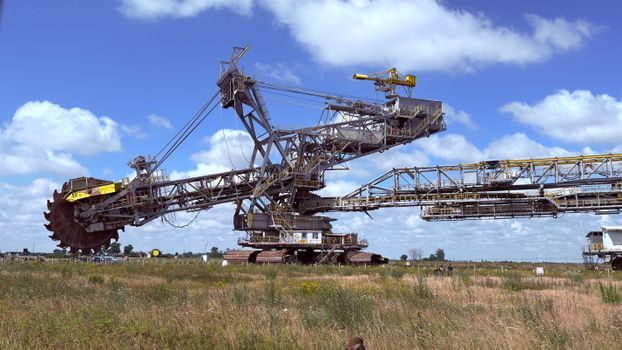
Amphibious excavators fit canal-cleaning, river-mouth deepening, marsh-reclamation, and bund-piling work where a standard crawler cannot deploy pontoons and a dredger is over-spec [S1]. They are the wrong tool for open-water dredging beyond shallow draft, high-cycle bulk-mining (where rope-shovel or dragline economics dominate), and any jobsite where road-transport width under 3.5 m is a hard gate — the 33-ton RL-AE20 with 1.0 m³ bucket will not fit a standard low-loader without permits [S1]. Mini units (1–5 t) are appropriate for hire fleets, small drainage contracts, and aquaculture-pond work, but their 1-ton-class bucket volumes mean fuel-cycle cost per cubic metre moves badly past 8-ton units on heavy clay.
For procurement teams evaluating used iron, the absence of OEM pontoon-engineering on retrofitted Cat 305.5/320 chassis means buyers should request pontoon weld-procedure specs and positive-pressure buoyancy test records before signing [S6]. Sourcing teams working with an industrial valve and hydraulic-block reference alongside the chassis spec will find the amphibious segment lighter on instrumentation than process skids, but tilt sensors and load-moment indicators still follow standard excavator hydraulic-monitor conventions.
Failure Modes, Limits, and Sourcing Watch-Outs
Three failure modes recur in amphibious service. First, pontoon seal failure under UV and saltwater exposure — buyers should confirm HDPE or marine-grade steel seam welding and ask for pressure-test certificates. Second, upper-structure overheating when the engine bay sits below the waterline splash zone; SANY-derived uppers in the RL-AE15 are better-documented here than unbranded uppers [S1]. Third, undercarriage wear from silt-laden water: reline intervals on the track frame are typically 50% of standard crawler intervals in marsh duty [S1].
On the supplier-evaluation side, Sinoway and similar trading-floor brands can mask factory origin — the same Hefei or Shandong OEM may ship under three or four brand names, so cross-checking the Made-in-China audited-supplier report and ISO 9001 certificate number is non-optional [S2][S3][S4]. The 2024-12 social-channel video of a small-river cleaning amphibious excavator underscores the segment's drift toward small-canal municipal work, but the underlying spec discipline is unchanged: operating weight sets the deployment envelope, pontoon geometry sets the draft, and upper-OEM brand sets the parts pipeline [S8].
Trackable signals through Q4 2026: any new RL-AE variant above the 42.3-ton RL-AE25, audited-supplier status changes on the Hefei cluster, and price-index movement on the US$1,805–US$3,989 mini tier [S1][S5]. For related sourcing coverage, the long-reach vs standard excavator spec map is the natural next read for buyers balancing reach against pontoon stability.