
Industrial autonomous mobile robots (AMRs) span a wide cost band in 2026, with DirectIndustry listing 16 manufacturers and 20 battery-powered AMR models in a single procurement category [S1]. Entry-level compact units with 50-100 kg payload and 2D SLAM navigation cluster near $15,000-$25,000 per vehicle, while mid-range 500-1,500 kg logistics AMRs typically land between $30,000 and $75,000 per unit before fleet software [S1].
Heavy-payload AMRs at 2,000-3,000 kg used in automotive and pallet handling run from $80,000 up to $200,000+, with stainless-steel cleanroom and outdoor-ATEX variants priced higher still [S1]. Fleet manager licenses, navigation infrastructure (LiDAR reflectors, edge servers, 5G/Wi-Fi-6 gateways) and integration services typically add 30-60% on top of hardware, so a 10-vehicle AMR deployment is rarely quoted under $400,000 turnkey [S1].
Payload Class and Unit Price Bands
Payload is the single largest cost lever, and the bands below track the 2026 manufacturer catalog range on DirectIndustry's battery-powered AMR page [S1]. Units under 100 kg, used in electronics test-cell and small-parts tote handling, sit at $15,000-$30,000 per unit. The 100-500 kg segment, covering collaborative bin transport and small-pallet moves, prices at $25,000-$60,000. The 500-1,500 kg bracket - the most heavily populated logistics category - ranges $40,000-$90,000 per unit, and above 1,500 kg the price floor rises to $80,000+ for heavy pallet, dolly and rack handling [S1].
Within each band, drive topology, lift mechanism and chassis material add 10-40% to baseline cost. Differential-drive units are the cheapest; mecanum and omnidirectional wheel configurations typically carry a 15-25% premium for the same payload because of additional motor controllers, encoders and steering firmware [S1][S2]. A built-in lift mast or conveyor deck adds roughly $5,000-$15,000 versus a flat-top transporter, and stainless-steel frames for food/pharma cleanrooms add 20-50% over mild-steel equivalents [S1].
Navigation Stack: 2D SLAM vs 3D LiDAR vs Multi-Sensor Fusion
Navigation architecture is the second cost lever, and 2026 OEM datasheets broadly separate AMRs into three sensing tiers [S1]. Tier 1, single-2D-LiDAR with safety scanners, suits simple corridor and rack-aisle work and keeps the bill of materials low; this is the dominant architecture on entry and lower mid-range units [S1]. Tier 2 pairs a primary 2D LiDAR with a 3D depth camera or secondary LiDAR, enabling mixed-pallet-height detection and tighter human coexistence; this stack typically adds $3,000-$8,000 to the unit price.
Tier 3 - multi-sensor fusion combining 3D LiDAR, RGB-D cameras, IMU and wheel odometry - is found on heavy-payload and outdoor AMRs and on Shinmaywa's research delivery platform integrating autonomous navigation for last-mile logistics [S1][S6]. These stacks add $10,000-$25,000 to unit cost and substantially raise edge compute and software-defined validation effort. Open-source reference designs, such as the ROS 2-based AMR published on GitHub with 20 commits and an amr_bot_description URDF package, demonstrate the baseline software stack integrators must still harden for production [S2].
Battery Chemistry, Duty Cycle and Energy Cost
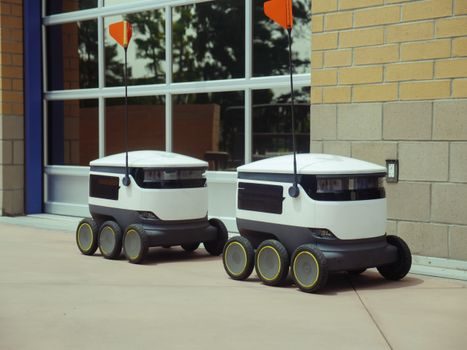
Battery chemistry drives both capital cost and total cost of ownership. Lithium iron phosphate (LFP) is the 2026 default for stationary intralogistics AMRs because of cycle life (commonly 3,000-6,000 cycles to 80% capacity) and thermal stability; LFP packs trade roughly 10-15% energy density for that longer life [S1]. NMC chemistries remain common where higher energy density and lighter packs matter (mobile manipulation, outdoor units), at the price of shorter cycle life and stricter thermal management [S1][S4].
Opportunity charging via floor contacts or wireless pads, and the contactor/battery-swap hardware around it, typically adds $4,000-$10,000 per AMR but extends the productive duty cycle from roughly 8 hours to 16-20 hours per day [S1]. Fleet-level, that delta is the difference between buying 20 vehicles for a 24/7 operation and buying 14. For a sense of how that fleet math is structured, an AMR selection gate framework treats charge strategy as one of the five hard gates in specifying a mobile robot deployment.
Software, Fleet Management and Integration
Fleet manager software is where sticker price and turnkey price diverge most. Most 2026 AMR vendors license a per-vehicle, per-year fleet manager subscription ranging $1,500-$5,000 per vehicle per year, with WMS/ERP connectors, simulation, and analytics modules priced separately [S1]. Open-source stacks reduce the license line item but push cost into integration hours and the long tail of support contracts, and a typical 10-AMR go-live is budgeted at 800-1,500 engineering hours before stabilized operation [S2][S5].
Open literature reviews of intralogistics AMR planning and control estimate that path-planning, multi-robot coordination and deadlock recovery consume the largest share of integration time and dominate software-side risk, rather than hardware tuning [S4][S5].
Application Fit: Warehousing, Manufacturing, and Last-Mile
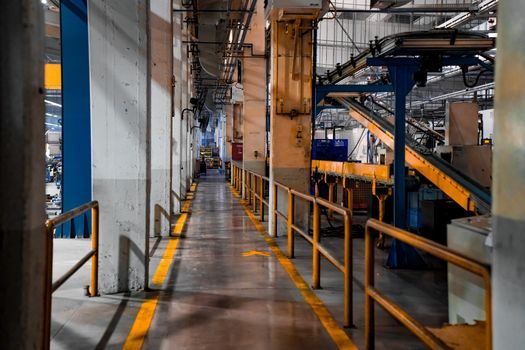
AMRs are specified for three broad use-case bands, each with its own price profile [S1][S5][S6]. Warehouse intralogistics - tote, bin and small-pallet transport - is dominated by mid-range units in the $30,000-$75,000 band and is the densest design space, with established benchmarks in order-picking throughput [S5]. Manufacturing line-side delivery and WIP handling tends toward compact units in the $15,000-$40,000 range, often with conveyors or lift-top handoffs to fixed automation.
Last-mile and outdoor logistics, exemplified by Shinmaywa's AMR-based delivery research, push toward heavier chassis, IP-rated enclosures and Tier 3 sensor stacks, with per-unit cost typically $80,000-$150,000+ before custom bodywork [S6]. A side-by-side reading of payload, navigation, and battery across these three use cases gives a clearer procurement picture than headline sticker prices alone.
Limits, Failure Modes and Sourcing Risk
AMR pricing is not a clean apples-to-apples comparison. Lead time in 2026 is still 12-20 weeks for many mid-range units, and integration labor is the variable most likely to overshoot - 30-60% of hardware cost is a planning number, not a ceiling [S1]. Vendor lock-in on fleet manager APIs, proprietary LiDAR maps, and safety-validated payload profiles makes swapping OEMs expensive mid-life, which is one reason total-cost-of-ownership (TCO) models, not unit price, are the right procurement metric for fleets above five vehicles [S1][S4].
For buyers comparing AMRs against a stacker crane in pallet-aisle applications, the practical break-even is throughput, building height and aisle width: AMRs win on flexibility and mixed-SKU flows, fixed cranes win on energy per move and unit cost at very high steady throughput. Track two signals through the rest of 2026 - the per-vehicle fleet license fee trend and LFP pack cost per kWh - both of which move fleet TCO faster than any single vendor list-price change.
For component-level specifications, see mobile crane, linear guide, and crossed roller guide.