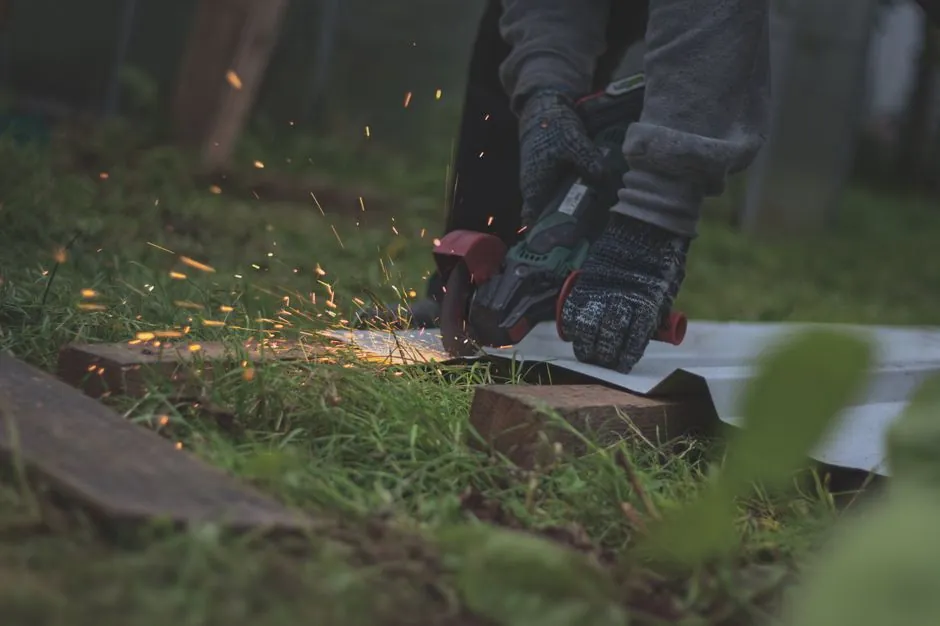
For electrical installation work, the 4-inch to 5-inch (115-125 mm) corded angle grinder running at 110 V or 230 V, drawing 6-9 A and spinning the disc at 8,000-12,000 RPM is the spec the trade actually buys [S1][S5].
That class of tool handles three jobs no electrician escapes: cutting out steel back-boxes, notching light- and medium-duty cable tray, and trimming galvanised conduit to length on a 110 V site transformer [S3]. Anything bigger (7-inch, 9-inch) or purely battery-powered trades away either access in a consumer unit or the runtime to keep cutting past lunch.
Why 4 to 5 Inches Wins on an Electrical Site
4.5-inch to 5-inch angle grinders work best for the bulk of electrical-installation cutting, giving enough power and control to keep a clean cut on thin-gauge steel without overrunning the box [S5]. A 125 mm disc gives roughly 25-30 mm of usable cut depth, which clears 20 mm conduit, 25 mm trunking lids, and standard 1.5-2.0 mm back-box steel in a single pass [S1]. A 9-inch grinder gains cut depth but loses access inside ceiling voids, inside consumer-unit back-boxes, and between studwork where the spark works for 80% of the day [S3]. The weight penalty matters too: a 4-inch/5-inch corded body sits in the 1.6-2.0 kg range, while 9-inch mains units exceed 5 kg and cannot be held one-handed overhead for any length of time [S1][S4].
For a fuller read on how this size class sits inside the wider portable-grinder family, the angle grinder fundamentals entry is the right starting reference, and the heavier metal-removal cousins (fettling work) are covered separately at fettling grinder spec basics for anyone whose scope spills into steel-fabrication prep.
110 V vs 230 V Corded: the Real Trade-Off
UK and EU site practice is 110 V centre-tap-earth (CTE) supplied from a 3 kVA or 5 kVA transformer, because the 55 V-to-earth limit keeps a single fault from becoming a fatality on a wet outdoor site [S3]. A 110 V Bosch 4-inch is the typical issue tool for production-grade fettling work, and the same transformer feeds chop saws, SDS drills, and impact wrenches, so the capital cost is shared across the kit, not just the grinder [S3].
230 V single-phase mains grinders are perfectly legal on a domestic or light-commercial job where the supply is RCD-protected, and a 230 V to 240 V nameplate mismatch is immaterial: both run on the same brush-type universal motor, and the ±5% mains tolerance is wider than the label difference [S3]. What 230 V buys is roughly 10-15% more mechanical power at the same current draw, and a cheaper tool (sub-£60 vs £100-150 for a 110 V equivalent), but the moment the job goes onto a construction site with a site-supply transformer, a 230 V grinder cannot be plugged in without an adapter that defeats the safety earth scheme [S3].
Brushless Cordless 18 V: Where It Works and Where It Quits

Corded electric angle grinders provide more consistent, uninterrupted power for demanding cutting jobs and are described as more potent than cordless models, with users reporting that cordless battery units do not last long [S3, S5]. For an electrician this is the deciding line: cordless is fine for trimming a few back-boxes, notching light- and medium-duty tray, and one or two trunking lids per visit, and it fails on heavy trunking, large cable tray, or any production run longer than about 15-20 minutes of cumulative cut time [S3].
Forum field reports from UK electricians reinforce the spec-sheet numbers: 18 V cordless grinder batteries "give up" on anything heavier than light/medium tray and small trunking, while 110 V mains 4-inch units run all day on a single 3 kVA transformer feed [S3]. The BOM cost gap is real too, with bare 18 V grinder bodies in the £150-200 range and a complete kit (battery, charger, body) approaching £400, against £60-100 for a corded 4-inch that needs no battery infrastructure [S3]. For site work where a 110 V transformer is already in the van, corded is the lower-TCO choice by a wide margin; for a maintenance spark doing one or two cuts a day in finished buildings, cordless pays for itself in time saved walking back to a socket.
Discs, RPM, and the Bits That Actually Fail
Disc selection matters more than grinder selection for cut quality and safety. Three disc families cover almost all electrical-installation work: 1.0-1.6 mm thin metal-cutting discs (Type 41) for clean, low-burr cuts on conduit, tray, and back-boxes; 2.5-3.0 mm depressed-centre grinding discs (Type 27) for weld dressing and burr removal on tray brackets; and 4 mm diamond or masonry blades for the rare chase-cutting and brick-sleeve job [S1][S4]. Thin cut-off wheels must never be run on a grinder whose no-load RPM exceeds the disc's marked maximum speed, typically 80 m/s or about 13,300 RPM for a 115 mm disc, and the 8,000-12,000 RPM operating window of mainstream 4-inch/5-inch grinders sits comfortably below that limit [S1][S4].
The recurring failure modes on site are disc shatter (almost always a disc speed mismatch or a disc that has been dropped), guard rotated out of the way to "see the line" (against every grinder manufacturer's safety guidance), and switch failure from dust ingress when the tool is used without extraction for masonry work [S6]. When the spindle lock shears, the gearbox grinds, or the armature commutator wears past 2 mm of undercut, repair is uneconomic on a sub-£100 tool, replace rather than rebuild.
Pneumatic and Specialty Power Sources: When They Earn Their Place
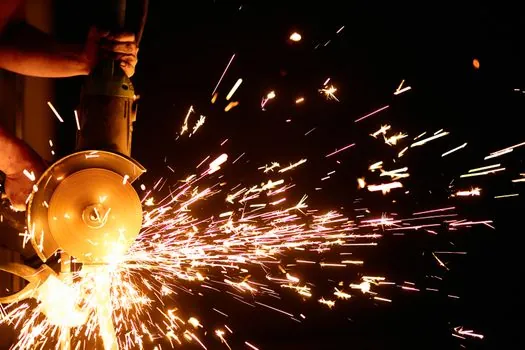
Pneumatic angle grinders, typically 4-7 inch disc, 90-120 PSI (6-8 bar) supply, 4-8 CFM air consumption, and 3,000-12,000 RPM, are the right answer in three electrical-installation scenarios: classified hazardous-area work where no electric tool is permitted, stainless-steel conduit prep where carbon-brush dust is unacceptable, and shipyard or offshore cable-tray work where compressed air is already on the deck [S5]. They weigh 2-4 lb (about 1-1.8 kg), run cooler than electric tools, and have no ignition source, but they trail electric grinders in torque-per-kilogram and require the compressor infrastructure that residential and light-commercial sites simply do not have [S5].
For hazardous-area work, the relevant supply-side rules are the ATEX 2014/34/EU Equipment Directive and the IEC 60079 series for explosive atmospheres; an air-driven grinder with a certified non-metallic housing is a far simpler compliance path than certifying any electric tool [S5]. Outside those niche cases, stick with corded 110 V or 230 V mains, and on overhead or access-platform work, coordinate the grinder spec with the access spec covered in the suspended working platform spec map for electrical installation, because the worst angle-grinder accident is the one where the platform was never rated for the reaction torque.
Sizing the Right Grinder to the Right Job
A direct comparison: 4-inch/5-inch corded at 6-9 A, 8,000-12,000 RPM, weighs 1.6-2.0 kg, costs £60-100 ex-VAT, suits back-boxes, tray, conduit, trunking; 4-inch/5-inch 18 V cordless brushless weighs 1.4-1.8 kg bare, costs £150-200 bare or £350-400 kitted, suits the same jobs in finished-occupancy spaces for one or two cuts per visit; 7-inch corded at 10-13 A weighs 3.0-3.5 kg, costs £120-180, suits heavy trunking, large tray, and any single cut deeper than 30 mm but is too large for back-box work; 9-inch corded at 15+ A weighs 5+ kg, costs £150-250, suits only site trench covers, floor-plate, and structural steel prep; 4-7 inch pneumatic at 90-120 PSI requires 4-8 CFM, weighs 1-1.8 kg, suits ATEX zones, stainless prep, and shipyard work [S1][S3][S4][S5].
Selection rule of thumb for an electrical contractor buying in 2026: standardise the 110 V 4-inch or 5-inch corded body across the van fleet (it covers 80-90% of cuts), add one 7-inch corded for heavy-tray and busbar-trunking work, and only buy cordless for the specific electrician who works occupied offices all day and spends more time walking to sockets than cutting. For column-mounted conduit and busbar risers where the grinder is used alongside rebar and structural prep, the spec overlaps with the heavier rebar-handling kits covered in the rebar straightener selection map for electrical installation.
Two trackable signals for the next refresh: brushless cordless 18 V (and the new 21 V Max / 40 V compact) platforms closing the runtime gap to within 10-15% of corded, which would shift the default back to cordless for site work; and stricter IEC 62841 hand-held tool dust-extraction integration, which would make the existing guard-down practice mandatory rather than advisory on masonry work.
For the relevant spec sheets and selection criteria, see floor grinder.