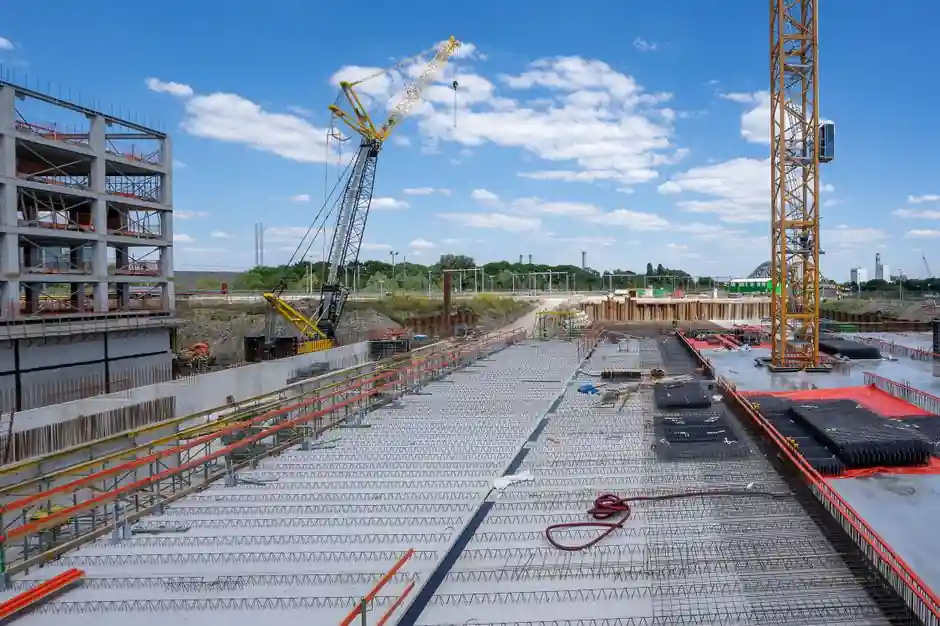
Optical automatic levels configured for steel erection typically run 24x to 32x telescope magnification, a ±15 arcminute compensator working range, and 1.5 mm/km to 3.0 mm/km standard-deviation accuracy, with a metal housing and IP-rated water resistance to survive on-site handling [S2][S3].
The instrument class pairs a circular bubble vial with an internal pendulum or air-damped compensator that holds the line of sight horizontal once the operator roughly levels the base, and the working kit adds a tripod, stadia rod, and horizontal tangent drive for angle reads [S1][S2]. For context on how a self-leveling automatic level sits in the broader instrument family, the entry covers the four-part anatomy: circular level, telescope, tripod, and stadia rod.
Core Specs That Decide Fit on a Steel Job
Magnification is the first number to lock in for steel erection: Spectra Precision AL-series auto levels ship in 20x, 24x, 28x, and 32x variants, and the higher the magnification the longer the usable sight distance for column-line and base-plate height transfer [S2].
Compensator working range is the second hard limit. Most professional auto levels self-correct within roughly ±10 to ±15 arcminutes of residual tilt; outside that envelope the line of sight is no longer guaranteed horizontal and the rod reading must be treated as suspect [S3][S5].
Accuracy is quoted as standard deviation per kilometer of double-run leveling. The commonly cited break point is 1.5 mm/km for precision structural work and 2.0 mm to 3.0 mm/km for general site grading, so the same body style covers both the steel crew and the earthworks contractor without re-tooling [S3]. Water-resistant construction, a metal housing, and a stable tribrach base are the build features that determine whether the unit survives the steel deck environment, where vibration, dust, and rebar impact are routine [S2][S3].
Auto Level vs Laser Level for Steel Erection
Optical auto levels read a graduated stadia rod through a telescope; self-leveling laser levels emit a reference plane that any receiver on a target or column can pick up, which is why laser systems are common for slab flatness and long horizontal baselines [S4]. For point-to-point column elevation, base-plate shimming, and bolt-group height transfer, the optical auto level still wins on single-operator cost, rod-reading resolution, and immunity to bright sunlight washing out a beam [S1][S2][S3].
On a steel deck the operator also has to weigh the construction tools ecosystem: tripods rated for the instrument weight, a fiberglass or aluminum rod, and a stable tribrach that does not walk under vibration. A laser level only pays back when multiple receivers are deployed across the work face at once, which is rarely the case for a 2- to 4-person erection gang [S4].
Matching Magnification and Accuracy to the Steel Task

For short-range base-plate and anchor-bolt height transfer inside a single bay, a 20x to 24x auto level with 2.5 mm to 3.0 mm/km accuracy is normally sufficient and is the cheapest configuration to deploy [S2][S3].
For multi-bay column-line work where sight distances stretch past 60 m to 80 m, the same vendor typically steps up to a 28x or 32x telescope and tightens the spec to 1.5 mm/km, because rod-reading error grows with distance and a tighter compensator accuracy is the only way to keep cumulative error across the frame within tolerance [S2][S3]. The Spectra AL20M, AL24M, AL28M, AL24A, and AL32A designations map directly to those magnification and compensator choices, with the M-suffix bodies using magnetic damping and the A-suffix bodies using air damping [S2].
On-Site Workflow: Setup, Reading, and Error Control
The setup sequence is: tripod stable, circular bubble centered, then the compensator takes over and the operator sights the rod through the telescope, reads the middle crosshair against the graduated stadia, and subtracts backsight from foresight to get the height difference [S1][S5].
Two-person checks still matter. Even with auto-compensation, one source recommends having a partner verify readings, because the compensator only self-corrects within its working range and a tripod that has shifted out of envelope silently corrupts the line of sight [S1]. Solo crews using a laser level for comparison still pair the instrument with a quality rod, because rod plumbing, graduation wear, and sun shadow on the face each add independent error terms that no compensator can remove [S4][S5]. For an auto level the published claim is that the auto-compensation step alone cuts total leveling time by roughly 30% versus a manual instrument, mostly by removing the repeated foot-screw fine-tuning that the traditional two-vial workflow demands [S5].
Limitations and Failure Modes to Plan Around
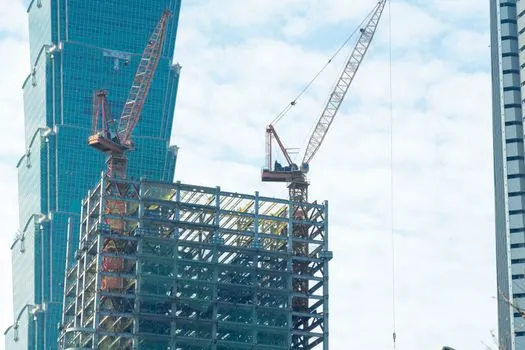
Outside the ±10 to ±15 arcminute compensator envelope the auto level stops self-correcting, so any reading taken on a tripod that has visibly shifted or settled must be redone from the bubble-vial step, not trusted from the last reading [S3][S5].
Compensator damping choice is a real trade-off. Magnetic-damped AL-M bodies react faster but are more sensitive to nearby steel mass and electrical interference, which is a known concern on a steel deck with rebar and temporary welding leads; air-damped AL-A bodies are slower to settle but mechanically simpler in that environment, and the datasheet lists both options for that reason [S2]. Stadia-line distance reads, horizontal tangent drives, and the horizontal circle are useful but they do not substitute for a theodolite when angle accuracy below roughly 1 degree is required, so a separate instrument is still needed for angle-critical steel alignment [S2].
Procurement Sourcing: Vendors, Datasheets, and Field Support
Spectra Precision publishes a dedicated AL-series datasheet, user guide, and dealer-locator page for the 20x / 24x / 28x / 32x bodies, which is the cleanest single-source spec sheet on the market for this instrument class [S2].
For buyers cross-checking performance claims, the construction machinery and equipment reference covers how automatic leveling fits with the wider tool fleet on a steel job, while general selection guides from K-Level and UniqueNav provide the published 30% setup-time figure and the 1.5 mm/km versus 3.0 mm/km break point that most field engineers apply [S3][S5]. Related reference picks for the same steel-construction toolchain include Laser Level Selection for Concrete Work for slab flatness and Rebar Bender Selection for Concrete Work for the rebar-handling side of the same crew, both of which run on the same elevation and tolerance assumptions.