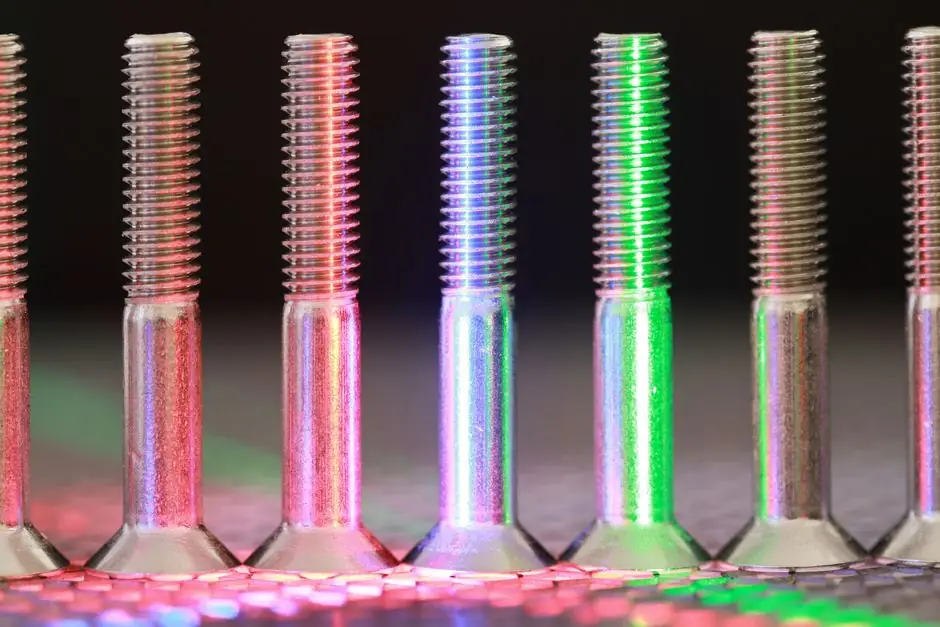
An automatic molding line purchase for a hardware foundry in 2026 is a six-number decision, not a brand decision: flask envelope, max mold height, sand feed t/h, squeezing pressure bar, cycle seconds per mold, and automation tier [S4].
Hardware work (hinges, locks, pipe fittings, valve bodies, brackets) typically runs in the small-to-mid flask band of 500×400 to 1000×800 mm with cycle times of 12–30 s, and the August 2026 market is dominated by DISA-type vertical flask-less cells and SINTO-type horizontal flask-carried cells [S4]. Buyers should anchor on the spec triangle before the brochure; chassis-only quotes under US$50,000 almost always exclude core-setter, conveyor, or auto-level modules that hardware foundries later bolt on at full price [S3].
Flask Envelope and Mold Height: Where Hardware Castings Sit
Flask inner size is the single biggest cost driver on an automatic molding line, and Chinese OEM envelope bands cluster in two camps: 500×400 to 900×700 mm for vertical flask-less cells, and 1000×800 to 1200×1000 mm for horizontal SINTO-type lines [S4]. Hardware bracket and lock-body castings usually fit inside 700×600 mm, putting them in the mid-range vertical cell bracket; a typical KSP80 Kailong single-station line quotes 800×600×200/200 mm flask inner size at 30 s/cycle, with 1000×1000×250/250 mm available on the KSP100 at the same 30 s/cycle and 8–12 kgf/cm² specific squeeze pressure [S1].
Mold height is a separate axis from flask footprint: vertical cells cap at 200–250 mm per half, while horizontal lines routinely hit 300–400 mm per half to support heavier pump housings and valve bodies [S4]. For hardware part lists that mix thin-wall lock cases and thicker hinge blocks, the typical answer is a horizontal cell rather than re-tooling a vertical platform, because pattern swap on a wider envelope avoids cutting two sets of tooling [S4].
Cycle Time, Sand Feed and Squeezing Pressure: The Mechanical Levers
Vertical DISA-style cells regularly quote 12–15 s per mold in production, while a comparable horizontal line lands at 20–30 s, the trade being part weight and pattern complexity rather than raw throughput [S4]. On the Kailong KSP double-station SPD80 and SPD100, cycle drops to 20 s/cycle for the same 800×600 and 1000×1000 mm flask sizes, recovering horizontal-line speed through parallel pattern exchange rather than faster squeeze [S1].
Sand feed rate scales with flask area: a 600×500 mm cell needs roughly 30–40 t/h, a 1000×800 mm horizontal line 60–90 t/h of compacted sand delivered to the mold [S4]. Squeezing pressure is the lever most often mis-quoted in tenders, because a 0.1 MPa drop on a vertical cell typically shows up as 5–8 % scrap from soft-ram corners within a week; green-sand vertical cells run 0.4–0.6 MPa squeezing with multi-pond aeration, and resin PU lines use 0.5–0.7 MPa plus amine gassing [S4]. The Kailong KSP/SPD range runs 8–12 kgf/cm² (≈0.8–1.2 MPa), which sits above the green-sand baseline and into the resin-PU compaction band [S1].
Platform Cut: DISA Vertical vs SINTO Horizontal
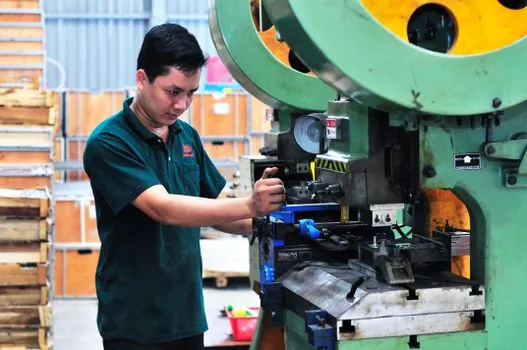
Two mechanical platforms split the August 2026 hardware-foundry market: DISA vertical (flask-less, shoot-and-squeeze, high throughput) for runs above 100 molds/hour, and SINTO horizontal (flask-carried, jolt-squeeze, larger envelope) for heavier castings and pattern-heavy job shops [S4]. Buyers usually cross these against part size, hourly tonnage, and sand type rather than chasing brand, because the underlying cycle and pressure bands are similar across OEMs once the spec envelope is fixed [S4].
The Yonghong YHH176 and YHH288 horizontal parting stripping lines target exactly this hardware-foundry envelope: 700×600/180–250 mm and 800×800/180–250 mm sand mold sizes respectively, with <0.3 mm clamping accuracy and 100 molds/hour on the YHH176 rising to >150 molds/hour on the YHH288 double-station configuration [S2]. The 1-cope/2-drag box configuration supports a compact hardware job shop that needs fast pattern changeover without dedicated drag restocking [S2].
Binding System Cut: Green Sand vs Resin PU vs Shell
The three binding systems the buyer actually chooses between are green sand (water-bonded bentonite, fastest, cheapest pattern, fairest finish), resin PU cold-box (medium cycle, better finish, complex internal cores), and shell molding (slowest per shell, cleanest finish, most pattern-expensive) [S4].
Resin-sand tilt-pour lines win on casting surface finish at Ra 6.3–12.5 µm typical, and on pattern changeover speed, with most 2026 OEM catalogs quoting 10–15 minute pattern swaps on a flaskless resin-sand cell [S3]. Green-sand lines win on per-ton sand cost, a factor of roughly 4–6× cheaper than resin-bonded systems, and on cycle time for high-volume runs above 100 molds/hour [S3]. Shell molding uses a heated match-plate at 250–300 °C rather than pressure compaction, so it does not belong in the same pressure spec table as the other two [S4]. A typical hardware foundry running mixed iron/steel batches at 8,000 t/year will normally spec one green-sand vertical cell for volume runs and one resin PU line for short-run pump and valve bodies, accepting the core making machine vs shell core machine cut as the most relevant trade-off [S3].
Automation Tier and Sticker Price: Where the Money Hides
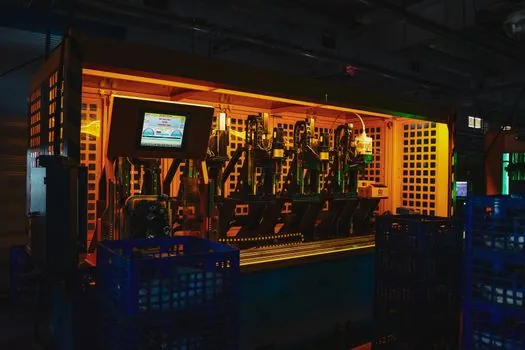
Three automation tiers define the 2026 market: semi-automatic (manual flask handling, auto sand cycle), fully automatic (auto flask, auto sand, auto pour prep), and turnkey (auto pour, auto shakeout, auto sand reclamation, MES/SCADA) [S3]. A green-sand flaskless line in tier 2 lands at roughly US$80,000–150,000 for a single-station cell, and tier 3 turnkey cells run US$250,000–500,000 with sand reclamation and pouring integration [S3]. Resin-sand tilt-pour units skew cheaper per station (US$10,000–30,000 in 2026 listings) but require separate core-making capacity [S3].
Buyers comparing per-station quotes should insist on a single-line itemization covering: (1) molding machine, (2) sand hopper and shooter, (3) flask/clamp table, (4) shell molding machine or core-setter if cores are placed in-line, (5) conveyor or pour line, (6) control cabinet with PLC/HMI, and (7) optional automatic level for flask setting tolerance [S3]. Skipping items 4 and 7 is the most common cause of a "cheap" line becoming expensive once installed, because core-set drift of more than 0.5 mm shows up as the same 5–8 % scrap pattern as a 0.1 MPa squeeze pressure drop [S3][S4]. On Kailong KSP and SPD builds, the control stack is a Siemens S7 PLC with touch screen and Ethernet networking, SEW or Siemens servos, Rexroth VFDs and hydraulic valves, and Schneider low-voltage electricals, a configuration consistent with the tier 2/3 spec band [S1].
Capacity Math, Failure Modes, and Sourcing Levers
Capacity math is straightforward once envelope and cycle are fixed. A 12,000 t/year target at two-shift operation translates to roughly 440,000 molds per year, achievable on a ZHY-style four-track horizontal layout (pouring, flask return, two cooling) with two identical horizontal parting molding machines and a 140 m × 24 m footprint [S5]. The same math on a YHH288 double-station horizontal line at 150 molds/hour over 16 hours/day, 250 working days, gives 600,000 molds/year headroom, more than enough for a mid-volume hardware job shop [S2].
Failure modes cluster around four subsystems: mold transport instability, inefficient flask and weight reuse, low sand reclamation, and manual intervention in core handling [S5]. The ZHY four-track horizontal design addresses unstable mold transport, inefficient reuse of flasks and weights, low overall productivity, and excessive reliance on manual labor with PLC-orchestrated automated flask and weight transfer, precision baseplate handling and clamping, and synchronized mold ejection [S5]. The wider pattern for hardware foundries is documented in our agricultural-machinery casting selection map, which uses the same envelope-and-cycle framework for a related part family.
Who the Line Is For, and Who Should Walk Away
An automatic molding line at tier 2 or tier 3 pays back only above roughly 50,000 molds/year; below that, a semi-automatic cell in the Kailong KSP80–KSP120 envelope, or a used horizontal flask line, is the rational choice [S1][S3]. Foundries running a stable 5–10 part mix with pattern changeover under once per shift are the sweet spot for a vertical flask-less green-sand cell, while job shops with 50+ active patterns and frequent short runs need the horizontal envelope and a resin PU side cell [S4]. Foundries that need Ra 3.2–6.3 µm as-cast finish, for instance decorative architectural hardware, should skip green sand entirely and spec a shell line, accepting the 3–8 minute per-shell cycle as the cost of finish [S4].
The Sourcing trail for August 2026 runs through three signals worth tracking: (1) flaskless OEM catalog cycle-time bands narrowing toward 10–12 s on green-sand vertical cells, (2) resin-PU gassing-rinse cycle compression below 60 s on cold-box cores, and (3) the appearance of MES/SCADA as a line-item, not an option, on tier 3 turnkey quotes above US$250,000 [S3][S4]. Buyers who pin their tender on the six-number spec and then walk suppliers through the itemization, rather than the other way around, will cut 15–25 % off the installed cost of a comparable cell.
For component-level specifications, see molding line.