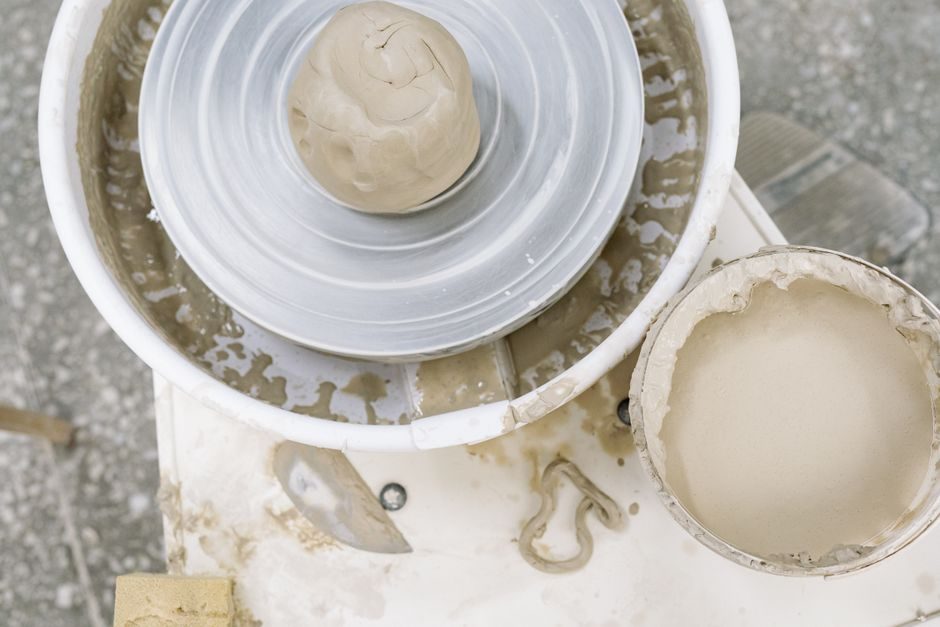
An automatic molding line is a multi-station system that produces complete sand molds at rates from roughly 80 to over 200 molds per hour, integrating sand mixing, flask transport, compaction, mold closing and de-flasking on a single rail or carousel [S4]. A core making machine, by contrast, is a single-purpose station that shoots or blows resin-bonded, cold-box, hot-box or shell cores into dedicated core boxes before those cores are inserted into the mold cavity [S1].
The decision between them is not "which is better" but "which is the bottleneck". A green-sand flaskless molding machine, such as the cast-iron models CASTKING ships from China, runs at high cycle rates but depends on a separate core supply [S4]. A core making machine supplies that supply. The 2026 buying logic treats the line as the throughput backbone and the core shooter as the geometry enabler.
Throughput, Cycle Time and Where the Bottleneck Actually Sits
A flaskless automatic molding line from Chinese foundries such as CASTKING routinely quotes a cycle of 12-15 seconds per mold at stable sand conditions, with the sand molding machine output measured in molds/hr rather than tons/hr [S4]. Compact EPS shape moulding lines from suppliers like Fang Yuan run on a slower cadence because the steam chest must heat and stabilise the bead before each shot, which is a thermal-mass limit, not a mechanical one [S1].
Core making machines decouple the core cell from the line clock: a cold-box core shooter can produce small-to-medium cores in 30-90 seconds, and a shell core machine in 120-300 seconds per cycle depending on section thickness. In practice the line almost never waits on the cores because cores are banked in a buffer, but cores do dictate how complex the casting can become. If your part geometry needs more than 3-4 internal cavities, you need a dedicated core machine long before you need a faster line. The automatic molding line buying guide for 2026 walks through the same throughput trade-off in a procurement framing.
Sand System, Compaction and Mold Quality Trade-offs
Green-sand flaskless lines depend on continuous sand preparation: moisture 3.0-4.5%, compactability 35-45%, bentonite 7-10%, and a tempering muller feeding a hopper above the shooter [S4]. Compaction methods split between pneumatic squeeze (lower capex, lower mold hardness on deep pockets), high-pressure jolt-squeeze (40-60 kN squeeze force typical, good for mid-size flasks), and the more recent air-flow / static-pressure heads that give 80-95 Brinell-equivalent hardness on deep draws [S4].
Core making uses a fundamentally different sand system. Resin-bonded cores use furan or phenolic resin at 1.0-1.8% binder addition plus a hardener; cold-box cores use a phenolic-urethane binder gassed with amine; shell cores use a thermosetting resin-coated sand dropped onto a heated (200-260 C) core box. The sand on the core side is a consumable with tighter chemistry control, while the sand on the line side is a recirculating mass. For a head-to-head of how the upstream sand system feeds both, the sand mixer versus molding line spec cut is the right companion read.
Capex Footprint, Floor Space and Foundry Layout
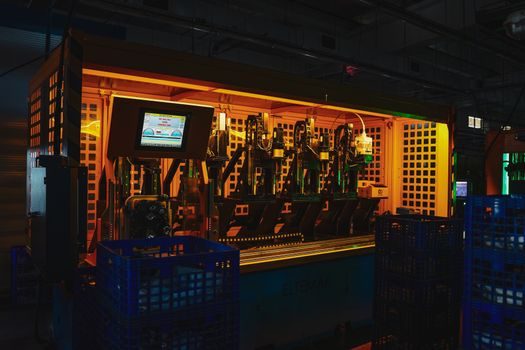
A 2026-vintage automatic molding line is a multi-cell installation: sand hopper, sand conveyor, compacting head, flask track or carousel, mold closing unit, and a de-flasking station. A mid-capacity flaskless line in the CASTKING catalogue footprint starts at roughly 8 m x 4 m of active line plus 4-6 m of sand loop [S4]. High-speed lines with a sand battery and pouring line integration commonly run 25-40 m of rail length.
A core making machine is a bench or stand-alone station. A vertical-shell core machine typically fits in 3 m x 3 m including the gas generator or heating cabinet, and a horizontal cold-box core shooter with amine gas generator takes 4 m x 5 m plus scrubber. This size difference is the first gate: a foundry below 1,500 m^2 of casting floor usually cannot justify a high-capacity automatic molding line and a full core cell side by side, and is better served by a single core machine plus a manual or semi-automatic molding bench.
Decision Matrix: Line, Core Machine, or Both
Foundries in 2026 generally spec equipment against four axes, and the same matrix applies to the line-vs-core call. [S1]
Throughput axis. Below 60 molds/hr, a manual or jolt-squeeze bench is more cost-effective than either an automatic line or a robotised core cell. Between 60-200 molds/hr, the automatic molding line is the workhorse. Above 200 molds/hr, a high-pressure static-pressure molding machine with multi-station sand supply is required, and the core machine must match in cycle time or the buffer grows out of control.
Geometry axis. If castings are plate-like with no internal cavities, the molding line is sufficient and the core machine is a sunk cost. Once castings carry water jackets, oil galleries or complex internal passages, the core machine is mandatory and the line selection should optimise mold-handling speed to match the core output rather than the other way round. Foundries that run both are best served by a static-pressure molding machine for deep-draw molds plus a dedicated shell core machine for the small, high-volume cores.
Sand and binder axis. Green-sand-only foundries can defer core investment by simplifying part geometry, but they trade casting complexity for it. Once furan, phenolic or cold-box binders enter the sand system, exhaust gas treatment, amine scrubbers and resin storage enter the capex, and the foundry effectively becomes a two-material plant: recirculating green sand plus disposable resin sand.
Labour axis. An automatic molding line with PLC + HMI typically runs with 1-2 operators per shift; a core machine with a robotised core handler runs 0.5-1.0 FTE per shift. Foundries with tight labour markets usually automate the line first because the line is the higher-FTE cell, then phase in the core cell once ROI is banked.
Standards, Safety and Compliance
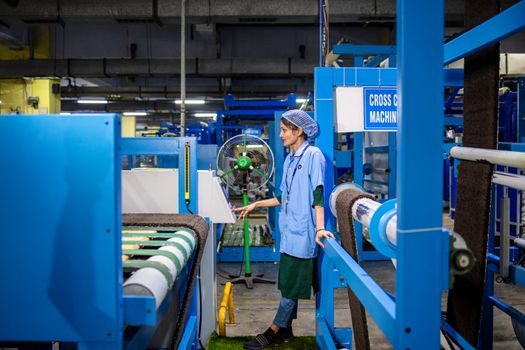
Chinese-built molding lines exported in 2025-2026 commonly carry CE marking under the Machinery Directive 2006/42/EC, with the relevant CE declarations accompanying the shipment [S2]. The CE marking covers the line as a whole, including electrical cabinets to IEC 60204-1 and the safety-related parts of control systems to ISO 13849-1. Foundries specifying CE plus a third-party functional-safety audit pay roughly 8-12% more for the same mechanical line, but gain access to EU automotive tier-1 supply chains [S2].
For core machines using amine gassing, the exhaust stream is a regulated VOC source in the EU under the IED (Industrial Emissions Directive 2010/75/EU), and a thermal oxidiser or wet scrubber is normally included in the scope. OSHA in the US enforces PELs for silica dust at 50 microg/m^3 as an 8-hour TWA, which applies to both lines and core cells; modern Chinese-built core machines ship with integrated dust pickup plenum sized to a 3,000-5,000 m^3/hr extractor.
Real Failure Modes and 2026 Service Signals
The two equipment types fail in different places. Molding lines lose cycle time when the squeeze head seal wears, the sand loop plugs at the screen, or the flask clamp hydraulic pack leaks; none of these stop the line outright, but each drops 5-15% of nominal rate within a quarter if not serviced [S4]. Core making machines fail more abruptly: a cold-box core shooter's amine gas generator can miss a purge cycle and contaminate the sand system, the shell core box heater elements fail at 6,000-10,000 hours, and resin-coated sand sitting in a humid hopper blocks the shooter's blow nozzle within days if not conditioned.
One specific service signal worth tracking: suppliers such as Fang Yuan now publish cycle-time recovery data and mould-change duration as part of the EPS shape moulding line (2026-05) documentation, which is a sign that end-users are asking for fast mould change as a contractual metric, not just a marketing line [S1]. Foundries negotiating 2026 contracts should pin mould-change time to a number (typical quoted values: 8-15 minutes for a clamp-style change, 20-35 minutes for a bolted flask change) rather than leave it as "fast".
Closing note: if the foundry's bottleneck is the line, the automatic molding line buying guide for 2026 is the right next read. If the bottleneck is upstream sand supply, the sand mixer price 2026 breakdown is the more useful node. Two trackable signals to watch into the second half of 2026: whether more Chinese core machine builders publish IO-Link or OPC-UA interfaces on the gas generator (a sign the cell is being sold into Industry 4.0 brownfield sites), and whether the static-pressure molding machine class expands from a handful of suppliers to a broader mid-tier catalog, which would compress 2025 pricing on the high-pressure head by an estimated 10-18%.