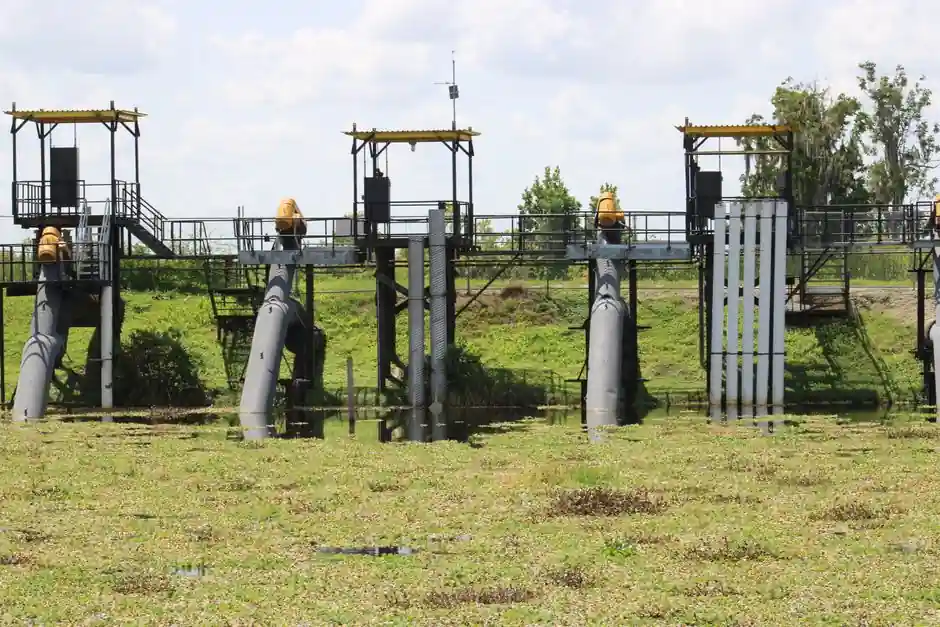
Select an irrigation balancing valve for the nominal design flow, available differential pressure, and required adjustment range rather than matching the branch pipe diameter.
Manual fixed-orifice and variable-orifice valves cover stable hydronic duties, while automatic balancing valves maintain design flow when system pressure changes [S1][S8].
Define the balancing duty before selecting a valve
A balancing valve must control the flow assigned to a branch without creating excessive pressure drop elsewhere in the irrigation circuit [S4]. This calculation demonstrates why valve selection requires both an expected flow and a pressure-drop range, not a pipe size alone.
For irrigation, establish the nominal flow for each zone or lateral group, the available differential pressure across the balancing point, and whether demand remains stable during the irrigation cycle. A line-sized valve can remain inadequate if its internal flow capacity does not support the nominal duty [S2]. Conversely, excessive throttling at a small valve creates unnecessary head loss and may leave insufficient pressure at the remote emitter or sprinkler outlet.
Valves should be selected around the nominal design flow, not merely the minimum and maximum flow limits [S2]. Keep the target within the usable adjustment range so the installer can approach the setting from both directions during commissioning. For equipment whose dimensions, pressure rating, and materials are established, review the balancing valve guide before fixing the schedule.
Compare manual and automatic balancing options
Fixed-orifice manual valves provide the simplest measurement method because the orifice geometry and Cv remain constant while a plug and seat adjacent to the orifice are adjusted [S1]. Variable-orifice manual valves place the plug and seat between the pressure-test ports, so the Cv changes at each knob position and the manufacturer must publish a family of curves by valve size [S1]. Automatic balancing valves use flow-control technology to maintain the design flow despite changes in system pressure [S8].
The comparison should be made against four criteria: adjustment resolution, sensitivity to pressure variation, commissioning effort, and whether the irrigation schedule changes the required flow. A manual fixed-orifice valve is the economical choice only when the circuit is stable and a technician will measure and adjust it. Automatic balancing is preferable when pressure variation would otherwise displace the branch from its assigned flow.
Size valves from nominal irrigation flow
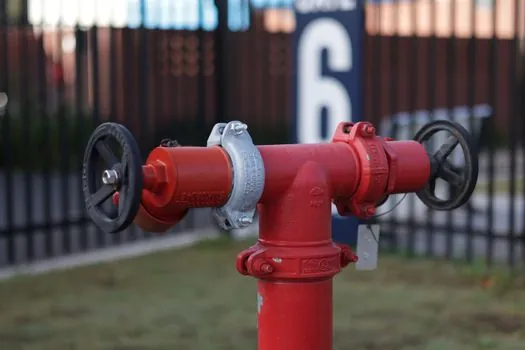
Size the valve in accordance with the gallons per minute it must control rather than the pipeline size [S2]. The research distinguishes nominal flow from minimum and maximum ratings: selecting a valve only because it falls within its broad flow range is not recommended, because the valve may lack authority at the nominal operating point [S2].
In a heating-water project with 100 coils, ¾-inch balancing valves were installed on 65 coils, while the remaining 35 valves ranged from ¾ inch to 2-½ inches [S2]. The lesson transfers directly to irrigation: check valve hydraulics and replacement transitions before equipment is ordered.
Do not force every branch into the same valve model or diameter. Use the valve size whose certified flow-versus-pressure-drop relationship places the nominal duty within the adjustable range. The line connection may still require a reducer, and that added transition must remain within the manufacturer’s dimensional and flow constraints.
Account for water quality and irrigation service conditions
Water quality determines whether the balancing element is maintainable. Filtration reduces suspended solids that can lodge in an orifice or seat, while mineral precipitation can alter a narrow flow passage. Select materials and seal arrangements suitable for the actual supply water, operating temperature, and treatment chemicals rather than relying on a generic bronze or stainless-steel description. [S1]
These values define one manufacturer’s envelope, not a universal rating. Confirm the exact model, size, construction, pressure class, and temperature rating against the project specification before substitution.
For irrigation zones exposed to dirt, fertilizer, chlorine, or frequent maintenance, service access matters as much as initial flow accuracy. Locate the valve where it can be isolated, inspected, and serviced without draining the entire mainline. A balance setting that cannot be checked after filtration or pump changes is not a durable commissioning record.
Use differential pressure correctly for commissioning
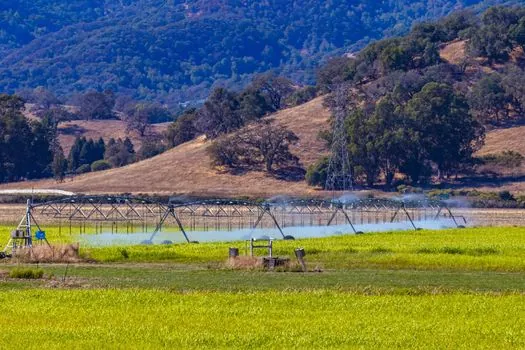
Measure differential pressure across the valve’s dedicated test ports, not across an arbitrary pair of gauge taps that includes unrelated piping [S1]. A differential-pressure manometer may be programmed to convert the measured pressure into flow, while fixed-orifice valves also have published flow charts [S1]. Variable-orifice valves require the curve corresponding to the exact valve size and knob position.
For a variable-orifice example, a knob setting of 2 with a differential pressure of 3 psi indicates 3 gpm [S1]. If 5 gpm is required, the installer can test positions 3 or 4 and interpolate toward the target, repeating the process until the target is approached [S1]. Record the final knob position, differential pressure, calculated flow, date, and operating condition because the same setting may not produce the same flow after pump or system changes.
Choose a pressure gauge range that gives useful resolution at the expected differential pressure; an oversized gauge can obscure a small difference [S4]. Manual balancing is iterative trial-and-error work, so accurate pressure measurement, isolation, and repeat access are part of the valve selection, not optional commissioning accessories.
Apply balancing valves where control is justified
A balancing valve is most useful where several irrigation branches have different lengths, fittings, elevations, emitter populations, or nozzle capacities, and the available pump head is sufficient to overcome the resulting imbalance. It can also be used to meter a zone when the flow specification is established, provided the valve remains in the applicable adjustment range [S4].
Do not use a balancing valve as a substitute for correcting an undersized main, insufficient pump capacity, blocked filtration, poor emitter selection, or excessive pressure loss in laterals. A globe valve for irrigation is more appropriate when throttling control is required during normal operation, while an automatic recirculation valve serves recirculation duties rather than branch-flow balancing.
Manual balancing is usually a poor fit for zones whose flow changes every irrigation cycle and cannot be checked routinely. Automatic balancing valves are better suited to maintaining a specified design flow as system pressure changes [S8]. For a complete pump, filter, emitter, and valve review, the ball valve selection guide for agricultural irrigation provides a separate check on isolation and line-duty constraints.
Build a traceable irrigation valve schedule
Specify each balancing valve by zone service and nominal flow, then add the required pressure rating, temperature range, connection size, body material, seal material, test-port arrangement, and manufacturer curve reference. The schedule should identify whether the valve is fixed-orifice manual, variable-orifice manual, or automatic, because the same nominal diameter does not guarantee equivalent flow control. [S2]
Before approval, verify three operating points against the published valve data: nominal design flow, minimum expected differential pressure, and maximum expected differential pressure. Confirm that the selected adjustment range covers the nominal duty and that the downstream pressure requirement remains satisfied after throttling. The shortlist logic is straightforward: use a manual fixed-orifice valve for stable, measurable circuits, a manual variable-orifice valve for wider manual adjustment, and an automatic balancing valve where pressure variation must be absorbed without repeated reset.
For procurement control, record the nominal gpm, available ΔP, model, valve size, adjustment range, pressure and temperature ratings, and approved materials for every irrigation zone. During commissioning, log the measured ΔP and calculated flow at the final setting, then repeat the check after pump, filter, or irrigation-program changes.