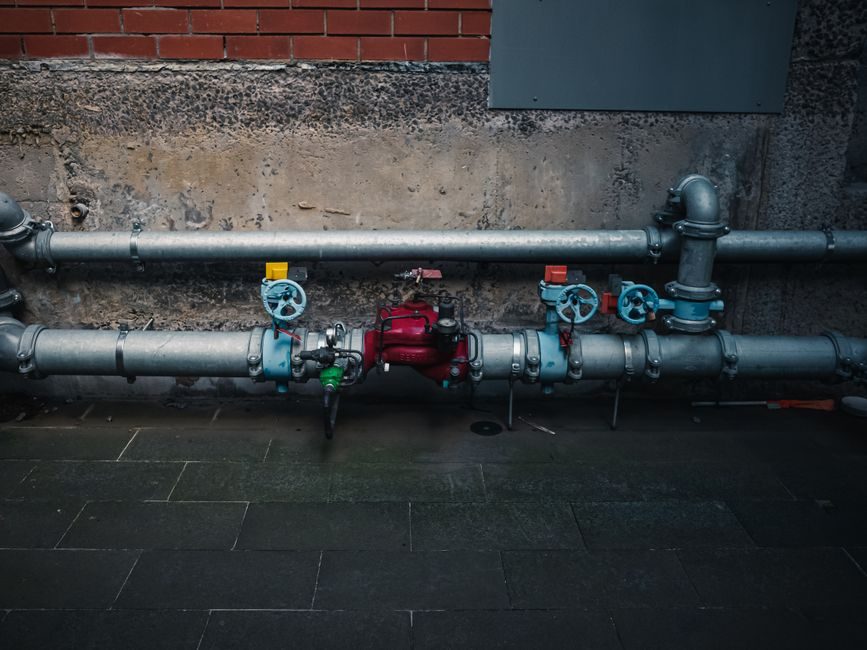
Balancing valves are specified on five engineering criteria — function type, size and pressure rating, body material, control interface, and measured fluid — and the dominant construction across HVAC and hydronic duty remains dezincification-resistant brass with threaded ends in DN15–DN50 [S2][S3].
Across current 2026 manufacturer offerings, the same five-criterion logic applies whether the duty is a 16-bar heating loop, a 300 psi HVAC circuit, or a 5,000–20,000 psi frac manifold [S2][S3].
Static vs Dynamic Function — The First Decision
Static balancing valves are fixed-orifice double-regulating units: a handwheel sets a discrete position, a memory stop locks it, and the valve holds that flow split regardless of system pressure swing. DirectIndustry's 2026 catalogue shows static units in DZR brass, DN15–DN50, PN16, with two quick test points for differential pressure measurement across the orifice [S2].
Dynamic (pressure-independent) balancing valves combine a regulating element with a differential-pressure controller so the design flow is held constant across a ΔP window — Taloar's PC320 pairs with the T330/TB300 family in sizes up to DN50 (2 in) for closed-loop HVAC water circuits [S3]. Selection rule: specify static for terminal-unit branch balancing where the loop is small and pressure is stable; specify dynamic on primary distribution and across chillers/boilers where ΔP swings with load.
Size, Pressure Class, and Temperature Envelope
The 2026 brass-body bracket covers PN16–PN25, –10 °C to +120 °C (14 °F to 248 °F) and DN15–DN50 threaded, with a few lines reaching DN80 (3 in) — Taloar's T330 lists 0.5–2 in, 300 psi, 120 °C max; ZETKAMA's zSTA 221 and VIR 9515/9516 hit DN15–DN50, PN25, –10 °C to +130 °C [S2][S3].
Industrial high-pressure balancing extends well past the hydronic envelope: ZETKAMA's BLB hydraulically-operated pressure-balance valves reach 2,000,000–30,000,000 Pa (≈20–300 bar) at 0–70 °C, while frac-tree balancing ball valves on the Jereh catalogue run 5,000–20,000 psi (≈345–1,380 bar) at –75 °F to +250 °F [S2]. Always size against the actual Kv/Cv curve, not the nominal DN, and verify that the test-point port pressure rating matches the local gauge.
Body Material and Fluid Compatibility
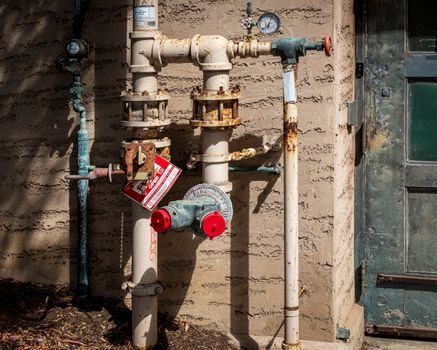
Brass — and specifically DZR brass per EN 12165/EN 12164 — is the default for heating, chilled water, and domestic hot-water recirculation, including the thermostatic CircuitSolver line for PWH-C duty [S2][S10]. Dezincification resistance matters when the water chemistry is aggressive (soft, high-chloride) because standard brass dezincifies and loses the metering edge over time.
Stainless steel (CF8/CF8M) and ductile iron with epoxy lining enter the spec when fluid temperature exceeds 120 °C, when glycol concentration is high, or when the line carries low-pressure steam condensate. Thermostatic hot-water recirculation units (e.g. Kemper 141 0G) operate 50–90 °C at PN16 and are built for thermal-disinfection cycles [S2]. A simple decision rule: brass for HVAC water up to 120 °C; stainless or lined iron above 120 °C or for any non-water service; matched thermal-disinfection rating whenever the line feeds a hospital or legionella-controlled loop.
Control Interface and Actuation
Manual handwheel remains the baseline on static balancing valves — 40 graduated stroke positions with a memory-stop and two quick test points are now standard on most DZR-brass DN15–DN50 lines [S2].
Motorised and pressure-independent variants are the growth segment: Taloar's TB300 and TS500 are electric, regulating, sized for water, and designed to integrate with a separate control valve on the same loop [S3]. Comparato Nello's SCPV series is an electrically-actuated brass ball valve with proportional, pressure-independent balancing logic in DN15/20/25 [S4]. Piston-body threaded units (e.g. Simple Valve D080-00500) keep the handwheel but add seal and distribution options for water, oil, and air up to 16 bar [S5]. For dynamic rebalancing under variable load, specify an actuated PICV (pressure-independent control valve) rather than a manual static unit.
Comparison: Four Common Balancing-Valve Families
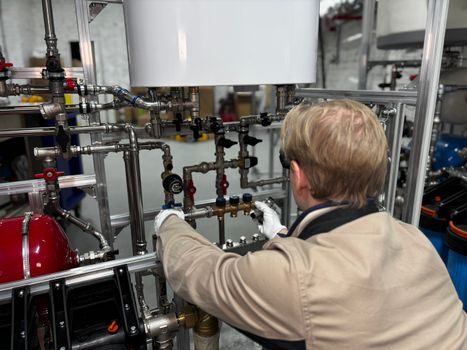
From the 2026 DirectIndustry catalogue, four families dominate the spec sheet; the table below lines them up against the four criteria that drive a buyer's shortlist [S2][S3][S4][S5].
Static DZR-brass double-regulating (ZETKAMA zSTA 221, VIR 9515/9516, VARIMEX 221): DN15–DN50, PN25, –10 to +130 °C, manual handwheel, 40-position memory stop, two test points — best fit for terminal branch balancing on a closed HVAC loop.
Dynamic pressure-independent (Taloar T330 + PC320, Comparato SCPV, Taloar TB300/TS500): DN15–DN50 (T330 up to 2 in), PN16–PN25, –10 to +120 °C, handwheel or electric actuator with proportional control — best fit for primary distribution where ΔP varies with chiller/boiler load.
Thermostatic hot-water recirculation (Kemper 141 0G, CircuitSolver): DN15–DN25, PN16, 50–90 °C, self-actuating by temperature — best fit for PWH-C return lines and thermal-disinfection duty.
Industrial high-pressure (ZETKAMA BLB, Jereh frac-tree ball): DN variable, 20–300 bar or 5,000–20,000 psi, –75 °F to +250 °F, manual or hydraulic — wrong fit for HVAC; correct fit for load-holding, workpiece-clamping, and wellhead manifold service [S2].
Where a Standard Balancing Valve Is the Wrong Pick
Do not specify a DN15–DN50 brass butterfly valve or generic ball valve as a balancing device on a primary heating loop: the disc has no calibrated metering orifice, no memory stop, and no differential-pressure test ports, so commissioning crews cannot set or verify flow split [S2]. The same caveat applies to a standard check valve — its function is backflow prevention, not flow balancing, and the Cv is not characterised for setting [S8].
Avoid specifying a static balancing valve where the system is genuinely variable: on a primary chilled-water loop with two-way control valves, the differential pressure at the branch swings 2:1 or more with load, and a static setting will drift off-design. Specify a dynamic balancing machine-tuned PICV or a separately-actuated dynamic balancing valve instead. Also avoid brass in glycol concentrations above ~50% or in high-chloride closed loops above 80 °C; the published material limit for DZR brass in continuous hot-water service is generally treated as 120 °C with a derating below 0 °C, and any chemical inhibitor compatibility must be confirmed against the inhibitor MSDS [S2].
Sourcing, Standards, and Trackable Signals
Current 2026 sourcing channels: DirectIndustry lists 45 manufacturers and 108 products in its balancing-valve index; GlobalSpec's industrial-spec search holds hydraulic and pressure-reducing balancing valves from vendors including Nachi America (e.g. GR-G03-A1-BK-20); Watts, Asiadon, Hebei Huahui, and Taloar remain active on the OEM and trading-company side [S1][S2][S3][S6][S8][S9].
Standards anchor: DZR brass body to EN 12165/EN 12164, threaded ends to ISO 228/1 (DN15/DN20) and ISO 7/1 Rp (above DN20), copper-tube olive kits to EN 1057 where the valve drops onto domestic copper. ASME B16.34 / API 6D govern the high-pressure industrial end, and HVAC commissioning should follow ASHRAE Guideline 0 and the project's specified balancing procedure (e.g. proportional method vs. venturi). For variable-flow primary loops, monitor the next product update from PICV vendors for DN80–DN100 extensions, and watch the dometic hot-water recirculation thermostatic segment — CircuitSolver-style self-actuating units are spreading into legionella-control retrofits [S2][S3][S10].