For plants standardising on a single cartridge seal type, the oil seal family is the pragmatic spare-availability winner: AliExpress lists TC-type NBR units in the 60–80 mm bore range at roughly USD 1.65–9.81 per piece in 100-piece lots, with confirmed 5-star sales volume above 150 units per listing [S9].
Bellows seal cartridges — typically welded metal-formed (AM-350, Hastelloy, Inconel) secondary seals — sit on the opposite end of the availability curve: DLSEALS reports a daily output of 127,000 pieces across its full seal portfolio, but metal-bellows subassemblies represent a small fraction of that mix and most plants still order them made-to-print on 4–8 week lead times [S3].
Stocked SKU Volume and Catalogue Breadth
Elastomeric oil seal mould tooling is shared across hundreds of factories globally, and supplier catalogues reflect that depth: CNBM's SBR/NBR/CR/IIR/CSM/ACM/NR/PU/HNBR/EPDM/SI/FPM material menu covers all common service fluids in 13 elastomer families, with reported MOQ as low as one piece on Alibaba-style platforms and quoted FOB Thailand at a per-piece price for standard NBR TC geometries [S5][S6].
DLSEALS' news section, dated 17 July 2026, focuses on automotive wheel-hub oil seals and PTFE/metal hybrid geometries — categories dominated by injection-moulded elastomers rather than welded metal bellows — confirming that the high-volume side of the aftermarket still flows through rubber moulding lines [S3].
CENS lists oil seals as a dedicated "Engine Parts → Engine Systems" category with active online-inquiry flow on 9 July 2026, and Materials Source and Supplies Co. quotes a 100,000-piece-per-month maximum supply capacity across branded SKUs (Federal Mogul, SKF, Timken, Koyo) on top of in-house production — a stocking signal that 1-day replenishment is feasible inside Saudi Arabia for any standard bore within 20–200 mm [S2][S7].
MOQ, Price Floor, and Reorder Velocity
Cos Plastic & Rubber quotes a starting price of USD 0.10 per piece with no enforced MOQ on Alibaba-trade platforms, and lists NBR/Nitrile, NR, Viton/FKM, EPDM, SBR, SR, CR, HNBR, PTFE, Silicon, PU, ACM material coverage as a single SKU line — useful when a maintenance store wants to carry one or two spares of an unusual bore without committing to a mill run [S10].
By contrast, the closest public reference price for a metal-bellows secondary seal on the same aftermarket channels sits in the USD 30–80 band, with shipments flagged as 4–8 week lead time by default — and that price excludes the matching gland plate, sleeve and set-screw hardware typically bundled into a mechanical seal cartridge.
For an MTBF-driven inventory model, the practical rule is that an oil-seal SKU held in modest stock (say 4–8 pieces per critical pump) can be replenished inside 7–14 days at a known unit cost, while a bellows seal requires either vendor-managed consignment or a 30–60-day safety stock at materially higher carrying value.
Material and Temperature Boundaries That Drive the Choice
Elastomeric oil seals are typically specified inside a -40 °C to +200 °C window for FKM (Viton) compounds and a -30 °C to +120 °C window for standard NBR; above those temperatures, or in services containing strong oxidising acids and aromatic solvents, the elastomer is no longer the right answer [S5][S10].
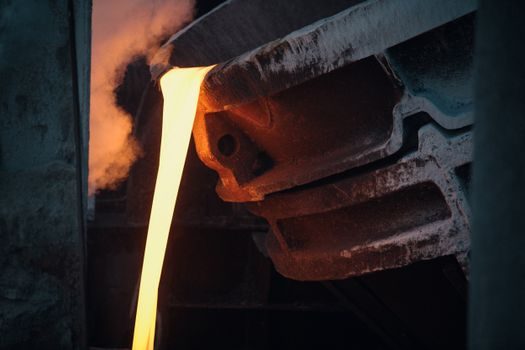
Metal bellows seals (AM-350/Inconel/Hastelloloy weld-formed) extend that envelope to roughly -200 °C to +400 °C and tolerate most aggressive chemicals because the secondary seal element is metal rather than polymer — a published DLSEALS application note on aerospace and nuclear service lists 700 °C excursions for metal C-ring variants, demonstrating the upper capability ceiling of the all-metal sub-family [S3].
The trade-off is unambiguous: when the duty envelope stays inside NBR/FKM limits (water, oils, mild chemicals below 120–200 °C), an oil seal is the only sensible spare to stock because spares of equivalent dimensions, materials and tooled moulds are routinely available in days, not weeks [S1][S9].
Regional and Brand Sourcing Channels
Indian moulders (Bentex Industries, founded 1991) hold 30+ years of compression-moulding tooling for automotive, tractor, JCB and submersible-pump oil seals in NBR, Viton and silicone — a sourcing channel that delivers custom geometries in 2–4 weeks at lower cost than EU equivalents, with direct export experience across 30+ years [S1].
Saudi- and Levant-region buyers (Almehania Co. Jordan) repeatedly post RFQs for 40-piece oil seal batches with CIF Philippines/Singapore terms on 14 March 2026, confirming that small-lot cross-border ordering is the established procurement pattern — versus bellows seal RFQs that rarely appear on public trade boards because each build is a custom-engineered cartridge [S8].
For a pressure transmitter or flow meter adjacent MRO store, the practical consequence is that oil seal spares are a routine line item sourced by part number, while bellows seal spares are typically procured against a build sheet, a nameplate photo and a vendor-managed cross-reference.
When Bellows Seals Earn Their Slower Lead Time

Metal bellows cartridges become the correct specification when the industrial valve or pump duty is genuinely beyond elastomer capability: hydrocarbon service above 200 °C, cryogenic LNG pumps, boiler-feed pumps above 80 bar, or any application calling out API 682 Plan 52/53A dry-run tolerance. In those services, the seal failure cost (safety incident, environmental release, unscheduled shutdown) dwarfs the inventory carrying penalty, and a 4–8 week rebuild lead time is built into the maintenance strategy. [S1]
DLSEALS' July 2026 editorial line — including the 15 July 2026 piece on metal C-ring seals for 700 °C aerospace and petrochemical service and the 13 July 2026 piece on Monel wire-mesh conductive silicone for EMI gasketing — confirms that the all-metal sub-family is still treated as engineered specials, not commodity spares, on the public aftermarket [S3].
The decision matrix therefore reduces to a single question: if the worst-case duty temperature stays inside FKM's ~200 °C ceiling and the media is on the standard elastomer compatibility list, hold oil seals. If it does not, accept the longer lead time of a bellows seal and structure the MRO contract accordingly.
Inventory Model and Recommended Spare Ratios
For a plant running 50 critical pumps with a mix of water, lube-oil and mild-chemical service, a defensible oil-seal stock is roughly 2 pieces per pump per critical bore — about 100 SKU lines — with an annual carrying value measured in low single-digit thousands of USD, replenished quarterly against vendor-managed consignment [S2][S9].
The same 50-pump population, if half of it is on bellows seals, typically carries 1 cartridge per pump as a critical spare because the rebuild cost is high and the lead time is 30–60 days — pushing the carrying value an order of magnitude higher per pump than the oil-seal equivalent, and justifying the carrying cost only on duty-critical assets where failure has a defined safety, environmental or production consequence.
When evaluating adjacent selections, the same availability-first logic applies to decisions such as steam trap selection criteria for hazardous-area skids and heat exchanger selection guide: duty match, material map, and spec limits, where off-the-shelf catalogue depth is a first-class selection criterion alongside duty match. For a sealing washer vs oil seal decision, the same stocking argument applies at the static-joint level.
Two signals worth tracking into the second half of 2026: (1) the price floor on FKM/PTFE-lipped oil seals on the major B2B trade boards, which sets the inventory economics for high-temperature elastomer spares; (2) any EU or US distributor announcements of consolidated bellows-seal consignment programmes, which would compress the 4–8 week lead time and shift the recommendation back toward metal bellows on duty-temperature grounds [S3][S9].