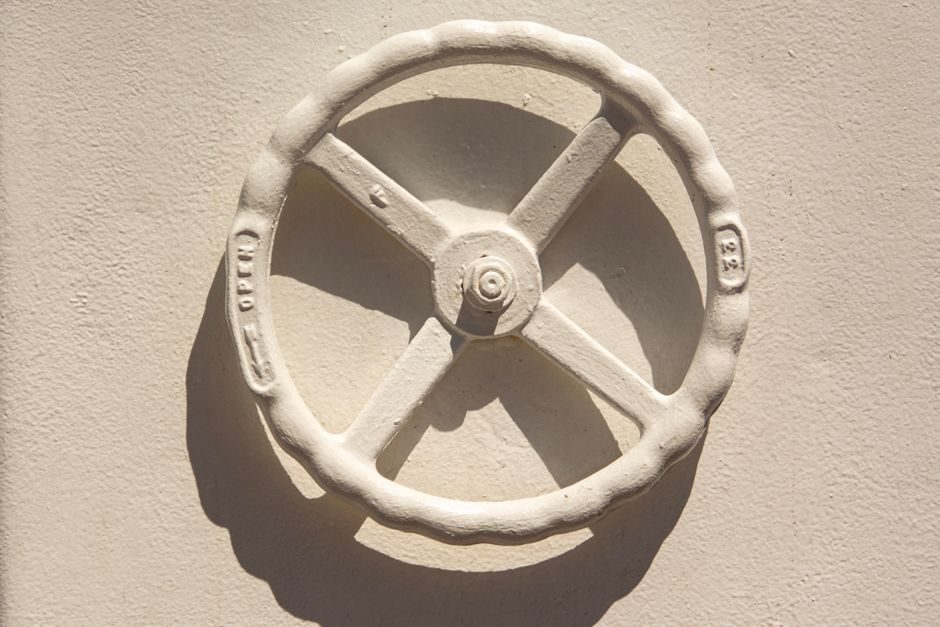
Ball valves and pinch valves solve overlapping isolation problems but differ in wetted material logic: a ball valve pairs a hard closure element with a hard seat, while a pinch valve uses a flexible elastomer sleeve as the only wetted part [S1][S2].
That single architectural choice drives every material-compatibility decision downstream, including corrosion resistance, abrasion tolerance, hygienic suitability and the chemistry of the seat or sleeve compound [S2][S3].
Wetted-area definition drives the compatibility matrix
For a ball valve the wetted area is the ball, the seat, the body cavity and the stem seal, with the seat normally rated to API 608 / ASME B16.34 fire-test classes when the service requires it [S2]. For a pinch valve the wetted area is reduced to the elastomer sleeve, and the closure mechanism sits outside the flow stream entirely.
The practical effect: a corrosive chemical that would attack a metal seat, a graphite stem packing or a stainless body weld has no path to attack the metal frame of a pinch valve, because only the sleeve touches the fluid.
Ball valve material options and their chemical limits
Body materials documented in current vendor catalogs span carbon steel to API 602 / A216/A216M casting grades, 300-series stainless, brass and bronze alloys, PVC, CPVC, PTFE-lined ductile iron and fully engineered plastics [S2][S3]. Seat and seal materials extend that envelope with PTFE, RPTFE, PEEK, Viton, EPDM, NBR and metal-to-metal hardfacings on Stellite or tungsten carbide.
The compatibility ceiling is therefore a compound ceiling: the engineer must check the weakest of body alloy, seat polymer, stem seal and any internal coating, and confirm that none of those four reacts with the service fluid at the design temperature [S2].
Pinch valve sleeve chemistry and temperature envelope
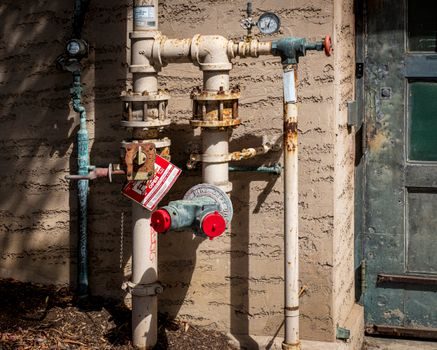
Pinch valve wetted materials are dominated by natural rubber, EPDM, nitrile, chlorobutyl, Hypalon, Viton and PTFE sleeves, each rated by the manufacturer to a specific pH range, slurry abrasion resistance and continuous service temperature. [S1]
Documented pinch-sleeve envelopes commonly top out below the continuous-temperature rating of metal-seated ball valves, and elastomer sleeves are not used where the process fluid includes hard, sharp solids that would cut the membrane under full closure pressure.
Selection criteria comparing both valve types
Decision matrix for a process engineer evaluating ball valve vs pinch valve for material compatibility: [S2]
1. Fluid state: clean liquid or gas versus slurry with fines. Abrasive slurries favour pinch valves because the flexible sleeve yields around particles and reseats without scoring a hard face [S1].
2. Chemistry: aggressive acids, caustics, solvents and oxidizers. Lined or alloy ball valves carry a wider chemical envelope when PTFE or alloy 20 / Hastelloy bodies are selected; pinch valves depend on the sleeve compound alone [S2][S3].
3. Temperature: continuous service above the elastomer limit pushes the choice toward ball valves with metal or PEEK seats, since high-temperature capability is a metal-seat property, not an elastomer property.
4. Hygiene / CIP: sanitary dairy, beverage and pharmaceutical lines favour ball valves with polished crevice-free bodies and EPDM or PTFE seats, or pinch valves with smooth elastomer sleeves that are easy to clean and CIP-friendly [S1].
5. Pressure class: high-pressure classes beyond typical pinch ratings direct the engineer to ball valves engineered to ASME pressure classes.
6. Dead-space and cross-contamination: a ball valve cavity can trap product between the ball and body, important in color-change or pharmaceutical service; a pinch valve has no cavity to drain.
Real use cases from current vendor data
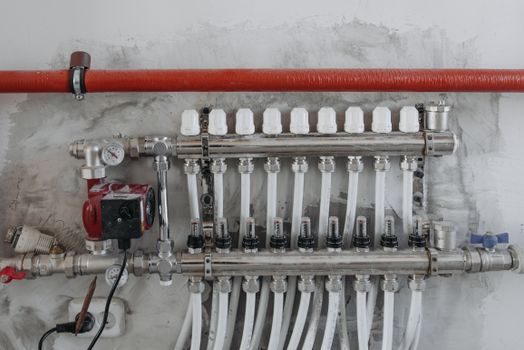
Current vendor offerings position stainless and PTFE-seated ball valves for chemical-industry service, gas, liquid food and beverages, with 2-piece flanged bodies and pneumatic actuation for automated chemical lines [S1]. Brass-body ball valves with NBR or PTFE seats remain standard for water, compressed air and light hydrocarbons, supplied by multiple Chinese and European manufacturers with threaded ends [S6].
Failure modes engineers actually see
Ball valve failures documented in field service include seat softening under temperature excursion, galling of metal-to-metal seats in dirty service, stem-packing leaks, and cavity entrapment releasing trapped product into the downstream line. [S3]
Pinch valve failures concentrate in sleeve wear, sleeve tear at the closure pinch point under sharp-solids service, and sleeve fatigue when continuous actuation cycles exceed the elastomer compound's rated life.
Standards and sourcing reference
Ball valve body and actuator-attachment standards appearing in current selection guides include API 602, ASME B16.34, API 608, MSS-SP-25 marking practice, and the actuator-mounting interfaces EN ISO 5211 / BS EN ISO 5210 for part-turn and multi-turn actuators [S2][S5]. Pinch valve standards typically reference ISO 7259 / BS 5156 and manufacturer-specific pressure and temperature ratings.
Material specification for carbon-steel castings is governed by ASTM A216/A216M as cited in the same selection literature, and elastomer compound selection is cross-checked against chemical resistance tables published by sleeve manufacturers [S2][S3][S5].
Who should choose which
Specify a ball valve when the service involves clean or filtered media, high pressure, high temperature, fire-test requirements, tight shutoff in a defined chemical envelope, or standardised actuator mounting per EN ISO 5211 [S2][S5].
Specify a pinch valve when the service is a solids-laden slurry, when only the elastomer sleeve can be allowed to contact the fluid, when cavity-free drainage is required, or when the line is CIP-cleaned and the membrane can be replaced cheaply versus re-machining a metal seat.
For readers cross-checking related instrument and final-control elements used on the same line, see the encyclopedia entries for industrial valve, flow meter and pressure transmitter.
Track the next selection decision at the actuator interface: confirm EN ISO 5211 mounting pad compatibility between the ball valve or pinch valve and the chosen pneumatic or electric actuator, then verify seat or sleeve compound against the latest chemical-resistance table from the body and sleeve manufacturer.