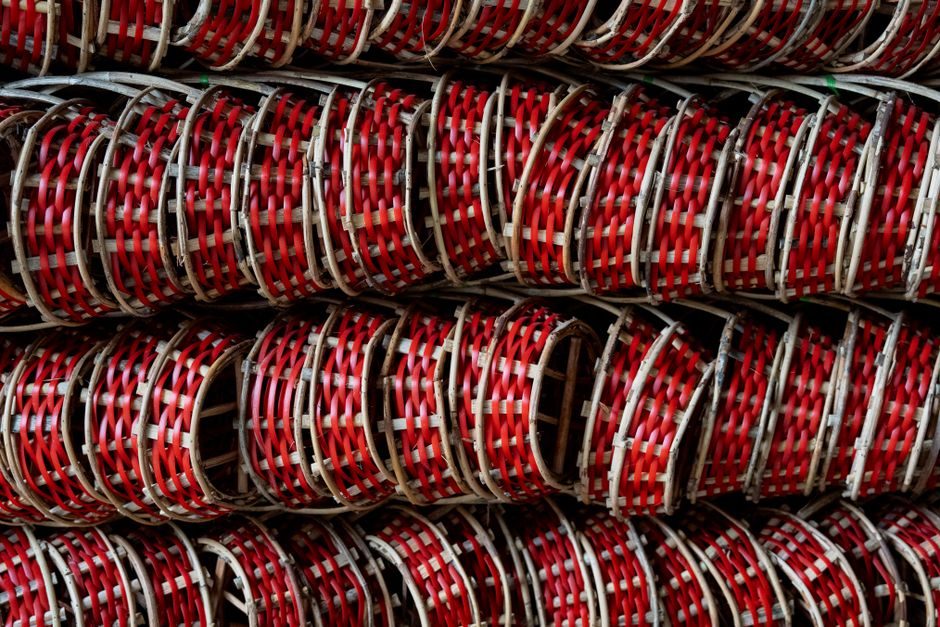
Basket strainers protect pumps, flow meters, control valves, and nozzles by capturing solids in a removable perforated or wire-mesh basket inside a vertical chamber, with screen open area typically engineered at 2-3x the pipe cross-section to hold pressure loss under 0.5 bar at design flow [S1][S3].
Across oil & gas, chemical, pharma, and water plants, basket strainers consistently show higher dirt-holding capacity and lower clean pressure drop than Y strainers on the same line, but they demand a full basket pull for cleaning, which is the single biggest design decision an engineer has to make before picking a size and material [S1][S3].
Duty Definition: When a Basket Strainer is the Right Call
Basket strainers are specified when the dirt load is high, the acceptable clean pressure drop is low, and the line can tolerate an occasional shutdown for basket pull, with simplex and duplex variants being the two operating modes every buyer has to choose between [S3]. A simplex basket strainer carries one chamber; the line must be depressurised and the cover opened to swap or wash the basket, so production stops for the cleaning cycle [S3]. A duplex basket strainer carries two parallel chambers with a diverting valve, letting the operator isolate one side, open it, and swap baskets while flow continues through the other side, which is why duplex units are standard on lubrication systems, marine oil burners, cooling lines at power plants, and lake/river raw-water intakes [S3].
If the downstream equipment cannot be taken offline without triggering a process trip, do not pick simplex — engineers on continuous service have moved duplex basket strainers down to sizes as small as 3/4" with knob-type covers for tool-free basket swap, while larger units use bolted covers [S3]. For batch processes, clean-in-place skids, and any line that can be isolated for 15-30 minutes, simplex remains the lower-cost and simpler choice, with cast body weights roughly half of a comparable flanged industrial valve on the same line size [S1].
Screen and Mesh Rating: the Real Filtration Decision
The screen is the working part of the strainer, and basket strainers almost always use either a perforated plate (for coarse service) or a wire-mesh layer (for fine service), with mesh count chosen against the smallest particle that would damage the protected equipment [S1][S4]. A 40 mesh / 400 µm 304 stainless steel mesh in a cast-steel flanged basket strainer is the most common stock configuration, sized to allow large flow at minimal pressure drop for general petrochemical and water service [S4]. Fine service in pharmaceutical or thin-product lines commonly steps to 60, 100, or 200 mesh, with the trade-off being higher clean pressure drop and shorter cleaning intervals because the open area is reduced [S1].
Standard perforated baskets in cast-iron and carbon-steel bodies are typically supplied for WOG (water, oil, gas) or steam service, and most manufacturers will substitute the screen on request when the duty falls outside the stock table, which is the practical path for abrasive slurry or sanitary food-grade lines [S1]. Always check the screen-to-basket fit and the basket handle rating; the handle on a duplex chamber sits over the in-service side so the operator can swing it clear of the depressurised chamber during a swap, and undersized handles are a common field failure on retrofit installs [S3].
Body Material and Pressure Class: Matching the Line
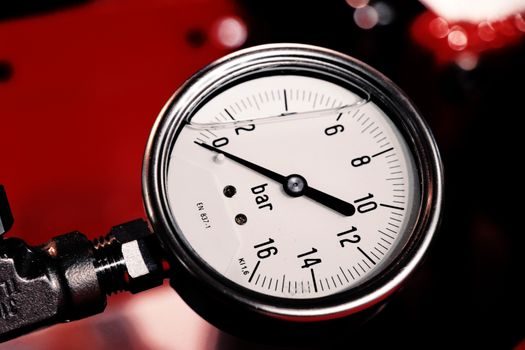
Body material is selected from corrosion, temperature, and cost, and the same basket-strainer geometry is routinely offered in cast iron, carbon steel (ASTM A216 WCB), bronze, and stainless steel (typically SS304 or SS316 / ASTM A351 CF8M) [S1][S2]. Cast iron dominates general water and low-pressure HVAC duty because of cost and strength; carbon steel in WCB is the workhorse for hydrocarbon and high-temperature lines including oil & gas and petrochemical service [S1][S2]. Bronze is specified where corrosion resistance is needed but stainless is over-spec, and stainless (SS304, SS316, CF8M) is mandatory in chemical, food, pharmaceutical, and seawater service where rust or chloride attack cannot be tolerated [S1][S2].
Pressure class is the second spec axis: stock basket strainers are commonly produced to ANSI 150, ANSI 300, and ANSI 600 flanged ends, with the higher classes (up to 900 lb on special order) typically limited to forged or special-cast bodies used alongside API 6D gate and check valves in oil & gas manifolds [S2]. End connections also drive cost and lead time: threaded bodies are cheapest and limited to small DN, flanged ends (ANSI B16.5 / DIN PN16) are the default for process work, and welded ends are used where the strainer is built into a fabricated spool [S1][S2].
Comparison: Simplex vs Duplex vs Y Strainer on 4 Decision Criteria
Strainers are not interchangeable, and the four criteria below are the standard shortlist filter engineers apply before they look at vendor model numbers: [S1]
1. Continuous-flow duty: duplex basket wins outright because the operator can swap a basket on one chamber while the other carries flow; simplex basket and Y strainer both require an isolated line for cleaning [S3]. 2. Dirt-holding capacity per clean cycle: simplex basket has the highest open-area ratio per body size, duplex basket roughly halves it per chamber, and Y strainer carries the least debris at any given line size [S1][S3]. 3. Clean pressure drop at design flow: basket strainers (simplex or duplex) typically run 0.1-0.3 bar clean; Y strainers run 0.3-0.7 bar clean depending on geometry, and any of the three can be ordered with a larger basket to drop this further [S1][S3]. 4. Installed cost and footprint: simplex basket is the cheapest, duplex basket is roughly 2-2.5x a simplex of equal line size, and Y strainer is the lowest-cost and most compact option where the application allows it [S1].
The simplified rule we use on P&IDs: pick Y strainer on small-bore, low-debris instrument and steam drips; pick simplex basket on cleanable process lines; pick duplex basket only when loss of flow during basket pull is not acceptable [S3]. For comparison context on adjacent equipment selection, the knife-gate selection logic follows a similar "shutdown tolerated?" decision path on slurry lines.
Integration with Downstream Instruments and Standards
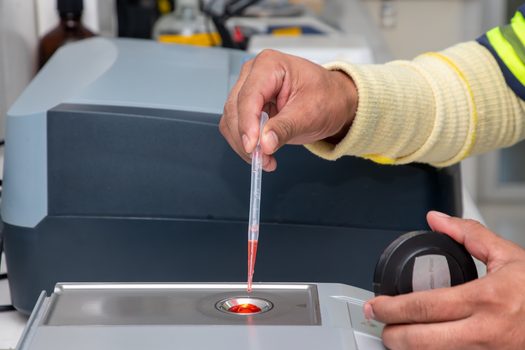
A basket strainer almost always sits immediately upstream of a pressure transmitter, flow meter, or control valve, and the strainer selection is therefore constrained by what those instruments can tolerate in terms of particulate size and pressure loss [S1]. Magnetic flow meters, Coriolis meters, and turbine meters all have published minimum mesh recommendations from the meter vendor; defaulting to 40 mesh is rarely wrong but is often too coarse for custody-transfer or chemical-injection skids where 60-100 mesh is the practical floor [S1][S4].
For sanitary and hygienic service (pharma, food, beverage), basket strainers are built to the same stainless grades and surface-finish protocols as the rest of the sanitary piping — the broader material logic is laid out in the sanitary process piping stainless-steel selection guide and the design constraints carry across both strainers and sight glasses in the sight-glass selection map. On hydrocarbon service, the strainer is typically built to ASME B16.34 / ANSI B16.5 flange and pressure-temperature ratings, and the adjacent check valve selection criteria follow the same ANSI class and material codes so the manifold stays consistent [S2].
Failure Modes, Limitations, and Sourcing Signals to Track
The three field failure modes engineers most often report on basket strainers are: cover gasket blow-out after the basket has been overfilled (DP across the unit has climbed past the design limit and the cover is now the weakest point), basket handle failure on duplex chambers where the swing path is fouled by pipework, and screen rupture under water-hammer when a simplex unit has been specified on a line that actually required a Y or duplex geometry [S3]. Avoid all three by sizing the basket open area to 2-3x the pipe cross-section, leaving the swing path on duplex units clear, and confirming the line's water-hammer class before locking the body class [S1][S3].
Trackable sourcing signals over the next procurement cycle: (1) vendors continuing to offer 304 vs 316 baskets as a stock option, with 316L on extended lead time for sanitary lines; (2) duplex basket demand in the 3/4" to 6" range holding steady as continuous-flow skid builders standardise on knob-cover designs; (3) replacement-screen and replacement-basket SKUs being stocked separately from the body, which is how most aftermarket cost is actually recovered on installed units [S2][S3].