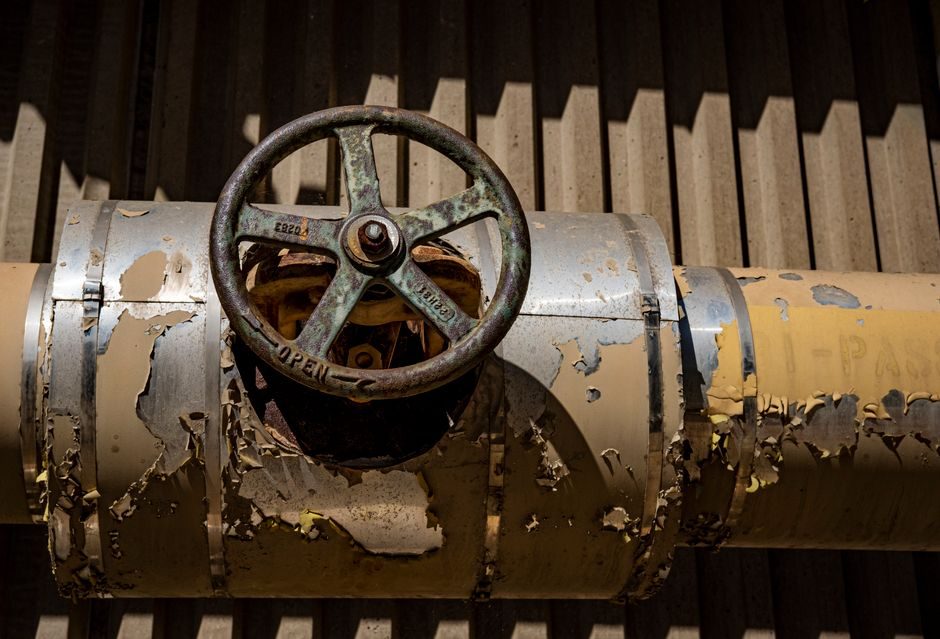
Check valve selection is fundamentally a four-axis problem — flow regime, cracking pressure, installation orientation, and pressure-temperature class — and a wrong call on any one axis shows up as water hammer, seat erosion, or pump damage within the first 6-12 months of service. Spring-assisted silent check valves were invented in the 1940s specifically to suppress reverse-flow surges [S1], and that suppression duty is still the single most common reason a process engineer upgrades from a plain swing disc to a spring-loaded variant.
Material of construction narrows fast once the fluid is known: ASTM A105N forged carbon steel covers hydrocarbon and steam service in ASME Class 800 ratings [S5]; ASTM A182 F316 stainless extends corrosion cover to NPS 3/8 through NPS 4 across Class 150 to Class 2500 [S3]. For sub-100 psi cracking duties on pneumatic or low-head systems, custom-machined modular check valves ship with opening pressures from 0.09 psi upward [S10].
Swing, Lift, Ball, and Silent Variants — Where Each One Wins
Swing check valves use a hinged disc that pivots on a hinge pin, remain fully open during forward flow, and slam shut on reversal — a geometry that gives the lowest pressure drop of the family but only when installed in horizontal or vertical-up lines where gravity can assist seating [S1]. Lift check valves run a guided disc that moves vertically inside the body; they require vertical installation, return tighter shutoff, and respond faster than swing types in clean service [S1]. A swing check valve is the default for firewater, flood prevention, and large-diameter clean-water lines where β-ratio head loss matters.
Ball check valves seat a spherical element against a ring — compact, tolerant of viscous fluids, and common in pumps, dispensers, and small-bore chemical duty; the trade-off is accelerated seat wear in dirty or abrasive service [S1]. Silent (spring-assisted) check valves add a helical spring to the disc; the spring holds the disc closed until forward differential exceeds cracking pressure, then closes the disc before flow can reverse, killing water hammer at source [S1]. Stop-check valves layer a manual start/stop function on top of the auto-check function and auto-close on low system pressure, a duty seen in power-plant boiler and petroleum service [S1].
Cracking Pressure, Closing Speed, and External Accessories
Cracking pressure — the upstream-to-downstream differential at which the disc lifts — is the single most tunable parameter. Modular U.S.-built check valves offer opening pressures from 0.09 psi to 20 psi across 9+ plastic bodies and 7+ O-ring compounds, allowing the same valve family to be reconfigured for gravity return, vacuum breaker, or low-head pump-discharge duty without changing the line layout [S10]. For higher differential services, external accessories retrofit a closing bias onto a standard swing check: the Series SA-1 External Lever, Spring & Weight (NPS 2"–12" / DN50–DN300) adds adjustable cracking pressure and a non-rotating disc to suppress disc flutter in multi-pump systems [S2]. The Series SA-16 External Weight & Lever does the same with a heavier mass bias, suited to long pipe runs where reverse-flow momentum is large [S6].
Helical springs in spring-assisted designs handle the thermal and corrosive envelope of the line: high-grade spring wire holds elasticity at elevated temperature and resists corrosion in water, oil, and gas service, which is why spring-loaded silent check valves dominate pump-discharge lines [S1]. Spring-brass check valves in globe-pattern bodies surface as a low-cost option for instrumentation and pneumatic panels, with FOB pricing around USD 10–20 per piece at MOQ 1–10 [S7] — appropriate when the duty is air or water at low cycling, not when the line sees aggressive chemicals or thermal cycling.
Body Material, Pressure Class, and Standards Mapping

Standard mapping is the easiest place to lose a specification. A forged Class 800 swing check valve sized NPS 1 / DN25 with NPT ends and ASTM A105N body is dimensionally tied to API 602; pressure-temperature ratings for a forged Class 150-2500 range in ASTM A182 F316 follow ASME B16.34, with wall thickness per API 602 and ASME B16.34, face-to-face per ASME B16.10, flanges per ASME B16.5, socket-weld ends per ASME B16.11, NPT per ASME B1.20.1, butt-weld ends per ASME B16.25, and final pressure test per API 598 [S3][S5]. Alternate body materials cover A105, F304, F304L, F316L, A350 LF2 (low-temperature carbon), F11/F22 (Cr-Mo), F5, F51 (duplex), and F321 (Ti-stabilized) [S3].
Quality programs that auditors will look for first are ISO 9001 and ASME Section III traceability through procurement, welding, assembly, testing, and packaging [S3]. Smart Products USA, operating 41 years in Mills River, NC, holds ISO 9001:2015 certification and ships modular check valves domestically — useful when project specifications call out Buy-America or short lead times [S10]. Chinese export channels list the same ASME B16.34 / API 602 envelope with FOB price around USD 90 per piece at MOQ 10 with 15-day delivery [S3].
Criteria Comparison: Picking Among Swing, Lift, Ball, and Silent
Four decision criteria separate the four main types: pressure drop, installation orientation tolerance, fluid cleanliness tolerance, and ability to suppress water hammer. A swing check is the lowest-pressure-drop option but must be installed with gravity assist; a silent/spring-assisted check adds a small cracking-pressure penalty in exchange for near-elimination of slam; a ball check is the most compact and handles viscous fluids well but wears fastest in solids-bearing service; a lift check delivers the tightest shutoff yet is locked to vertical-up installation [S1].
Numeric anchors to spec against: cracking pressure 0.09-20 psi on modular custom builds [S10]; ASME Class 150-2500 pressure envelope on forged stainless [S3]; ASME Class 800 on forged carbon steel [S5]; spring-bias retrofit kits sized NPS 2-12 [S2]. Forged swing checks from established API 602 sources typically run 15-day delivery at MOQ 10, while a generic brass globe-pattern spring check ships in small lots at 1-10 piece MOQ [S3][S7].
Who Should Not Pick the Mainstream Swing Check
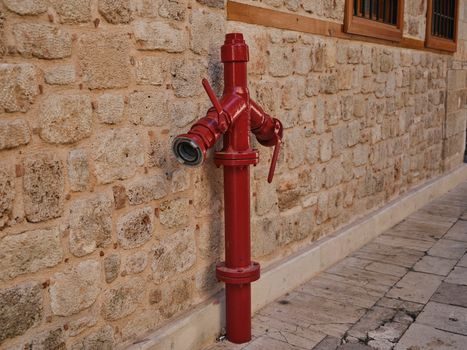
Skip a plain swing check if the line sees pulsating flow from a reciprocating pump, has a long discharge run with high fluid momentum, runs vertical-down, or carries solids. In each of those four cases a silent check valve (spring-assisted), a stop-check, or a dual-plate/tilting-disc variant outperforms a hinged swing disc on either closing speed, slam suppression, or mounting flexibility [S1]. Multi-pump parallel headers also call for an external weight-and-spring accessory (SA-1 / SA-16) rather than a stock swing check, because parallel-pump transients can flip a swing disc against the seat hard enough to seat-fail within a few cycles [S2][S6].
For low-pressure compressed-air and pneumatic-panel work, a heavy-duty Class 800 swing check is over-spec; a spring-brass globe-pattern check at the small end of the price curve matches the duty at a fraction of the cost [S7]. Conversely, on cryogenic, sour-service (NACE MR0175), or offshore Class 1500+ duties, a stock swing check is under-spec; forged F316 / F51 with full ASME B16.34 documentation and 100% API 598 hydrostatic test is the minimum [S3].
Use Cases Mapped to Variant
Firewater mains and flood-prevention loops: swing check, low pressure drop, gravity-assisted seat [S1]. Boiler feed and power-plant hot service: stop-check for combined isolation and backflow prevention [S1]. Pump-discharge on clean water: silent (spring-assisted) check sized so cracking pressure is below the pump's minimum differential but above the static head [S1]. Viscous or chemical dosing: ball check for compact sealing and tolerance of high-viscosity fluids [S1]. High-cycle multi-pump headers: swing check with SA-1 or SA-16 external weight-spring accessory to bias disc and absorb reverse momentum [S2][S6]. Small modular pneumatic and OEM panels: custom low-cracking check (0.09 psi upward) in 9+ plastic bodies [S10]. Forged hydrocarbon and steam: A105N swing check, Class 800, API 602 geometry [S5].
Limits, Failure Modes, and Sourcing Checklist
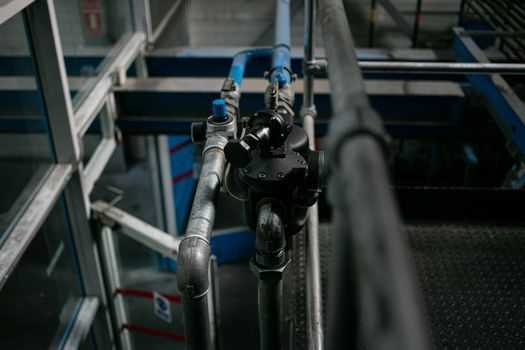
Failure modes worth flagging at the spec stage: swing-disc slam on pump shutdown (mitigated by spring assist), seat wear in dirty service (mitigated by lift or dual-plate geometry), water-hammer column separation in long vertical-down lines (mitigated by silent check plus slow-closing control), and disc flutter in low-flow / partial-load conditions (mitigated by external spring bias) [S1][S2]. Lead-time planning is straightforward: forged Class 800 valves from Chinese API 602 sources run roughly 15 days at MOQ 10; custom-built modular check valves from U.S. shops run on short cycles for stocked plastic/O-ring combinations [S3][S10].
Two trackable signals to watch: revisions to ASME B16.34 pressure-temperature rating tables for the F51 duplex and F316L envelopes (since these govern most process-industry forged checks), and any updates to API 598 pressure-test durations that would change hydrostatic-hold times on Class 1500+ forged deliveries. Standards applied in current offerings include ASME B16.34, API 602, API 598, ISO 15761, ASME B16.10, B16.5, B16.11, B16.25, and B1.20.1 [S3][S5]. For pumps that feed multistage centrifugal headers, the same swing-disc-with-spring-bias logic that damps check-valve slam also dampens pump-side transients — a related selection thread for lift-station duty.
The underlying component specifications are covered under balancing valve.