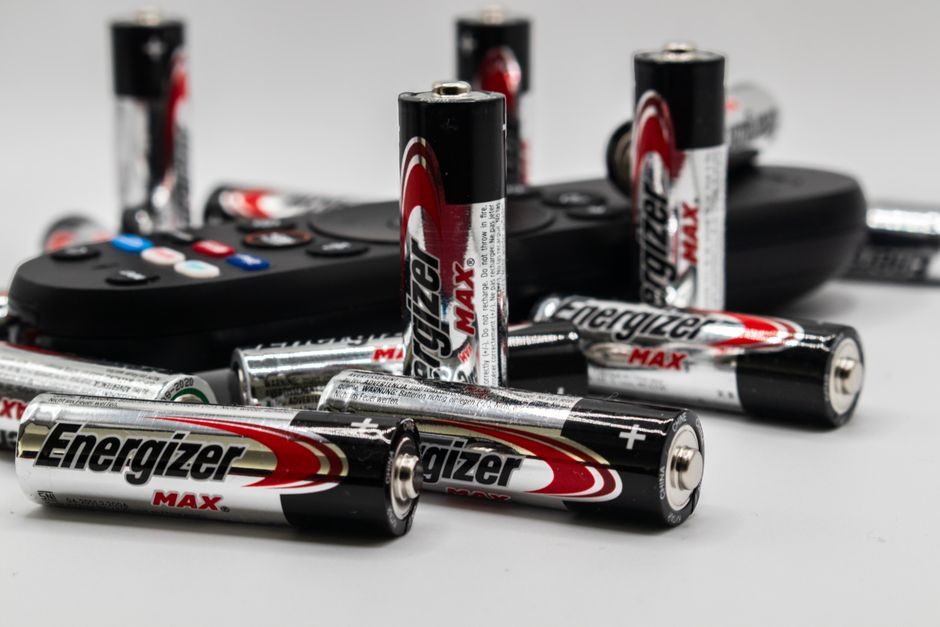
Lithium iron phosphate (LFP) and the wider Li-ion family now anchor grid-scale battery energy storage system (BESS) production, with LiFePO4 cited as the dominant chemistry for commercial and industrial cabinets in current OEM line cards [S5][S7].
A BESS is built up in four nested layers — cell, module, rack, and container — with a Battery Management System (BMS), a Power Conversion System (PCS) and medium-voltage switchgear sitting on the DC and AC sides of the DC bus [S1][S3]. The most widely deployed BESS topologies arrange cells in series to reach a DC string voltage, then parallel strings to reach the MWh target, before a PCS inverts the DC bus to 400 V AC or MV for grid interconnection [S3][S4].
Cell Chemistries Compared on Energy, Cycle Life and Safety
LFP cells typically deliver 3.2 V nominal voltage, gravimetric energy around 90–160 Wh/kg, and cycle life commonly quoted above 4,000 cycles at 80 % depth-of-discharge, which is why current commercial and industrial BESS cabinets lean on LiFePO4 over NMC for stationary duty [S5][S7][S8]. The selection criterion that swings most utility tenders is thermal-runaway onset temperature: LFP cathodes release oxygen at higher temperature than NMC, which is why containerised BESS designs in dense urban substations default to LFP prismatic cells [S8].
For stationary storage where footprint is secondary to round-trip cost, lead-acid still has installed base inside UPS and flow meter-controlled water-treatment backup, but its 30–50 Wh/kg specific energy and 500–1,200 cycle life make it uneconomic for new 4-hour duration BESS tenders [S2][S8]. Sodium-based and redox-flow chemistries sit in the long-duration niche: flow batteries decouple power (kW, set by stack area) from energy (kWh, set by tank volume), which is the structural advantage behind vanadium-flow specification on 6–12 hour discharge applications [S8].
Cell Formats: Cylindrical, Prismatic and Pouch
Three mechanical formats compete inside BESS production lines: cylindrical cells in 18650/21700/4680 form factors, prismatic hard-case cells (typically 50–200 Ah), and laminated pouch cells [S8]. Cylindrical lines run at the highest throughput per cell because standardised 21700/4680 cans share tooling across automotive and storage, but pack-level energy density suffers from the interstitial void between cans [S8].
Prismatic hard-case cells — the format Enerbond and Roypow commercialise inside their C&I cabinets — win on pack-level packing factor (often above 90 %) and on mechanical robustness when modules are stacked into a storage rack or a 19-inch sub-rack [S5][S7]. Pouch cells offer the highest gravimetric energy density but require external compression frames to prevent swelling, which complicates module-level safety testing [S8]. For grid-scale containers the production-engineering default is prismatic LFP at 280–314 Ah, because the case itself acts as a fire-propagation barrier when arranged with cell-to-pack (CTP) or cell-to-pack-to-module (CTM) skip-level architecture [S8].
Pack Assembly: From Electrode Coating to Module Integration
Cell production follows a fixed sequence: electrode coating, calendaring, slitting, notching, stacking or winding, electrolyte filling, formation cycling, and aging [S8]. The two processes that most determine BESS cost structure are electrode coating — where dry vs wet coating is shifting because solvent recovery dominates OPEX — and formation, where each new cell is cycled 3–5 times to stabilise the SEI layer, consuming roughly 30–50 kWh of factory energy per kWh of cell capacity produced [S8].
Module integration adds laser-welded or wire-bonded busbars, BMS slave boards on each cell or cell-group, and a thermal-management plate — either cold-plate liquid cooling for utility-scale containers or forced-air for indoor commercial cabinets [S1][S3]. Pack-to-rack cabling and the rack-to-PCS DC bus use the same connector and pressure transmitter-grade sensing families specified for industrial inverters, which is why connector sourcing tracks IGBT and MOSFET spot-price cycles discussed in our Semiconductor Spot Prices 2026 coverage [S3].
Power Conversion, BMS and Container Integration
Each BESS container pairs the DC battery with a Power Conversion System (PCS) that bi-directionally inverts between the DC bus (typically 1000–1500 V DC for utility-scale) and the AC bus (400 V LV or 10–35 kV MV through a step-up transformer) [S1][S3].
Container integration is where production engineering meets grid code: HVAC sizing, gas-exhaust detection, and fire-suppression (typically aerosol or clean-agent plus water-mist) are tested as a system, not as components [S1]. For indoor C&I cabinets the equivalent safety envelope is smaller, with LiFePO4 cell choice and a 1C continuous discharge ceiling becoming the dominant specification [S5][S7].
Selection Criteria: Who Should Specify What

For 1–4 hour duration, behind-the-meter commercial cabinets up to 1 MWh, LFP prismatic modules in an indoor-rated IP54 enclosure with air cooling are the production-engineering default — Roypow and Enerbond both ship in this segment [S5][S7]. For 2–8 hour duration, front-of-meter utility containers from 1 MWh to 1 GWh, liquid-cooled LFP prismatic cells in a 10-ft or 20-ft ISO container with a 1500 V DC bus are the incumbent spec [S3][S4][S8].
Spec teams building long-duration assets above 8 hours should evaluate redox-flow or sodium chemistries where round-trip cost-per-kWh-cycle beats Li-ion, accepting lower energy density in exchange for independent power/energy scaling [S8]. For sites constrained on footprint, high-nickel NMC remains the only path to >200 Wh/kg at the pack level, but the production line must integrate gas-detection and pack-level fusing to offset the lower thermal-runaway threshold [S8].
Limits, Failure Modes and Production-Side Constraints
The recurring production-side failure modes in BESS are cell-to-cell capacity drift, DC-arc faults inside the pack, and thermal runaway propagation between modules [S1][S8]. Cell-to-cell drift is mitigated by BMS balancing, but formation-cycle variation inside a single batch can leave residual SoC spread above 5 %, which compounds over the first 200 cycles [S8].
DC-arc faults are addressed by insulation-monitoring devices on the DC bus and by arc-flash tested switchgear upstream of the PCS — the same switchgear classes specified for industrial valve-actuator cabinets in process plants [S1]. Thermal-runaway propagation is controlled by cell spacing, intumescent barriers between modules, and pack-level gas venting routed to the container exhaust — Enerbond's Capwall solid-state product line and Roypow's hybrid energy storage system both market this as a feature, not a checklist line [S5][S7].
Trackable signals for spec teams: (a) UL 9540A test reports at the container level, (b) PCS round-trip efficiency published at the AC side, and (c) cell-format disclosure (cylindrical vs prismatic) on the module datasheet — these three documents catch the production-side risks that cell brochures hide. For sourcing decisions on adjacent balance-of-system, our Cable and Wire Companies 2026 sourcing map is the relevant reference on DC and AC cable sizing.