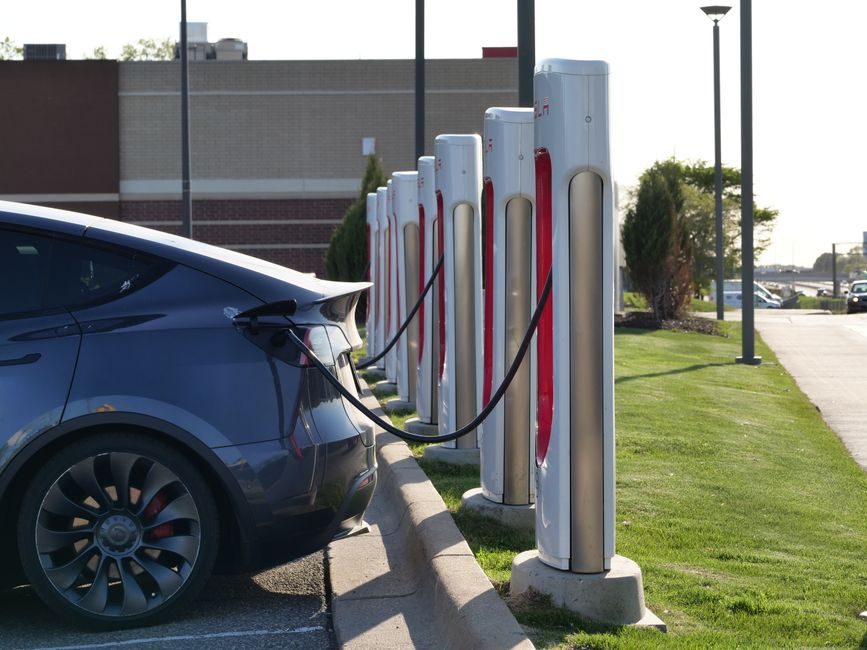
China-hosted BESS suppliers listed in June 2026 expose a four-tier product map: residential wall-mount LiFePO4 in 5 / 10 / 15 kWh steps [S5], commercial-rack 100–600 kWh hybrid inverters, 20 ft / 40 ft container BESS at 500 kW–1.8 MWh around US$54,056–56,386 / piece FOB [S10], and a small but growing semisolid-state R&D lane out of Shenzhen [S8].
Buyers should treat the Made-in-China index (2,000+ battery factories, 6,000+ SKUs) [S3] as a sourcing funnel, not a vendor list — only a fraction of listed names hold the three certs a grid-tied project actually demands: GB 31241 (portable Li-ion), IEC 62619 (industrial Li-ion), and UL 1973 (stationary ESS). For spec-driven procurement, sort by chemistry, BMS topology and container ratings, not by trade-show booth count.
Tier 1 — Residential LiFePO4 Wall-Mount 5–15 kWh
The ALFP-series 5 kWh / 10 kWh / 15 kWh wall-mount LiFePO4 packs shown on Shenzhen storage-battery listings target the same form factor Enphase and Sonnen defined: 48 V nominal, CAN/RS485 BMS, floor-standing or wall-mount enclosures with IP65 fronts, and DOD cycling to 80 % capacity at 6,000+ cycles [S5]. SUNLY's 12-year-old portable-power-station line claims compliance with GB 31241, IEC 62619 and UL on every shipping pack, with BMS-level over-voltage, over-current and cell-balancing protections [S2]. Henan Liwei New Energy, an ISO 9001-certified manufacturer out of Zhengzhou, runs a parallel residential line at 24 V / 48 V 100–200 Ah with custom voltage / capacity windows [S9].
For a procurement engineer: a 10 kWh residential SKU at roughly US$950–1,199 per piece MOQ-1 [S7] implies a fully-installed cost band in the US$1,800–2,500 range once you add a hybrid inverter, mounting kit and gateway — comparable to a Tesla Powerwall 3 once you normalise for tariff and installer margin.
Tier 2 — C&I Rack and Hybrid Inverter 100–600 kWh
These units pair a 100 kW bidirectional PCS with LiFePO4 rack modules and ship pre-integrated with EMS, fire suppression (aerosol or perfluorohexanone) and HVAC. Most are designed for IEC 62619 / UL 9540A test reports; very few ship with full UL 9540 system certification out of the box, which is the actual US NEC 706 / NFPA 855 gating document for indoor C&I installs.
Selection criteria for this tier are straightforward: round-trip efficiency (target ≥ 95 % at 0.5 C), peak C-rate (1 C continuous, 1.5 C peak for 10 s for grid-services duty), cabinet IP rating (IP54 indoor / IP55 outdoor), and ambient operating window (−20 °C to +50 °C discharge, 0 °C to +45 °C charge — LFP will not charge below 0 °C without a heater). The storage rack itself should be a 19-inch seismic-rated frame with a documented short-circuit withstand, not a repurposed server rack.
Tier 3 — Container BESS 500 kW–1.8 MWh, 20 ft / 40 ft ISO
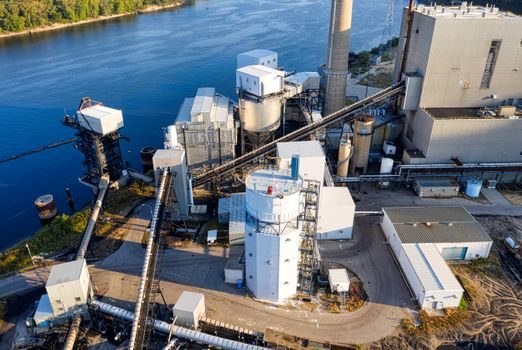
Container BESS is where the 2026 BESS market is most contested. The standard 20 ft / 40 ft ISO container ships 500 kW / 1 MWh to 0.6 MW / 1.8 MWh using LFP cells in series-parallel strings, liquid-cooled in the high-end builds, air-cooled in cost-optimised builds [S10]. Pricing sits in a tight US$54,056–56,386 / piece band across multiple Chinese OEMs on the index, indicating a commodity floor that squeezes out anything without a captive cell line.
SCU Power, founded as a full-stack integrator covering BMS, PCS and EMS [S1], is a representative Chinese OEM shipping into this tier.
Tier 4 — Motive and Specialty: Forklift, RV, Semisolid-State
A distinct product lane covers motive packs for forklifts, AGVs and RV house banks. Torphan's June 2026 catalog splits cleanly into lithium-ion forklift batteries, LiFePO4 wall-mount, chargers and BMS as separate SKUs — meaning the BMS can be sourced independently of the cell, a useful structure for buyers who already standardise on a specific BMS firmware [S4]. Enjoy Solar and Solarasia Energy (both Anhui-based, Diamond Member audited) list 24 V / 48 V 100–200 Ah LiFePO4 packs with explicit BMS protection, MOQ 2 pieces, US$650–660 / pack [S7] — a price floor for low-voltage motive.
Shenzhen Fuxin Industrial Technology, founded July 2019, is one of the more visible Chinese semisolid-state vendors as of June 2026, claiming 532 happy clients, 48 branches and distribution across 19 countries, with Pingshan (Shenzhen) as R&D base [S8]. Treat semisolid-state announcements with caution — production volumes remain tiny versus LFP, cell-level energy density claims are often pack-level, and few units have shipped third-party cycle data beyond lab cells. Huiyao Intelligent Technology in Tianjin (ISO 9001 + ISO 14001) sits one level up the stack, supplying battery module / pack assembly equipment — relevant if you are evaluating a captive pack line rather than buying cells.
Sourcing Gates: Certifications, MOQ, Lead Time
The actual procurement decision hinges on four gates: (1) certification matrix — GB 31241 for portable / consumer, IEC 62619 for industrial Li-ion, UL 1973 for stationary, UL 9540A for fire propagation, UN 38.3 for transport; (2) MOQ economics — residential packs MOQ 1–2 pieces at US$650–1,199 [S7], container BESS MOQ 1 piece at US$54k+ [S10]; (3) lead time — 30–45 days for stocked residential SKUs, 90–150 days for custom container BESS; (4) warranty structure — cell-level cycle warranty (typically 6,000 cycles to 80 % DOD) versus system-level warranty (often only 5 years, which is shorter than the cell warrant — a red flag).
Three cross-tier specs every buyer should pin in the RFQ: BMS communication protocol (CAN 2.0B vs RS485 Modbus vs both), cell origin (whether the OEM buys cells or has captive LFP lines), and the test-report package shipped with each lot (UN 38.3 summary, IEC 62619 CB certificate, UL 1973 follow-up service listing).
Comparison: Supplier Tiers at a Glance
A 2026 buy decision reduces to four variables against four tiers: chemistry (LFP dominates all tiers), energy per unit (5–15 kWh residential / 100–600 kWh C&I / 0.5–1.8 MWh container / 1–10 kWh motive), price band (US$650–1,199 per pack → US$54,056–56,386 per container), and lead time (30–45 days → 90–150 days). Residential buyers prioritise installer ecosystem and warranty; C&I buyers prioritise UL 9540A and PCS round-trip efficiency; utility-scale buyers prioritise captive cell supply and bankability. [S1]
For the grid-tied side of the market, bi-directional energy meters for revenue-grade metering and thermal-management valves for the liquid-cooling loop are the two auxiliary BOM items that most retrofit projects get wrong — meter accuracy class 0.2 s for utility revenue, valves rated for the actual coolant mix (typically 50/50 glycol-water). The 2026 grid supply-chain map shows the same Tier-2 bottleneck pattern — cell busbars, BMS ICs, and UL-listed DC contactors — that constrains every BESS tier equally.
Limits, Failure Modes and Trackable Signals
Three hard limits every spec sheet glosses over: (1) LFP cannot charge below 0 °C without a heater — derate or refuse any container BESS quote that does not include heater power draw and ambient spec; (2) the Made-in-China index's 2,000+ factory count [S3] includes many trading companies reselling other OEMs' cells — the Diamond Member / Audited Supplier flag is necessary but not sufficient, always request the IEC 62619 CB certificate number and look it up; (3) semisolid-state vendors like Fuxin [S8] should be treated as pre-commercial — verify any cycle-life claim with a third-party UN 38.3 + IEC 62619 test report dated within 12 months.
Trackable signals for the next two quarters: UL 9540A large-scale fire test results for the Elecnova-class container BESS suppliers (these are public on UL's follow-up service database once issued), updated GB 31241-2025 enforcement dates for portable Li-ion, and any new entrants shipping LFP cells below US$60/kWh at the pack level. If the semisolid-state vendors begin publishing independent 2,000-cycle data, that is the signal that Tier 4 has matured into a real procurement option rather than a press-release category.