
Cleanview's mid-2026 tracker identified 59 behind-the-meter (BTM) data center projects covering approximately 90 GW, of which 92% (about 82 GW) was announced since the start of 2025; that is more than 25% of all planned US data center capacity [S1].
As of mid-2026, roughly 2 GW of BTM generation is actually online across four projects, the bulk of it at xAI's Colossus 1 in Memphis, and the remaining ~88 GW sits in varying stages of permitting, construction, or announcement [S1].
Why BTM, and why now: the grid-queue forcing function
US grid interconnection timelines now run 3 to 7 years in major markets such as Northern Virginia, Phoenix, Dallas, and Chicago, while physical data center construction compresses to 18 to 24 months, a mismatch that has pushed 56% of developers to evaluate co-located or on-site generation per the Foley 2026 Data Center Survey [S5].
Capacity requests routinely arrive in the 100 MW to 500 MW+ band, and utilities in constrained markets are adding multi-million-dollar per-MW capacity deposits plus expensive load-study fees with no delivery commitment [S5]. Hyperscalers including Meta, Microsoft, Amazon, and Oracle, plus AI labs such as OpenAI and Anthropic, have signed leases for more than 10 GW of BTM power [S1]. The economic driver is straightforward: AI data centers can generate $10 to $12 million per MW per year, so each year of acceleration on a GW-scale site is worth $10 to $12 billion in foregone revenue [S1].
Equipment classes actually being deployed
Heavy-duty combined-cycle gas turbines remain the efficiency benchmark for baseload, but their lead times have stretched past the point of usefulness for AI-scale builds, so developers are substituting alternative prime movers [S1].
The active equipment mix on BTM data center projects in 2026 breaks down into five distinct classes, each with a different spec profile. Mobile gas generators on semitrailers: the fastest-to-deploy option, used at scale by xAI at Colossus 1, but lowest electrical efficiency and highest noise/emissions footprint [S1]. Aeroderivative turbines (originally designed for aircraft and naval propulsion): compact, fast-ramping, mid-range efficiency, the workhorse of the current BTM wave. Reciprocating engines: fast ramp and good part-load behavior, lower thermal efficiency than turbines, higher NOx without post-combustion. Refurbished industrial turbines: redeployed from oil and gas or other process plants, with shortened delivery at the cost of uncertain remaining service life. Fuel cells: Bloom Energy's solid-oxide units rose to 14% OEM share on Cleanview's tracker after a megadeal with Oracle to power Stargate Project Jupiter in New Mexico [S1].
OEM concentration is high: Caterpillar holds 33% market share across projects Cleanview tracks, with more than 8.8 GW of permitted Caterpillar engines and Solar Turbines machines in the pipeline [S1]. One developer, unable to secure enough conventional turbines, placed a $1.25 billion order with Boom Supersonic, a company that had never sold a power-generation product before [S1].
Selection criteria: matching prime mover to load profile and fuel
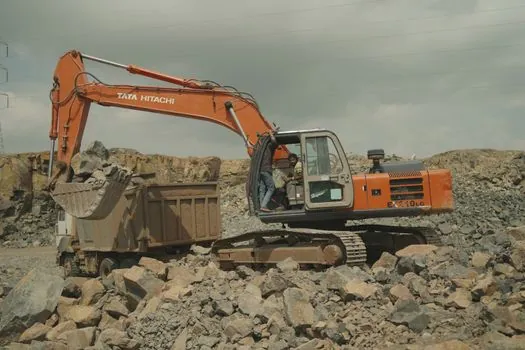
The spec driver is no longer thermal efficiency; it is speed-to-power, fuel access, and modularity, with secondary weight on emissions, water consumption, and acoustic footprint [S1].
Use a four-axis screen before shortlisting equipment: (1) time-to-first-MW, with mobile gensets and refurbished turbines leading at weeks-to-months, aeroderivative turbines in the 12 to 24 month band, and heavy-duty combined-cycle outside the useful window for greenfield AI builds; (2) ramp rate, where reciprocating engines and aeroderivatives outperform utility-scale turbines for step changes in AI training load; (3) fuel supply, since 83% of proposed BTM capacity is concentrated in five states with proximity to major natural gas production regions and regulatory frameworks favoring rapid development, with Texas leading [S1]; (4) footprint and modularity, with mobile containerized gensets and skid-mounted fuel cells scaling by addition rather than by re-engineering.
For gas-turbine and engine packages, the auxiliary train matters as much as the prime mover: switchgear, harmonic filtering, and the power supply architecture feeding the data hall must be specified in parallel with the genset order to avoid on-site rework. Continuous-rating DC power supply units for the BESS and switchgear controls, plus switching power supply modules for the telemetry and protection cubicles, are typically specified as part of the same procurement package.
Reliability, ride-through, and the storage pairing
AI training loads are step functions, not smooth curves, so frequency regulation and ride-through on a BTM island are the binding reliability constraints, not steady-state generation availability [S2].
Lender concerns over power supply interruption are now a primary financing risk on BTM projects, alongside stranded-asset exposure if grid interconnect eventually arrives cheaper, and licensing uncertainty for novel configurations such as containerized gas gensets at hyperscale [S2]. Most current BTM sites pair their thermal generation with battery energy storage systems (BESS) sized for ride-through rather than for time-shifting, which is why industrial UPS topologies are increasingly co-specified with BESS inverters for sub-second ride-through. Operators also need dense on-site monitoring: a data logger layer on fuel metering, exhaust temperature, vibration, and switchgear status is now standard procurement, since the alternative is flying a technician every time a module faults in a 1 GW campus.
Non-generation equipment that decides the BTM build
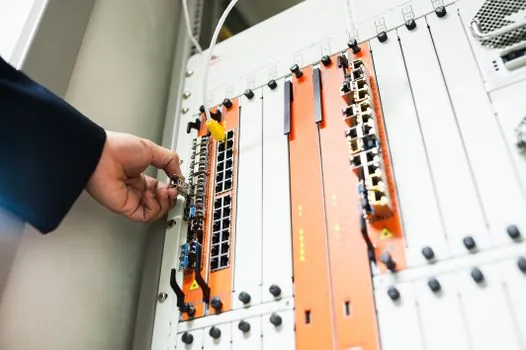
Medium-voltage switchgear, transformer skids, and gas-treatment packages are the actual schedule-limiting items on most 2026 BTM sites, because the genset OEM often delivers ahead of the balance-of-plant.
Specifiers should treat the BTM electrical room as a system, not a bill of materials: generator circuit breakers, unit transformers, and the paralleling switchgear must be matched on impedance, short-circuit duty, and protective relay settings before the first skid lands. For sites using refurbished turbines, the inspection regime (boroscope, blade-tip clearance, hot-section life) is more rigorous than for new units, and a data logger tied to the turbine control system is the only credible evidence base for remaining useful life. Non-destructive examination of pressure boundaries on the gas train still falls under standard practice for any pressurized piping tied to fired equipment, and NDT equipment procurement should be locked in at the same time as the genset PO.
Who BTM is FOR, and who it is NOT for
BTM is FOR developers with GW-scale AI training loads, a firm gas-supply contract or a willingness to dual-fuel, a balance sheet that can absorb a 2 to 4 year construction-and-operate period without grid backup, and a regulatory site in a state with fast permitting [S1][S2].
BTM is NOT for latency-sensitive retail colocation, operators with firm sustainability commitments that exclude unabated gas, sites without firm gas pipeline access, or developers whose lenders require a utility offtake as a condition of financing [S2]. For sub-50 MW retail colocation, the BTM economics do not close against a standard PPA, and the operational complexity is not amortized across enough load to justify it. For operators with carbon commitments, even paired BESS and high-efficiency aeroderivatives will not meet near-term Scope 2 targets without on-site carbon capture or significant renewable hybridization, both of which add lead time the AI timeline does not allow [S1][S2].
Sourcing, standards, and what to verify before PO
The IEA projects USD 3.9 trillion of global data center investment between 2026 and 2030, which is the macro envelope framing every BTM equipment-purchasing decision made in 2026 [S2].
On the sourcing side, the dominant OEM path runs through Caterpillar and Solar Turbines for gas packages, Bloom Energy for fuel cells, and a long tail of refurbished-equipment brokers and reciprocating-engine packagers; xAI's mobile-generator strategy validated the trailer-mounted gas-engine path as a real procurement category [S1]. Verify the gas-turbine or engine data plate against the EPA NSPS or applicable state air permit before signing, confirm the BESS inverter's ride-through certification against IEEE 1547 or the local ISO's ride-through profile, and require witnessed factory acceptance testing on the switchgear and power supply skids before shipment. Trackable signals for the next 6 to 12 months: the rate at which announced BTM capacity converts to actually-permitted projects (Cleanview's tracker currently shows 8.8 GW permitted across Caterpillar and Solar Turbines alone), and the first major BTM refinancing or offtake deal that establishes a market-clearing cost of electricity for behind-the-meter AI campuses. Related reading on the test coverage that catches these BTM build defects: ICT vs functional test for server boards: 2026 coverage decision.