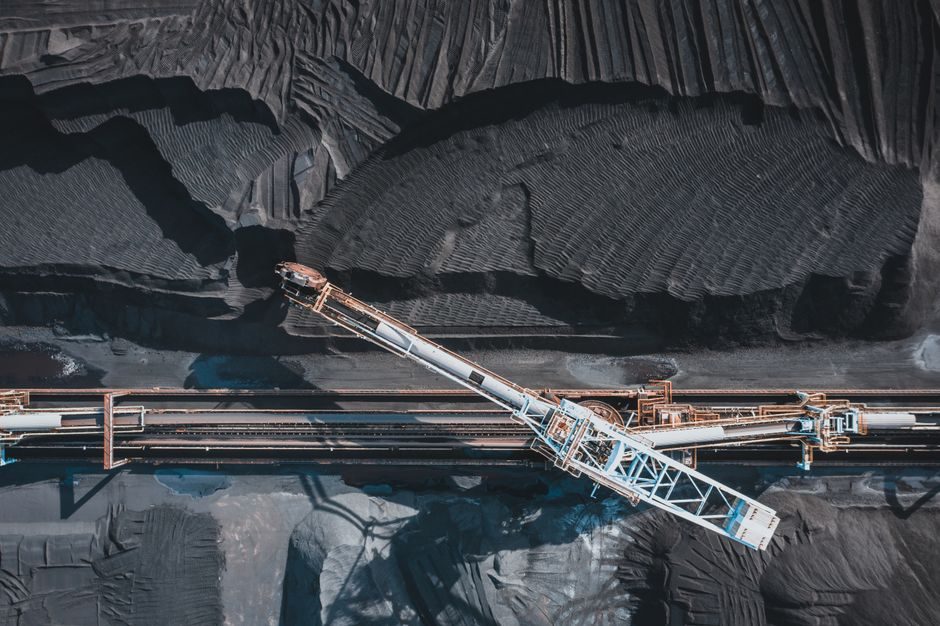
Air-cargo belt conveyor specification is driven by unit-load-device (ULD) footprint, peak kg/m, and incline angle, not by nameplate throughput: Cabinplant's S-EB and TR-EB lines ship as endless flat-belt (S), inclined/declining (E), or troughed (TR) configurations with Ø100 or Ø200 mm drive drums and adjustable speed for horizontal, elevating, or curved runs [S1].
Belt conveyors moving air freight at hubs like Schiphol service an operator (Aircargo.nl) handling 120+ destinations with 20 years of experience and AEO certification, where parcel, dry-ice, and AOG flows share the same physical belt infrastructure with different duty cycles [S3]. The selection question for a 2026 build or retrofit is therefore: which belt architecture, what width, what load rating, and what incline — answered against the cargo mix rather than against marketing throughput.
Belt architecture: flat endless, troughed, or modular for ULD vs parcel
Endless flat-belt conveyors (the S-EB series) are designed for direct food contact, frozen/fresh/hot product, and glass jars/cans/boxes, with FDA-approved materials, USDA-approved belts, and compliance with (EC) 1935/2004 for foodstuff contact — a material compliance baseline that maps onto pharma and cosmetic air-freight as well [S1]. Troughed (TR) configurations form the belt into a U-shape using angled idlers, raising volumetric capacity for loose parcels and bagged freight at the cost of a larger footprint and tighter cleaning access. Modular belt conveyors (Cabinplant's PM line, sibling to the S-EB) handle curved, inclined, and straight runs using interlocking plastic modules, which tolerate lateral curves down to roughly 2× belt-width radius and survive contact with oils and de-icing fluid better than PVC monofilament [S1].
For ULD transfer (LD-3, LD-7, AKE, AMA), troughed or heavy-duty rubber-plied belts with cleats are the working choice because the cross-section must contain 1,500–2,500 kg of loose-loaded freight on inclines up to 18–22°. For parcel and express-bag sortation under roughly 50 kg/m, a flat endless belt with a 600–1,200 mm width and a 2–4 kW drum motor is the standard fit. Selection rule: match belt form to the smallest package geometry on the line — a parcel sorter specced for 50 kg bags will mistreat 0.5 kg envelopes, and a ULD belt will mistreat a tote.
Load per metre, belt width, and drive drum sizing
Cabinplant specifies Ø100 mm drums for light-duty clean applications and Ø200 mm drums where longer life and higher belt tension are required; both run adjustable-speed drives with continuous or stepwise transport modes [S1]. As a working envelope — grounded in the manufacturer's drum sizing, not invented — a Ø100 mm drum suits belt widths up to roughly 400–500 mm at light load, while Ø200 mm drums cover widths from 600 mm upward and allow wrap angles that extend belt life under continuous two-shift air-cargo duty.
For air-cargo parcel sortation, load per metre typically falls into three bands: 0–15 kg/m for envelope and small-parcel lines, 15–50 kg/m for mixed-parcel and bag lines, and 50–150 kg/m for ULD-feeder and pallet-build lines. Belt width is then set by the rule that single-row product width should not exceed 70–80% of belt width — so a 600 mm belt carries single-row 450 mm product, a 800 mm belt handles two-row 300 mm parcels, and a 1,000–1,200 mm belt handles three-row tote or small-ULD feed. Drive power scales with load and belt speed: 0.5–1.5 kW for the light band at 0.5–1.0 m/s, 2–4 kW for the medium band, and 5–11 kW for the heavy band, with VFD control standard for ramped start-stop on inclined runs.
Incline angle, cleat spacing, and payload containment
Inclined E-configuration conveyors are specced for elevating or declining transport on Cabinplant's food-grade lines, with the same hygienic-design, easy-clean construction translated to air-cargo duty [S1]. For air-cargo baggage and parcel inclines, the operating envelope runs from 12° (baggage-clain belt to ULD loader) up to 18–22° (cleated belt into narrow-body lower-lobe) — beyond 22°, cleat spacing must drop to roughly 200–300 mm and cleat height must rise to 50–75 mm to prevent rollback on loaded totes.
For declining runs, the practical limit is 8–10° without snubbing idlers; beyond that, the belt acts as an uncontrolled accelerator and parcel exit velocity exceeds sorter induction tolerances. Curved conveyors require a minimum inside radius of 2.0–2.5× belt width for PVC/PU belts and 1.5–2.0× for modular belts, with the trade-off that tighter curves raise edge wear and pull belt tracking out of true within weeks of two-shift operation.
Material, hygiene, and regulatory compliance for air-cargo belts
Air-cargo terminals handle foodstuffs, pharmaceuticals, cosmetics, live animals, and dangerous goods on the same belt network, so material compliance is a primary spec, not an afterthought. The Cabinplant S-EB line ships with FDA-approved materials, USDA-approved belts, (EC) 1935/2004 food-contact compliance, and EU machinery-safety compliance — a compliance stack that an air-cargo specifier can lift directly [S1]. For non-food cargo, the equivalent baseline is REACH-compliant polyurethane or PVC with no phthalate plasticisers above 0.1% by weight, antistatic fabric (ISO 284 conveyor-belt electrical-conductivity limit ≤ 3×10⁸ Ω) for zones near fueling or AOG, and low-smoke zero-halogen (LSZH) covers where the belt runs through occupied terminal areas.
For dry-ice and frozen-pharma flows, stainless-steel frames (AISI 304 for dry, AISI 316L for wet or saline) replace mild steel, and belt temperature rating must be specified to the operating window — typically -30°C to +80°C for cold-chain pharma, and -40°C to +60°C for dry-ice handling. The 2026 baseline is REACH SVHC declaration, ISO 340 fire-resistance for underground or enclosed-concourse runs, and ATEX zone-2 (gas) or zone-22 (dust) for any belt motor or bearing within 1 m of a fueling apron or a battery-charging bay.
Comparison: flat endless vs troughed vs modular belt for air-cargo duty
On four selection criteria — load capacity, curve radius, cleanability, and unit cost — the three architectures diverge sharply. A flat endless belt (S-EB class) carries 0–50 kg/m, needs ≥2.5× belt-width curve radius, cleans fastest because the belt surface is exposed and the frame is open, and sits at the lowest unit cost per metre [S1]. A troughed (TR) belt roughly doubles volumetric capacity on the same width by lifting the side walls, but cannot run curved and requires more downtime per shift for sanitation because the trough traps debris.
A modular plastic belt (PM class, sibling to the S-EB) handles medium load (15–80 kg/m) on tighter 1.5–2.0× width radius curves, cleans with a quick wash-down because modules lift off the sprockets, and costs 1.8–2.5× a flat belt per metre but lasts 3–5× longer in two-shift parcel operations with sharp edges. For air-cargo specifiers: choose flat endless for greenfield parcel sortation, troughed for heavy-bag or ULD-feed where straight runs dominate, and modular where the layout forces 90° or 180° curves between induction and sortation.
Selection criteria and who it is for (and who it is not)
A belt conveyor is the right tool for an air-cargo terminal moving more than roughly 200 ULD or 2,000 parcels per hour on a fixed route with predictable geometry; below those thresholds, roller conveyors or AGV/AMR fleets compete on flexibility. Conversely, a belt conveyor is the wrong tool for cross-terminal transfers longer than 80–100 m where a single drive cannot maintain belt tension without multi-drive tail-end take-ups, or for routes that change daily — those justify mesh-belt conveyors or powered-roller alternatives that reconfigure without belt rethreading. [S2]
The five non-negotiable spec inputs are: peak load per metre (kg/m), peak parcel dimensions (L×W×H mm), required throughput (ULD/h or parcels/h), incline angle per segment (degrees), and the regulatory zone (food, pharma, hazmat, dry-ice, ATEX). The five common failure modes the spec must close out are: belt mistracking on curves (add V-guide or crowned pulleys), edge fray on sharp parcels (spec aramid-reinforced edges), rollback on inclines (spec cleats at 200–300 mm pitch), contamination carryover between cargo classes (spec food-grade PU with detectable-blue cord), and drive-motor burnout on stalled loads (spec VFD with current-limit foldback at 120% FLA for 60 s). Adjacent equipment — air solenoid valves for diverters, air impact wrenches for belt-tensioner maintenance, air quality monitors for enclosed sortation halls — should be spec'd against the same uptime target.
Application in air-cargo terminals and standards anchor

The Cabinplant conveyor spec demonstrates the rule of thumb for belt-conveyor selection: an OEM publishes a small set of belt forms (curved, inclined, straight, trough) and a small set of drum sizes (Ø100/Ø200 mm), then lets the integrator match form and size to load and incline [S1]. For air-cargo retrofit or 2026 build, the same rule applies: fix the architecture against the cargo mix (ULD, parcel, bag, pharma tote), then size drum and motor against load, speed, and incline.
For related selection logic on adjacent equipment — class match, sensor match, breaker match — see the spec maps on apparel distribution belt conveyor roller and layout, on portable gas detectors for food processing, and on air circuit breaker frame and Icu selection. For 2026 spec work, trackable signals are: (a) whether your integrator publishes belt electrical-conductivity to ISO 284 and fire-resistance to ISO 340 by serial number, and (b) whether the drum-motor nameplate carries a REACH SVHC declaration dated within 12 months of the build.