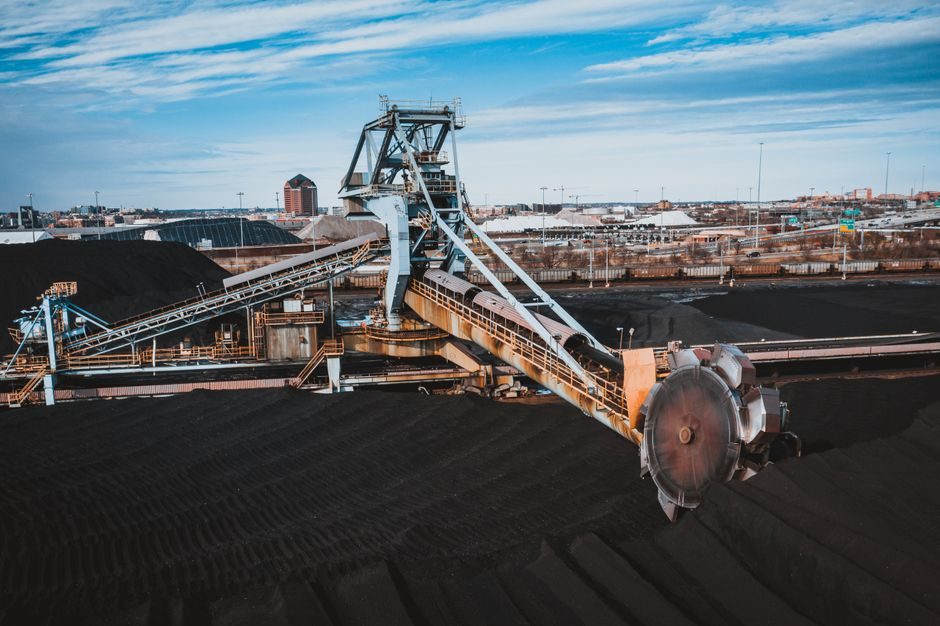
Chemical-shipping duty pushes belt conveyor selection past generic bulk-handling choices: a corrosive or reactive cargo forces matched decisions on belt cover compound, idler material, pulley lagging, and sealing [S3].
The working envelope most plants spec for is 500-1400 mm belt width, trough angle 20°-45°, centre distance up to 20 m on a single drive, with belt speeds typically 0.8-3.5 m/s for bagged or granular chemicals [S5].
Belt Cover Compound and Chemical-Plant Rated Belts
Chemical-plant-rated conveyor belts appear as a distinct catalogue line rather than a general-purpose rubber belt, signalling a cover compound selected for acid, alkali, or solvent exposure [S3]. Standard cover grades for mild chemical duty are typically natural rubber or SBR; for stronger exposure, chlorobutyl, EPDM, or PVC covers are common, with cover thickness 4-8 mm top and 1.5-3 mm bottom. One Chinese supplier catalogs a chemical-plant conveyor belt alongside stainless-steel and ceramic rollers as separate product offerings in its online catalog.
Two procurement checks that catch most field failures: (1) confirm the cover Shore A hardness (typically 60±5 for chemical service) and (2) confirm splice rating matches the motor's pull-up torque, since chemical plants often run start-stop duty that overloads cold vulcanised splices. The chemical-plant conveyor belt line is the workhorse here, and plants should treat belt specification as inseparable from the idler and pulley spec.
Idler Materials: Steel, Stainless, Ceramic, Polymer
Idler material selection tracks the chemical being shipped: carbon steel with rubber coating is fine for dry, non-corrosive granules; stainless steel (typically 304 or 316) is specified for chloride or acid mist; ceramic lagging is reserved for high-temperature or highly abrasive chemical slag; polymer (UHMWPE, HDPE) rollers handle sticky or hygroscopic powders [S3].
The idler set itself follows the trough angle: 20° for light bulk, 35° for general chemical bagged goods, 45° for high-capacity granular loads [S5]. Standard idler diameters run 89 mm, 108 mm, 133 mm, and 159 mm; heavier chemical loads (e.g. bulk soda ash, fertiliser) typically step up from 89 mm to 108 mm minimum. Self-aligning and impact idlers are listed alongside the trough idler family, with the impact idler placed at transfer points where chemical bags or lump material drop onto the belt [S3].
Drive Pulleys, Lagging, and Backstop
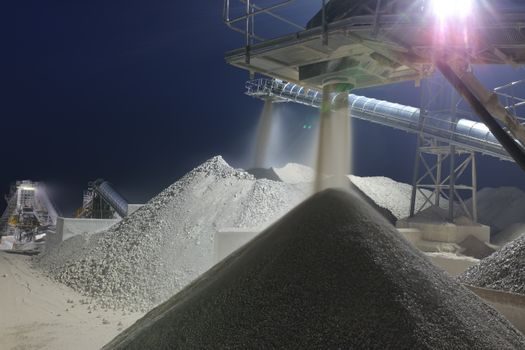
Drive pulleys for chemical-shipping conveyors are typically rubber-lagged (diamond or herringbone grooved) to raise the coefficient of friction and prevent slip on the chemical-rated belt cover [S3]. A backstop idler is fitted on inclined conveyors to prevent reverse rotation during a power loss, which is a hard requirement for any chemical-shipping line running above 6° inclination.
Pulley diameter is governed by the belt's piw (pounds per inch of width) rating and the cord type: textile-ply belts typically need pulleys at 4-6× the belt's rated minimum pulley diameter, steel-cord belts need 6-10×. A properly sized belt tensioner is paired with the drive to keep take-up travel within ±1.5% of centre distance. The flat-belt drive variant is used only at low-capacity transfer sections under 50 t/h; for higher tonnage, the troughed belt with crowned drive pulley is the rule.
Layout and Centre Distance: Short, Medium, Long
BEUMER-class troughed belt conveyors are commonly documented with centre distances up to 20 m on a single drive, and tubular belt variants for combined horizontal and vertical transport [S5]. Below 20 m, a single drive and one take-up winch handles most chemical-shipping duty; above that, an intermediate drive or booster drive is added.
For truck-container loading at chemical terminals, telescopic roller conveyors are a parallel product family (not a belt line), offered with a 2-set MOQ at unit price bands roughly US$100-1,500/set depending on length and roller material [S1]. Where the conveyor feeds a stacker or reclaimer, the layout links into a heavy-industry bulk-handling system that includes pulleys, idler frames, and steel structure from a single supplier scope [S2]. For a fully matched chemical-floor line, see the belt conveyor spec map for e-commerce fulfilment for adjacent non-chemical layout logic.
Selection Criteria Comparison: Belt × Idler × Pulley Combinations
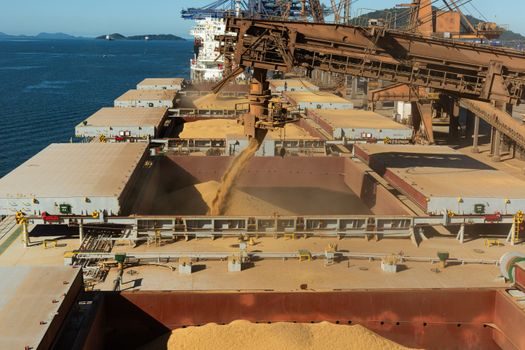
This comparison is the kind of structured pass that lets an engineer rank options on the same axes rather than vendor-by-vendor. [S3]
Component Accessories That Close the Spec
A full belt conveyor accessory set for chemical shipping includes impact bars at transfer points, side seals to keep dust and chemical fines off the return run, primary and secondary belt scrapers (urethane or tungsten carbide blades), bottom rollers on the return run, canopies over outdoor sections, and drive/idler pulleys with drum coatings matched to the belt compound [S4]. The impact bar (typically UHMWPE top surface, 100-150 mm height) absorbs the drop energy of 50 kg chemical bags at 1-1.5 m drop height, preventing belt cover damage that would otherwise propagate into chemical ingress.
Standard scraper placement: a primary scraper at the head pulley (6 o'clock position) and a secondary scraper 200-400 mm further along the return run, both held at 0.5-1.5 N/mm linear contact pressure. For chemical-anchor wash-down zones, all accessories must share the same stainless or polymer specification as the idlers, since a single mixed-material fitting will corrode first and become the failure origin. In fume-handling lines, a mesh-belt conveyor variant is sometimes used instead of a solid belt; in the standard solid-belt path the chemical reagent compatibility of every polymer, rubber, and metal part is the final cross-check before sign-off.
Common Failure Modes and the Spec That Prevents Each
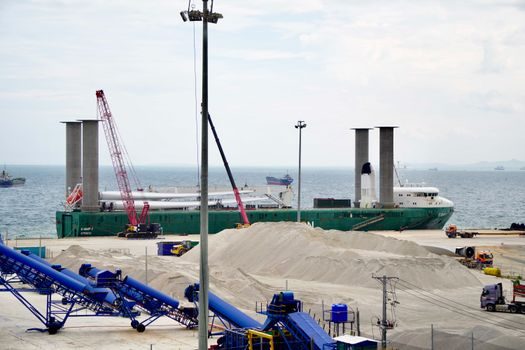
Three failure modes dominate chemical-shipping conveyors. First, cover swelling or cracking from solvent attack, prevented by matching the cover polymer to the chemical family and capping belt temperature 20°C below the polymer's rated ceiling. Second, idler bearing failure from moisture ingress, prevented by specifying stainless or polymer idlers with sealed-for-life bearings (2RS or ZZ) rather than open bearings. Third, belt mistracking from carryback build-up, prevented by the primary-plus-secondary scraper pair and a correctly tensioned belt tensioner sized to ±1.5% of centre distance. [S3]
For adjacent floor logic outside the chemical envelope, see belt conveyor selection for automotive parts logistics.