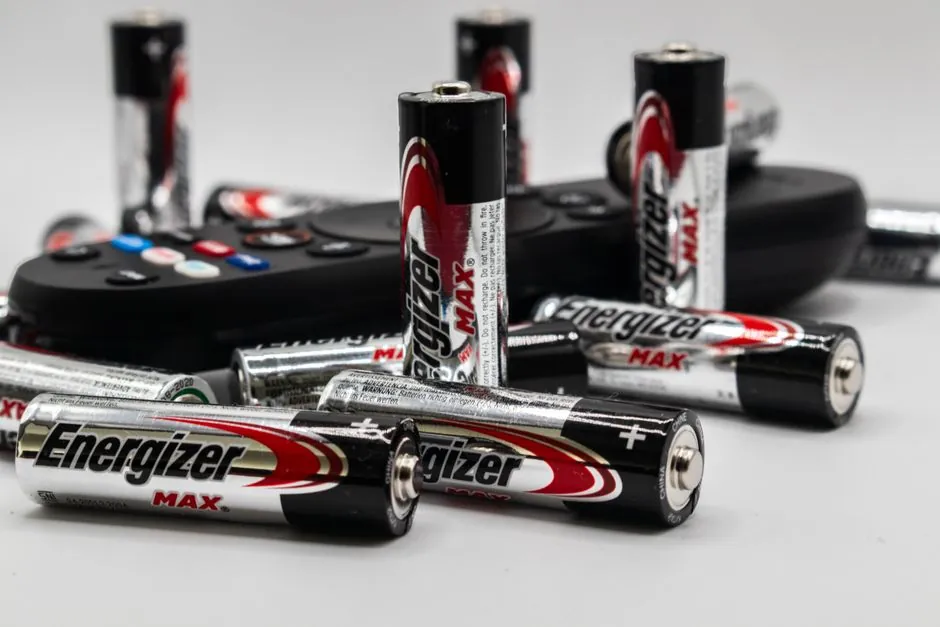
Buyers of stationary battery energy storage systems (BESS) should anchor their raw-material sourcing strategy on lithium iron phosphate (LFP) cells priced at roughly $70–$100/kWh at the pack level, with tier-1 cathode and cell traceability required for any project seeking federal or utility-grade financing [S3][S1].
Stabilized LFP cathode pricing near $8,000–$10,000/ton (down from about $25,000/ton in early 2023) and warranted cycle life of 4,000–10,000+ to 80% capacity have moved the procurement conversation from chemistry selection to supplier depth, cybersecurity controls, and standards compliance [S3].
Chemistry choice: LFP as the default, NMC and sodium-ion as bounded alternatives
LFP cells now deliver 120–180 Wh/kg gravimetric and 227–396 Wh/L volumetric energy density, with pack-level systems landing near 100–140 Wh/kg once enclosures, busbars, and thermal management are added [S3]. At one cycle per day, a 4,000–8,000 cycle warranted LFP cell translates to roughly 11–22 years to 80% capacity retention, the metric that drives levelized cost of storage (LCOS) [S3].
NMC and NCA chemistries remain 20–30% more space-efficient, useful for tight urban sites, but they typically reach only 1,500–3,000 cycles under similar duty and have averaged about $128/kWh at the pack level versus roughly $70/kWh for LFP in 2025 [S3]. Sodium-ion and solid-state chemistries (the latter targeting 350–500 Wh/kg at cell level) are still pilot-stage for grid duty, with thin field history and long lead times that make them unsuitable as primary BESS raw-material bets [S3].
For procurement officers, the chemistry decision is therefore a filter, not a research question: default to LFP unless the site is footprint-constrained or the project is an explicit pilot [S3].
Raw material price bands: cathode, lithium carbonate, and anode inputs
Battery-grade lithium carbonate remains the swing variable: spot prices rose and fell through 2024–2025 as Australian, Chilean, and Chinese conversion capacity came online, and current sourcing guides flag it as the single largest unhedged exposure in most BESS bills of materials [S5].
Anode inputs are now graphite-dominant, with natural graphite supply concentrated in China and synthetic graphite prices tracking needle-coke and energy costs; silicon-rich anode blends can add 10%–30% energy density at moderate silicon loadings, but calendar and cycle aging remain too soft for long-duty grid service [S3]. Ten minerals are commonly listed as critical for lithium-ion BESS raw-material risk models: aluminum, cobalt, copper, natural graphite, iron, lithium, manganese, nickel, phosphorus, and silicon, with cobalt and nickel the two where LFP offers the biggest structural hedge versus NMC/NCA [S7].
Installed system pricing typically falls in the $200–$500/kWh range, with storage duration, balance-of-system, and EPC scope the main deltas; raw-material moves explain roughly the cell half of that spread [S3].
Supplier tier map: cell makers, cathode producers, and what to demand at RFP
The Tier 1 cell layer for stationary BESS in 2026 is concentrated in a handful of Chinese and Korean makers with direct LFP cell capacity (CATL, EVE, BYD, CALB on the LFP side, with LG Energy Solution, Samsung SDI, and SK On competing on the NMC and NCA side); the Tier 2 layer includes system integrators that source modules from those cell makers and add PCS, BMS, fire suppression, and enclosure work [S5][S8].
At the materials layer, cathode active material is dominated by Chinese converters (several of whom run integrated lithium-resource-to-cAM supply chains), with Korean and Japanese cathode makers concentrated in NMC; lithium hydroxide and carbonate supply runs through a smaller number of qualified converters regardless of upstream mine geography [S8]. Buyers who care about U.S. Inflation Reduction Act (IRA) tax credit eligibility must additionally trace critical minerals and battery components to FEOC-compliant origins, a documentation burden that has reshaped RFQs since 2024 [S2].
A defensible 2026 RFP should require: (1) disclosed cell manufacturer and chemistry, (2) signed warranty terms with cycle count and end-of-life capacity (typically 70%–80%) [S3], (3) UL 9540A test reports and NFPA 855 siting alignment [S3], (4) firmware and software bill of materials (SBOM) for both BMS and PCS, and (5) Foreign Entity of Concern (FEOC) declarations on the cell and cathode supply chain [S2].
Standards and cybersecurity gates that gate raw-material qualification
The U.S. DOE FEMP BESS Procurement Checklist (referenced by federal buyers) and the Idaho National Laboratory BESS Procurement Guide (R4, March 2025) are the two public-domain control sets most US RFPs now import [S1][S2]. The INL guide explicitly flags supply chain risk management (SCRM) as foundational because BESS and inverter-based resources carry persistent communications links, remote firmware update paths, and multi-stakeholder access to operating data [S2].
FEOC-sourced equipment adds three concrete risk vectors that raw-material sourcing must address: less manufacturing-process oversight, the possibility of compelled disclosure under foreign law, and a wider, harder-to-audit sub-component spiderweb [S2]. Counter-controls recommended in the guide include key-controls standards built into bidding language, intake analysis to size the risk assessment per vendor, and a formal vendor risk-assessment methodology tied to firmware and sub-component origin [S2].
At the cell level, UL 1973 (stationary cells), UL 9540 (BESS), and UL 9540A (installation-level fire propagation) are the test reports that materially de-risk a raw-material decision, while NFPA 855 governs how much energy can sit on a given footprint, which in turn constrains which LFP container geometry a site can accept [S3].
Lead times, logistics, and where contracts most often fail
Lead time is the second-most-cited cause of BESS project slippage after interconnection queue delay, with containerized LFP deliveries running roughly 26–40 weeks from PO in 2026 depending on cell allocation [S4][S6]. The procurement pattern that closes the most risk is direct Tier 1 cell relationships plus an integrator who holds bonded warehouse stock in the destination region, because cell allocation, not cabinet assembly, is the bottleneck [S5].
Contract failures cluster in three places: warranty interpretation (especially what counts as a cycle and how ambient temperature derates capacity), software/ESCROW terms for the EMS and BMS, and force-majeure language around mineral supply disruption [S4][S9]. The Federal Energy Management Program (FEMP) checklist and INL R4 both call out contract terms as a load-bearing risk-transfer tool, not boilerplate, and recommend embedding firmware update rights, vulnerability disclosure windows, and end-of-life recycling/recovery obligations [S1][S2].
For a fuller read of where cell prices and GWh forecasts are tracking into 2030, the cell-price and GWh forecast for 2026–2030 is a useful cross-check, and the chemistry-and-supplier tier map is the natural companion for tier-mapping the cell makers named above.
Decision framework: which raw-material path for which buyer
A 2026 buyer picks a raw-material path in three steps: (1) lock the chemistry to LFP unless footprint, pilot status, or weight drives NMC/sodium/solid-state; (2) pick the cell supplier tier by warranty depth, cycle count, and FEOC posture, not by headline $/kWh; (3) lock the integrator by UL 9540A test report, EMS/BMS firmware escrow, and SCRM clause language from the INL R4 guide [S2][S3].
Criteria-based comparison of the four realistic raw-material paths for stationary BESS in 2026: (a) LFP from Tier 1 Chinese cell makers: lowest $/kWh, 4,000–10,000+ cycles, IRA risk if FEOC non-compliant; (b) LFP from Korean/Japanese joint ventures: similar cycles, higher $/kWh, cleaner FEOC posture; (c) NMC/NCA from Tier 1 makers: 20–30% better energy density, 1,500–3,000 cycles, higher $/kWh and cobalt/nickel exposure; (d) sodium-ion or solid-state: pilot-only, thin field history, premium pricing, no fit for daily-cycling utility BESS [S3][S7].
The market is now wide enough that a buyer who can hold a 26–40 week delivery window and accept LFP at $70–$100/kWh pack-level will see the lowest LCOS in 2026, while a buyer constrained to FEOC-compliant, IRA-eligible supply must accept roughly 15–30% higher pack cost and a longer queue at the cell maker [S3][S5]. Procurement teams that integrate the FEMP checklist, the INL R4 SCRM clauses, and the UL/NFPA test stack from day one are the ones that close bankable PPAs; teams that treat raw-material sourcing as a one-line commodity decision are the ones that renegotiate mid-project [S1][S2][S9].
Detailed specification references: energy management, energy meter, and linear guide.