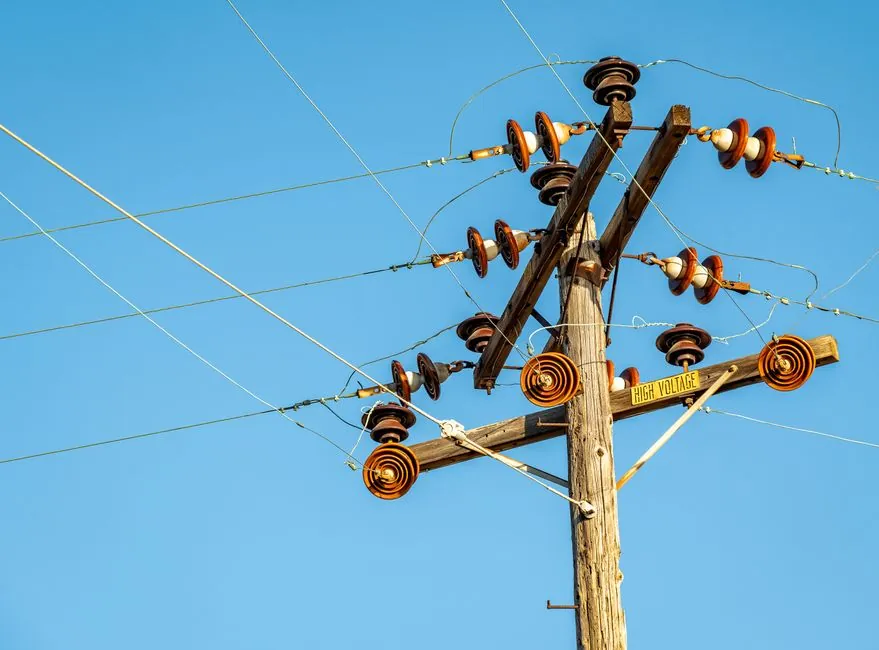
The U.S. electric grid runs through more than two million miles of power lines, 11,000 power plants, and roughly 3,000 utilities, organized into three largely independent interconnections: the Eastern, Western, and Texas (ERCOT) grids [S3]. Supply and demand must match in real time because storage at grid scale is still measured in minutes, not days [S1][S7].
After almost two decades of flat load, U.S. demand has grown at close to 3% annually since 2023, driven by data centers, reshored manufacturing, and building electrification [S2]. That demand bump is hitting a hardware base where distribution transformer lead times now exceed 24 months and certain transformer prices have risen 4-9x over the last five years [S2].
Four-Stage Supply Chain: Generation, Transmission, Distribution, Consumption
The electricity supply chain has four functional levels: production, transmission, distribution, and consumption [S5]. Unlike gas or water, electricity is not extracted, it is generated on demand by converting a primary energy source (fossil, nuclear, hydro, wind, solar, geothermal) into electrical energy through rotating generators or power-electronics inverters [S5].
Long-haul transport is done at high voltage because raising voltage reduces current for a given power, which cuts I²R losses in the line, so step-up transformers at the plant push voltage up before current enters the transmission network [S1]. A complete power grid BOM across generation, T&D, and substations is dominated by conductors, transformers, switchgear, and protection relays rather than by generation turbines alone. The switching power supply devices inside substation controls and SCADA cabinets are a small-volume but qualification-critical slice of that BOM.
Transmission: High-Voltage Bulk Power and the Three Interconnections
High-voltage transmission lines, typically carried on lattice steel towers or tubular monopoles, move bulk power from generation clusters to load centers, often across hundreds of miles [S1]. The U.S. Lower 48 grid is split into three largely asynchronous interconnections (Eastern, Western, ERCOT), each of which must internally balance generation and load second by second [S1][S3].
Interconnection matters for procurement: a 345 kV transformer specified for the Eastern Interconnection may not be a drop-in for WECC, because BES equipment must clear region-specific reliability standards such as NERC TPL and PRC series for the Eastern and Western Interconnections, while ERCOT operates under its own nodal market protocols [S3]. Lead times on large power transformers (LPTs) are now commonly 18-30 months, which is why the DOE flagged transformers, circuit breakers, substation components, and power electronics as the four equipment classes most exposed to supply-chain risk [S2].
Substations and the Step-Down to Distribution
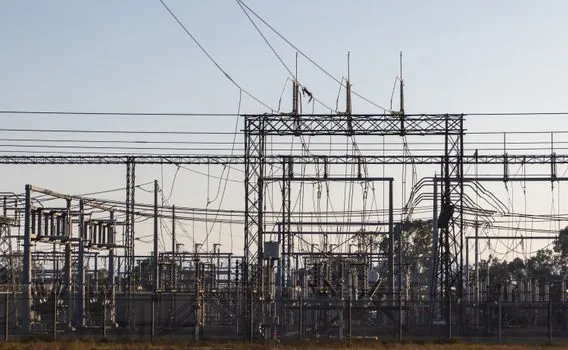
Substations are the grid's voltage-translation hubs: step-down transformers at transmission substations drop voltage from extra-high-voltage (typically 230-765 kV) to sub-transmission levels (34-138 kV), then further down to primary distribution (4-25 kV) at distribution substations, before final pole-top or pad-mount transformers deliver 120/240 V single-phase or 120/208 V three-phase service to customers [S1].
Inside each substation, the supply-chain unit of interest is the bay: a circuit breaker, disconnect switches, current/voltage transformers, instrument transformers, protection relays, and a station service industrial UPS for control power. Each of those subsystems has its own qualifier cycle. The DC power supply rails feeding protection relays and teleprotection channels are typically 48 V or 125 V DC, with battery-backed autonomy rated in hours, and they are a frequent bottleneck during substation commissioning because the relay house power system is signed off before the HV equipment is even energized.
Distribution: The Last Mile and Why Lead Times Blew Out
Distribution is the lower-voltage network that fans out from distribution substations to homes and businesses, operated by the local utility (investor-owned, cooperative, municipal, or federal power marketing administration such as BPA or TVA) regardless of who sells the energy [S1]. In the U.S. this network has grown past two million miles of low-voltage line, and it is also the layer where most new DER (rooftop solar, batteries, EVs) is interconnecting [S3].
The bottleneck is concentrated in the distribution transformer, the small, oil-filled, pole-mount or pad-mount unit that drops primary voltage to utilization voltage. DOE's Office of Electricity (OE) reported on 2026-08-04 that lead times for distribution transformers and other critical grid components now run two or more years, driven by imported core steel and winding copper, limited domestic production capacity, and excessive specification customization by individual utilities [S2]. The same notice announced a program worth up to $375 million to onshore distribution- and power-transformer manufacturing, components, and materials [S2].
Who the Grid Supply Chain Is For, and Who Should Not Spec Into It
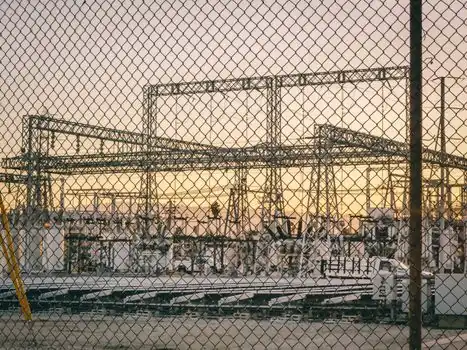
It is for project developers, utility procurement, and EPC firms that need 138 kV-765 kV switchgear, 500 kV HVDC converter stations, large GSU transformers, and standardized distribution transformers at predictable lead times. Tier 1 utilities and IPPs will get priority on the constrained LPT and distribution-transformer slots, and they tend to win because they can sign multi-year blanket purchase agreements [S2].
It is not for buyers looking for small-lot, fast-ship spares, or for projects that depend on a non-standard kVA rating or a unique impedance specification. The DOE's stated remedy is standardization, since common specifications across utilities would let domestic lines run longer campaigns instead of one-off builds, which is the lever that historically compressed lead times below 12 months [S2]. A useful cross-check is the tier 1 power-grid supplier landscape for 2026, which ranks who can actually take that volume.
Comparison: Generation Source vs Grid-Fit Characteristics
Choosing what to plug into the grid is itself a supply-chain decision, because each generation source stresses a different equipment class: thermal (gas/coal) drives demand for step-up transformers and gas-insulated switchgear rated for high fault currents; hydro needs long-runner turbine-generators and remote substation builds; thermonuclear needs 18-24 month outage windows and massive GSU transformers; and renewables (wind, solar, geothermal) need step-up transformers, power-electronics inverters, and reactive-power support to keep voltage stable on weak grids [S5].
As of the EIA figures cited in 2021, fossil-fuel plants still produced about 60% of U.S. electricity and nuclear about 20%, with the residual split across hydro, wind, solar, and biomass [S3]. The supply-chain implication is that any decarbonization scenario must scale step-up transformers, HVDC links, and grid-forming inverters at a rate that current domestic capacity cannot meet, which is precisely the gap the DOE $375M program and the August 2026 standardization push are designed to close [S2].
Reliability, Vulnerabilities, and What to Watch Next
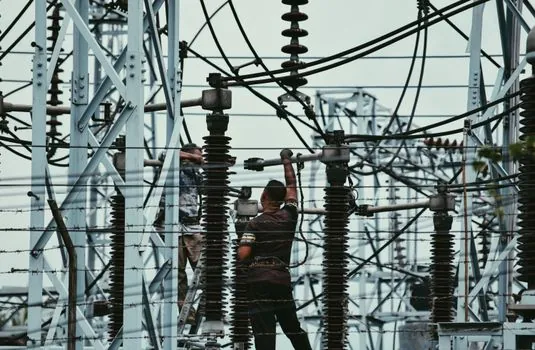
Grid reliability is governed by the NERC suite of reliability standards (TPL for planning, PRC for protection, EOP for emergency operations, CIP for cybersecurity) and is enforced as a binding rule in the Eastern and Western Interconnections, while ERCOT operates under its own protocols with limited federal oversight [S3]. The two operational failure modes engineers spec around are equipment scarcity (transformers, large breakers, GSU units) and event-driven blackouts driven by extreme weather or cyber events, both of which have shaped the post-2021 federal grid-investment posture [S2][S3].
Trackable signals over the next two quarters: (1) award announcements under the DOE $375M domestic supply-chain program first disclosed 2026-08-04 [S2]; (2) any DOE- or FERC-led move toward a common distribution-transformer specification that would compress lead times below the current 24-month floor; (3) ERCOT interconnection-queue reforms, since Texas load growth is the test case for whether standardization outpaces customization. None of these is a forecast, they are public-policy levers already in motion as of September 2026.